The most revealing thing about an advertising agency may be the moment before it makes an advertisement. The room is quiet. The presentation is closed. Someone has just described what they want: a campaign, a logo, perhaps a phrase large enough to sit on a hotel. Most agencies begin answering. Redline Media Group asks another question.
This habit has a lineage. Before S.R. Tommie founded Redline, she spent 27 years working across the Seminole Tribe of Florida - economic development, social welfare, community management and, finally, chief of staff to the tribal chairman. As a child, she translated for a mother who did not speak English while the family navigated public assistance. Translation was not wordplay. It was the practical work of moving meaning between people, rules and institutions.
In May 2003, after saving tribal shareholder stipends for a decade, Tommie opened Redline with three employees in 900 square feet. The company eventually grew beyond 50 people and reported work for brands in at least 74 countries. Its client list has included Hard Rock International, Seminole Gaming, Nike, Harley-Davidson, HBO, ESPN, luxury auto marques, a local city and tribal governments. That range looks miscellaneous until you notice the common problem: each client has something complicated to say to people who are busy, skeptical or both.
The brief beneath the brief
Redline sells the recognizable inventory of an integrated agency: strategy, branding, media planning and buying, digital marketing, websites, interactive installations, print, photography, video and events. It also maintains a specialty in government and tribal communications. The business model is the familiar agency mixture of projects and ongoing relationships. Media strategy can lead to production; production can lead to measurement; a campaign can become a system.
The unusual part is the method it has named Scivertising. Ignore the registered-mark flourish and the framework is refreshingly concrete. Learn. Collaborate. Illuminate. Design. Deploy. Measure. Refine. In other words, do not confuse the first idea with the final answer.
The agency talks about demographics, psychographics, archetypes, KPIs and applied psychology. Those terms can become decorative very quickly. Redline's better proof is its public work. When Dania Beach wanted a new identity in 2017, the agency spent months speaking with residents, business owners, educators, cultural leaders, the council and the mayor. The resulting “Sea It, Live It, Love It” mark encoded a building, the sun and a wave in a bright DB. The city approved it unanimously. The design won only after the listening did.
“We ask good questions, and we're very good listeners.”Redline Media Group, on the first stage of its process
How do you advertise a guitar-shaped hotel?
In 2019, the first Guitar Hotel rose 450 feet over South Florida. The building was already its own billboard. Redline's task was not to make it more visible. It was to make it mean something beyond novelty.
The answer was “Discover Your Rhythm,” a campaign for Hard Rock's Hollywood and Tampa properties. Music became the bridge between a building, a hospitality brand and a guest's desire for exploration. The work traveled through print, digital, photography and film. A structure became an invitation: find your rhythm here.

That distinction explains where Redline sits in the market. A specialist production shop can make the film. A media agency can buy the audience. A brand consultancy can write the positioning. Redline competes by keeping those decisions connected, with particular fluency in hospitality, gaming, civic and tribal environments. For a client operating across jurisdictions and cultures, fewer handoffs can mean fewer opportunities for the idea to get lost.
When attraction gave way to reassurance
Then came 2020, and the hospitality brief reversed itself. Hotels, restaurants and casinos had spent years tempting people to come closer. Suddenly the question was whether it was safe to come at all.
Before
Sell the crowd, the room, the meal and the thrill of arrival.
After
Explain distance, sanitation and altered service without making the experience feel clinical.
Redline integrated remote work, adjusted its own safety routines and developed messages across different laws, customs and protocols. Restaurant clients moved from dining rooms to delivery. Auto dealers demonstrated and sold vehicles online. Service businesses had to explain sanitation measures without turning every ad into a warning label.
For Hard Rock, Redline helped develop Safe + Sound, a worldwide communication system for new health protocols, and worked on PlayersEdge, a responsible-gaming education program. This was the moment that changed the purpose of the message. Persuasion had to share the page with instruction. The creative team's clever phrase mattered because the operations beneath it were real.
What failed first was the old assumption that the customer's obstacle was indifference. During the pandemic, the obstacle was uncertainty. The reusable lesson is simple: diagnose the hesitation before choosing the channel. A louder invitation is useless when the customer is waiting for reassurance.
The cost of guessing
An integrated campaign has many costs: research, stakeholder time, production, media, localization and measurement. Redline's proposition is that those investments should form one system. The alternative is paying several disconnected vendors to discover the same audience separately - and then paying again when their messages contradict one another.
The copyable part
Write the business problem in behavioral terms. Ask one more specific question. Put research before design. Give every channel one job. Set a measure before launch. Remove the pieces that do not earn their keep.
This approach is not universal. It will disappoint a company seeking a cheap logo by Friday, a founder who will not share evidence, or a team without the authority to change a campaign after launch. Listening only creates value when the answer is allowed to alter the work.
An agency built like a bridge
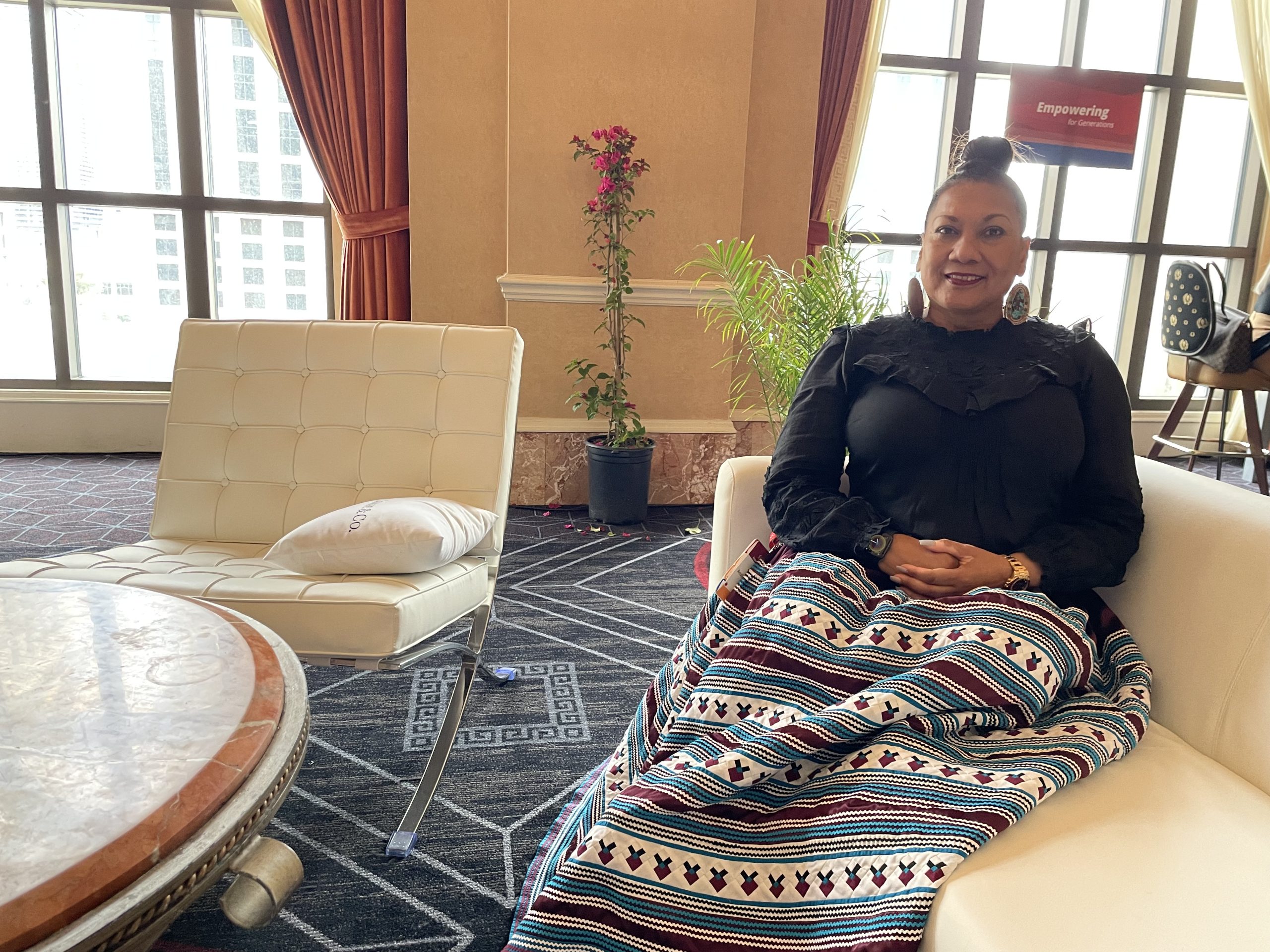
In 2022, the National Center for American Indian Enterprise Development named Redline its American Indian Business of the Year. Tommie has said the award mattered because it came from her own community. She also insisted that the name engraved on Redline's awards belongs to the company rather than one person. That preference is consistent with the agency's mantra: “Working Together, Works!” It is earnest, a little unfashionable and probably more revealing than a wall of trophies.
Redline's competitive advantage is not simply that it is Native American and woman-owned, though that matters in an industry where cultural understanding is often bolted on late. The deeper advantage is accumulated fluency: in government process, tribal sovereignty, commercial spectacle, local consensus and global brand control. It knows a message can be attractive and still fail because it arrived without context.
The second question is therefore not a workshop trick. It is a small act of respect. What do you mean? Who needs to believe it? What would change their behavior? What must remain true when the message crosses a city line, a national border or a cultural boundary? The advertisement comes later.