On Halloween, a box of raisins is not merely a snack. In the hands of a disappointed eight-year-old, it is evidence. It says that somewhere behind this front door lives an adult who has misunderstood the assignment. Candy was requested. Fiber has arrived.
In 2021, Sun-Maid and its agency team stopped fighting that verdict. They gave it an address. A real home in Merchantville, New Jersey, became the Raisin House, complete with grape zombies, raisin tombstones and cleanup kits for households likely to be egged or toilet-papered. The campaign invited people to share their own raisin-house stories on TikTok. Sun-Maid reported that its following there jumped more than 3,200 percent in a week; the broader case later claimed 1.4 billion impressions.
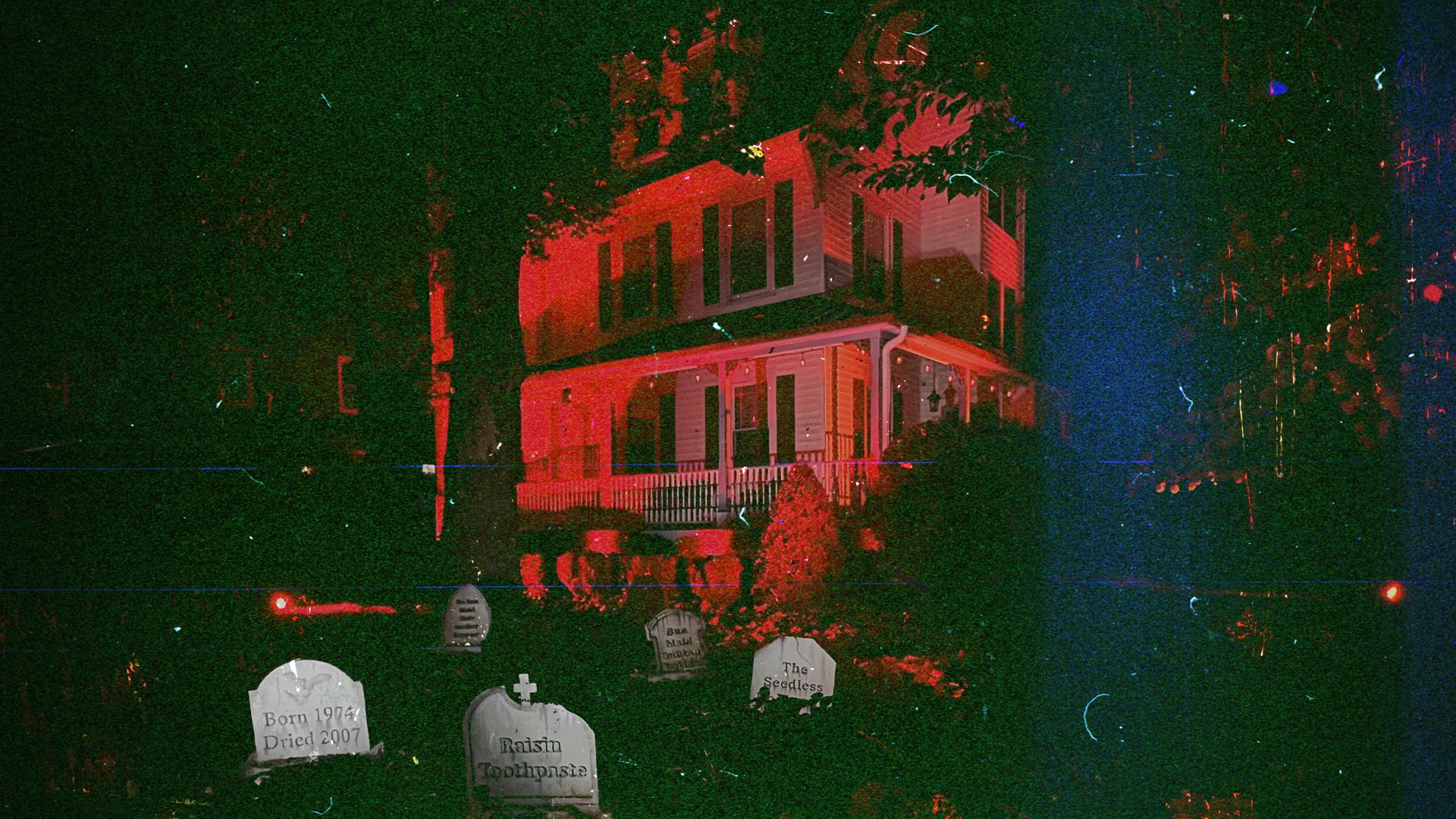
The most interesting thing about the stunt is not that it was funny. Advertising has a warehouse full of funny ideas. It is that the joke began with surrender. Earlier, more virtuous Halloween messaging had tried to make the healthy-snack case. The audience had already decided: raisins are not candy. The agency changed its mind and treated that objection as raw material.
“If we can't be peoples' favorite Halloween snack, we want to at least show people that we can still be a fun snack.”Sonya Cooper, quench account director
A holding company in a boutique's coat
The Raisin House is also a useful map of Pavone Group. The lead creative agency, quench, belongs to a Harrisburg-based network that has accumulated nine focused businesses: Pavone, quench, Varsity, Vigor, WildFig, Hooch, east|west, Market Street Trust Design Co. and LEAP. On a large assignment, the group can pull strategy from one shop, analytics from another, production from a third and retail activation from a fourth. The companies keep their specialties; the client does not have to hire nine vendors.
Nine doors into one group
This sounds like a holding company, because it is one. The distinction Pavone cares about is ownership and access. It is privately held. The agencies are presented as one group, not a loose referral club. In the firm's version of events, a client gets boutique-level category fluency without surrendering the production capacity or range of a broader network.
That category fluency is the sell. quench knows the food aisle. Vigor speaks restaurant. Varsity has spent more than 25 years studying older consumers and senior living. east|west works at the point where shoppers make a decision. WildFig handles visualization, predictive modeling and machine learning. LEAP works on product pipelines. These are not nine decorative logos arranged around a conference table. They are nine answers to the expensive question: how long will the agency need before it understands our business?
The price of the joke
The useful cost marker for the Raisin House is a ceiling, not an invoice: it won an ANA REGGIE in a small-budget activation category for work below $500,000. The campaign took roughly six weeks from planning to execution, according to the collaborators' case account. That is enough to make the lesson concrete, but not enough to pretend every haunted front yard produces the same return.
What failed first was the instinct to correct the customer. Children should appreciate the healthier treat. Consumers should understand the nutrition. The change was to accept the social truth of the occasion. Once Sun-Maid could say, in effect, “Yes, we know,” the brand gained permission to participate in the fun.
That move is copyable. Begin with the sentence customers say when the brand is not in the room. Do not sand it into a research-deck euphemism. Decide whether the company can admit it publicly. Then build one physical or digital object that makes the thought visible. The Raisin House did not require a viewer to decode a brand manifesto. You saw the porch, the gravestones and the red light; you understood the joke.
The model behind the mascot
Pavone Group began in 1992 with Michael Pavone's namesake agency. Its growth accelerated much later. By 2021, it had completed five acquisitions in three years. Two arrived almost back-to-back: Manhattan shopper specialist Eastwest Marketing Group in September, then Atlanta restaurant agency Vigor in October. New York and Atlanta joined Harrisburg and Philadelphia on the office map.
Growth created a less glamorous problem: who does what at the top? In 2023, Pavone moved into a CEO-only role focused on expansion, while longtime partner John Bassounas became president and took greater responsibility for operations and modernizing the offer. Amy Murray, whose tenure also reaches back to 1992, continued building the family of agency brands. It was an acknowledgement that the founder's original job had become at least two jobs.
The group also removed a word from its name. Pavone Marketing Group became Pavone Group. The explanation was almost comically practical: advertising, branding, design, innovation, data, analytics, media, creative and public relations no longer fit neatly beneath “marketing.” Shortening the label gave the collection more room.
Can taste be scored before airtime?
The most revealing newer product is SpotBowl. Pavone has run the public Super Bowl commercial poll for 23 years. WildFig now adds a predictive layer, using historical voting data and four characteristics - humor, emotional appeal, visual impact and relatability - to estimate which commercials will perform. In 2026, the model forecast four of the poll's top five finishers.
Before the votes came in
WildFig's 2026 model correctly placed four of SpotBowl's eventual top five ads. It is a promising demonstration, not a universal law of creative taste.
For marketers, that is the practical promise of the shared bench. The creative agency can make the spot; the data company can pressure-test it; the media operation can distribute it; the content studio can cut it into the shapes each platform expects. Pavone makes money through the familiar agency machinery of projects and ongoing relationships, but its differentiation sits in how those capabilities are packaged.
The customer range is correspondingly broad: Sun-Maid and StarKist in packaged food, Home Run Inn in restaurants, Penn State Health in healthcare, senior-living operators through Varsity, plus retail and consumer brands including Herr's, Ritz, Oreo, Lysol and Revlon. Recent work for Penn State Health brought cancer specialists and research into a regional campaign across television, digital, social and out-of-home. This is not one aesthetic repeated across categories. The claim is the opposite: category knowledge should change the work.
What to borrow - and what to leave
Organize expertise around recurring customer problems, then make specialists shareable across teams. Let the audience's existing belief start the brief.
A network only helps if handoffs are fast, incentives align and the client knows who owns the outcome. A joke only works if the brand has earned the right tone.
The model is weakest when a client needs deep coverage in dozens of countries, when regulatory work demands a single tightly controlled team, or when the specialists guard their accounts like private property. It also fails when category expertise hardens into category habit. Knowing the aisle is useful; assuming the aisle never changes is not.
Pavone's favorite word for its culture is “Bulldogged.” The dog appears in the mark, in the language and, for more than 20 years, in the office as a living “Director of First Impressions.” It is cute, certainly. It is also a compact piece of organizational design. Respect, innovation and passion are the formal values. The bulldog makes persistence visible.
A mascot cannot integrate nine companies. Neither can a clever name or a grid of capabilities. The proof is whether the right person appears when the brief turns strange. A healthy snack must survive Halloween. A hospital must talk about cancer without sounding like every other hospital. A Super Bowl ad needs judgment before $7 million of airtime makes judgment expensive. Pavone Group has built a business around being able to reach for a specialist before everyone else finishes introducing themselves.