In 1995, before the inbox became the place where courage went to die, Michelle Adams went prospecting by car. She drove around Columbus, looked at the names on buildings and later called to ask whether anyone inside ran marketing. A good day meant reaching one human being in roughly 20 attempts. There were no clients yet, no local record to point to and, during that first difficult year, a pregnancy Adams worried might make wary prospects warier.
This is the part of an agency story usually polished away. The logo arrives fully formed. The portfolio is already thick. Nobody mentions the 19 unanswered calls. But those calls explain PRISM Marketing better than a list of services does. The company is an argument for persistence, close client contact and doing the work after the presentation ends.
Today PRISM is a woman-owned, founder-led agency in Westerville, in the Columbus metropolitan area. It works with healthcare and life-science companies, consumer brands, manufacturers, nonprofits and private-equity-backed businesses. Its public roster includes names such as Cardinal Health, Abbott, Optum, Procter & Gamble, Safecor Health and Two Labs Pharma Services. The scale varies. PRISM says it has worked with Fortune 50 corporations and mom-and-pop shops. The recurring customer is not defined by size so much as by a problem: a marketing leader needs strategy, creative and execution to behave like one system.
“I got excited when I’d get just one person on the phone out of 20 or so calls - ONE.”Michelle Adams, recalling PRISM’s first year
The operating ideaThe handoff is where good marketing goes to become average
PRISM describes its process in four linked moves: research informs strategy; strategy powers creative; creative drives execution. There is no novelty in the nouns. The difference is the insistence on the links. Many companies hire one firm for research, another for identity, a production shop for video, a media buyer for distribution and an employee to translate among them. Every handoff sheds context. The customer insight becomes a slide, the slide becomes a mood board, and the campaign that ships resembles the original problem only in the way a distant cousin resembles you.
PRISM tries to keep that context in the room. Its services cover positioning, brand identity, content, websites, ecommerce pages, search, social, paid media, video and campaign measurement. The promise is not merely that one vendor can make many things. It is that the person asking “why?” remains connected to the person pressing “publish.” That is especially useful in healthcare, where an attractive idea can still fail if it mangles a technical truth, ignores regulation or speaks to the wrong point in a patient or buyer journey.
The team calls its members T-shaped marketers: deep in one discipline, conversant in several others. It also makes the cheerfully blunt claim that there is no B-team. The public team page supports the shape of that claim - senior people cover visual identity, research, channel strategy, retail media, writing, web development and account leadership, with several long tenures and résumés across healthcare and consumer brands.
A campaign about everybody elseTwenty candles, zero chest-thumping
Consider the dangerous corporate anniversary. A company reaches a round number and immediately develops the urge to tell everyone how long it has existed. The audience, which has anniversaries of its own, rarely shares the excitement. When longtime client Two Labs Pharma Services approached its 20th year, the obvious campaign would have been a retrospective about Two Labs.
Instead, the company wanted to put the spotlight on people who had improved the industry. PRISM developed the message, creative language and hashtag, then gathered accounts from employees, clients and partners. The team made social posts and images and collected exactly 20 stories on a landing page. An anniversary became an act of recognition rather than a demand for applause.
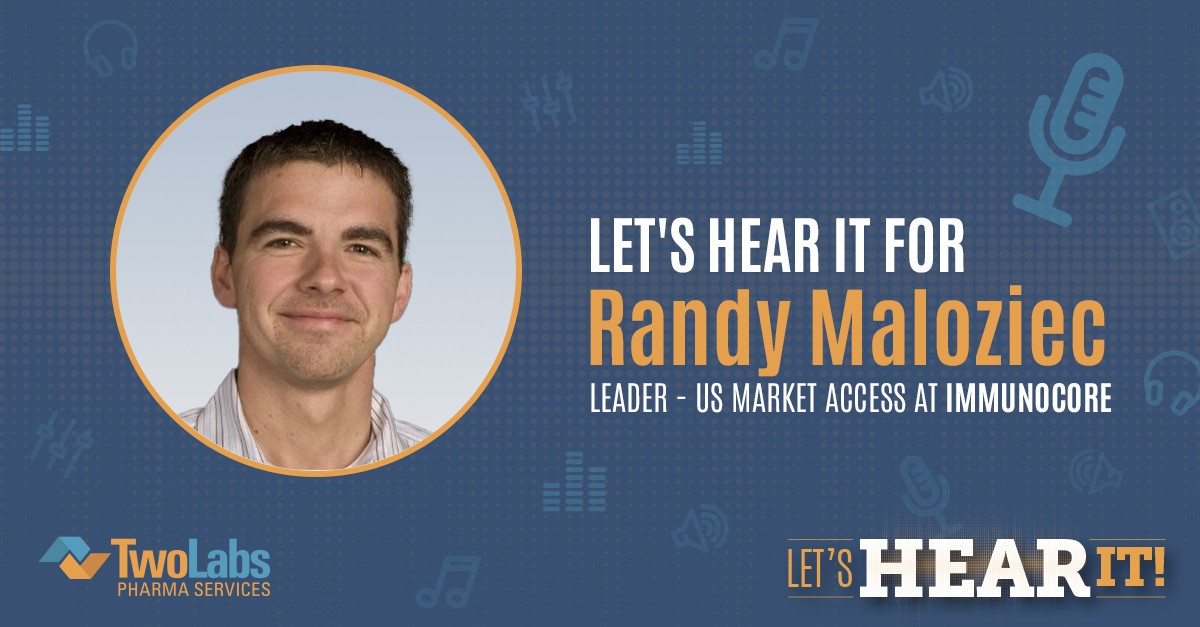
The results make a neat case for generosity as media strategy. Compared with typical Two Labs campaigns, “Let’s Hear It!” produced more than three times the impressions and four times the engagement. Shares multiplied by ten. Comments rose by nearly 300 percent. People did not circulate the campaign because a company had survived two decades. They circulated it because someone they respected had been seen.
Purpose, with receiptsA nice sentiment must still do a hard job
PRISM has made “Marketing on Purpose” a visible part of its positioning. In weaker hands, purpose is fog: an agreeable word placed near a photograph of a tree. PRISM’s more useful version begins with an organization’s reason for existing, but it does not end there. The point is to turn that reason into differentiation, audience relevance and work that can be measured.
Its campaigns show the range. For Clearblue, a Procter & Gamble brand, PRISM helped introduce the Flip & Click pregnancy test, a product marketed to women who were not intending to become pregnant. The agency carried the work from concept through post-production. PRISM reported more than 13.2 million video views and 84 million impressions; the piece won the 2020 Internet Advertising Competition award for Best Health Care Online Ad.
For Allied Mineral Products, the subject was less familiar: refractory materials that protect high-temperature equipment. Allied saw a niche among remote palm-oil facilities in South America, where a boiler failure could threaten an entire operation and outside help was not close. PRISM developed three creative directions around operational understanding, exceptional service and peace of mind. Allied later said that this arm of its business grew from five customers to 30 across seven countries. The central message was not abstract purpose. It was the willingness to go where other suppliers would not.
This is where PRISM fits in the market. It is not a giant network with an office for every discipline, nor a narrow production boutique waiting for a brief. It competes with both, and with the improvised collection of freelancers and specialist firms that many marketing leaders assemble. Its advantage is continuity and domain experience. Its constraint is the same one faced by every integrated shop: the model works best when a client has an empowered marketing leader, shares access to customers and treats marketing as an operating function rather than an emergency request desk.
The model bendsProjects when the job is defined, retainers when the relationship matters
PRISM accepts specific projects and longer partnerships. Adams once assumed the classic agency retainer had disappeared. Then three sophisticated clients - two existing and one new - asked for one. They had experienced larger agencies or demanding direct-to-consumer companies and understood the overlooked economics of continuity: fewer restarts, simpler coordination and deliverables connected to a larger goal. PRISM liked the result too. Retainers allowed less blocking and tackling, and more strategy and focus.
The firm’s newer private-equity offer pushes that logic further. PRISM presents three ways to work: an embedded senior team for a thesis-critical portfolio company, a quarterly cadence for a company with an established commercial leader, or a fixed-scope project such as pricing, CRM or exit preparation. The language is deliberately closer to the boardroom than the awards room. Activities are supposed to connect to revenue growth, gross margin, operating leverage or revenue durability. PRISM says it has delivered more than 20 percent compound annual growth across a four-year hold, although it does not publicly identify the company behind that result.
The useful parts to steal
- Begin with customer interviews, not a preferred campaign format.
- Write one chain from insight to strategy to creative to execution.
- For milestones, celebrate the people around the company instead of the company itself.
- Choose engagement structure by problem: fixed project, recurring cadence or embedded team.
- Attach every marketing measure to a business driver someone outside marketing values.
What thirty years changesThe cold call becomes a compound asset
The first thing that failed for Adams was not a campaign. It was the romantic assumption that opening an agency produces customers. Most calls went unanswered. What changed her position over time was evidence: persistence produced a client, connected work produced longer relationships, and long relationships produced better work because the agency knew the business. Even her view of retainers reversed when experienced buyers began requesting them.
That history gives PRISM an appealingly practical philosophy. Research matters because assumptions are expensive. Purpose matters when it clarifies why a customer should care. Creative matters when it makes that answer memorable. Execution matters because nothing happens until the work leaves the deck. Measurement matters because a business eventually has to distinguish motion from progress.
Thirty years after those drives around Columbus, the agency still sells a version of the answered phone: senior people who learn the problem, stay reachable and remain present long enough to see what happened. In an industry forever announcing its next revolution, that may sound almost quaint. It also happens to be difficult to automate, difficult to fake and, judging by the clients who asked for the old retainer back, difficult to replace.