The most interesting thing in a Havas office is not an ad. It is the short walk between two desks. One might belong to a media buyer, the next to a strategist, another to a healthcare specialist or a data scientist. Havas calls the arrangement a Village. The name is genial, almost twee. The business logic beneath it is hard-nosed: every doorway removed from a client brief is one fewer place for the brief to lose its plot.
That matters because a modern marketing assignment is a relay race designed by committee. Research hands to strategy. Strategy hands to creative. Creative hands to production. Production hands to media. Data arrives late and explains why the baton was dropped. Large agency groups grew by assembling every specialist a chief marketing officer could need, but the collection itself created the next problem. The client did not want the collection. The client wanted the pieces to behave as one.
Havas has made that coordination problem its identity. It operates three broad networks - Creative, Media and Health - with commerce, culture, public relations, production, customer experience and data capabilities threaded through them. More than 4,000 organizations buy some combination of those services. In 2025, Creative supplied 40 percent of group net revenue, Media 38 percent and Health 22 percent. This is not a boutique pretending to be comprehensive. It is a 22,641-person company trying to behave like a much smaller table.
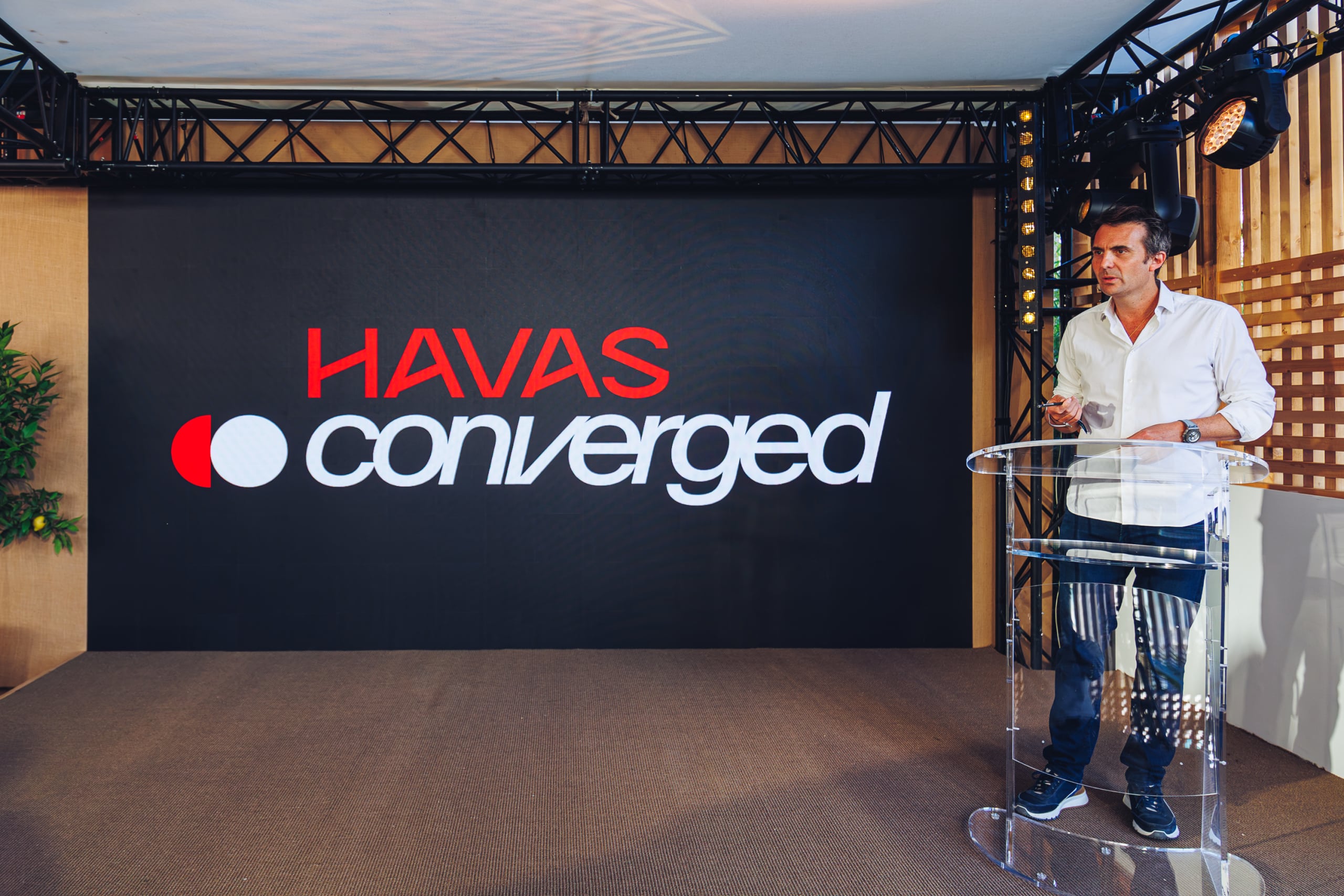
The first thing to fail was the handoff
When Yannick Bolloré became chief executive in 2013, the group began a “Together” strategy. The following year it pushed the Village model: put different disciplines under one roof, organize them around clients and let proximity do some of the work that memos and matrix charts could not. Today Havas reports more than 70 Villages in over 100 markets. There are seven in North America, ten in South America, 31 in Europe, four in Africa and 22 across Asia and Oceania.
This is what Havas actually does differently. Publicis, Omnicom, WPP and Dentsu can all offer enormous menus of expertise. Consultancies and independents compete from either end, one with systems access and the other with focus. Havas cannot reliably win a contest based on being biggest. It can argue that it is integrated enough to make scale usable. The Village is the physical version of that argument.
“People need to be able to work closely together and learn from each other to be their best and thrive.”Yannick Bolloré, chairman and CEO
There is a practical lesson here for any company with an org chart wider than its customer journey. Find the moment a live problem changes owners. Shorten the distance. Give both sides access to the same facts. Then make someone responsible for the whole result. You do not need to call the room a Village. You do need to change who sits in it.
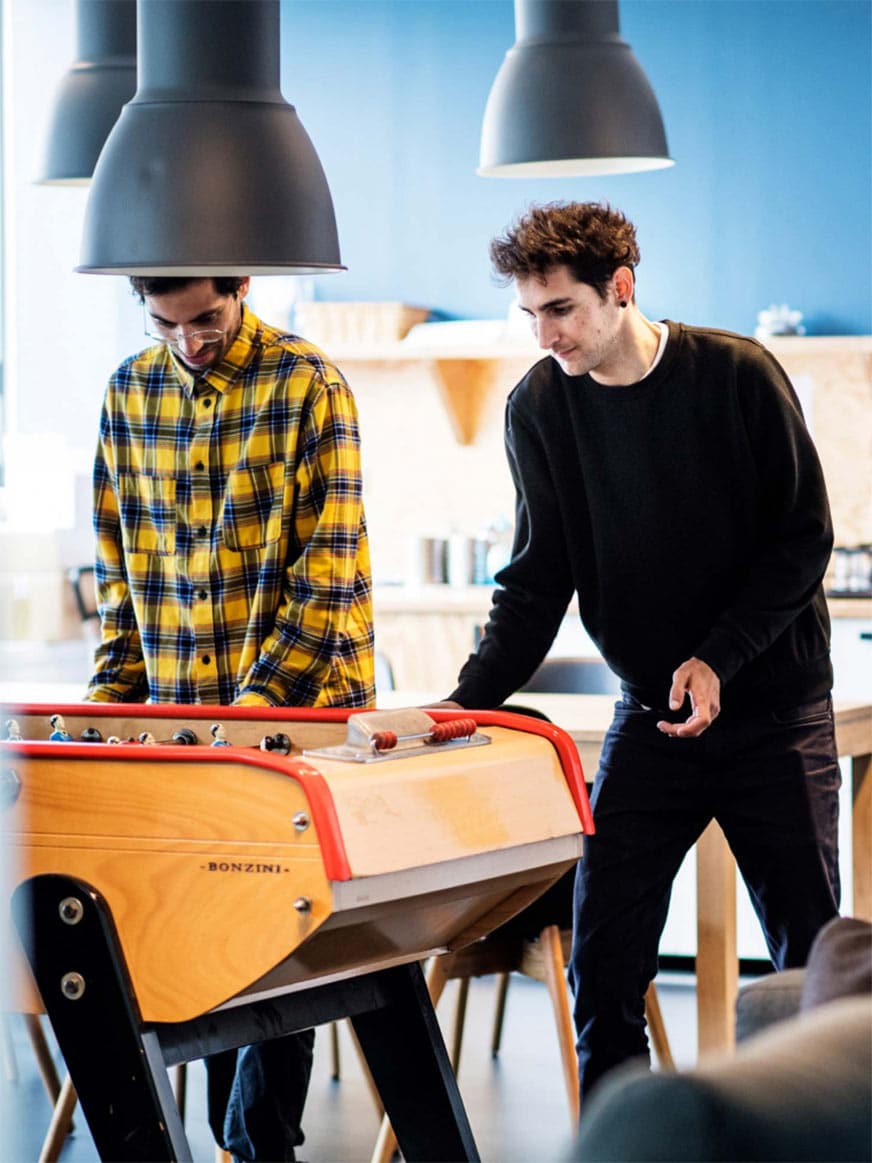
Then the hallway became software
Physical proximity does not solve a global brief that wakes up in Paris, travels through New York and lands in Singapore. In June 2024, Havas announced Converged, later styled Converged.AI: a groupwide operating system meant to connect its people, tools and methods. Its four stages are almost aggressively plain - Intelligence, Design, Activate and Measure. That is useful. Operating systems should tell people what happens next.
The cost is unusually concrete for a strategy announcement: an expected €400 million across 2024 to 2027 for data, technology, AI, new capabilities, partnerships and acquisition-related commitments. Havas has expanded an Adobe partnership used by roughly 5,000 people, partnered with AI infrastructure company Akkio, invested in consumer-modeling business Vurvey Labs, and built AVA, a secure portal through which employees can use multiple large language models. It also developed Vermeer.ai for generative production with human oversight.
What changed Havas's mind was not one cinematic failure. It was the accumulating inconvenience of the holding-company model. Clients wanted personalized work in real time, consistent across markets, with a defensible link to sales. A collection of excellent agencies could still produce an ordinary experience if their tools, incentives and calendars disagreed. Havas first changed the room. Then it changed the workflow.
What the client is actually buying
The output can be a television campaign, a pharmaceutical launch, a media plan, a product page, a fashion show, an influencer program or a measurement model. Havas Media advises on where to spend and buys the space. Havas Creative develops brands, experiences and campaigns. Havas Health works through the regulatory and behavioral knots of healthcare. Havas Market, present in more than 30 countries, combines ecommerce operations, retail media, content, paid performance and sales analytics. Havas Play works in sports, gaming, music, creators and live culture.
The company is paid through project and advisory fees, retainers, media commissions and a growing mix of outcome-based compensation. The old cost-plus model has not vanished, but Havas has said that media remuneration is moving from pure commission toward retainers and results. That changes the pitch from “we make communications” to “we improve an observable business outcome.” It also raises the standard of proof.
In 2025, revenue reached €2.913 billion and net revenue €2.783 billion. Organic net-revenue growth was 3.1 percent, the adjusted operating margin was 12.9 percent, and the group bought majority stakes in 11 agencies. Those deals were not random flags on a map. They added ecommerce, data engineering, financial communications, experiential work, entertainment and local media depth. In 2026 Havas kept buying in the same pattern, including youth-culture agency Archrival and sustainable-events shop MUT.
A company from 1835 tries desire
The origin story is almost too neat. Charles-Louis Havas founded a Paris news agency in 1835, translating foreign papers and moving information with the fastest networks available, including carrier pigeons. The modern group no longer sells news, but it still earns money by improving the route a message takes. In December 2024 it separated from Vivendi and listed in Amsterdam, gaining more room for acquisitions and technology investment while remaining operationally headquartered in Puteaux.
Its latest positioning is “Growth, Powered by Desire.” The supporting 2026 study covered more than 87,500 respondents and 2,400 brands across ten markets. Havas says desirable brands in its data were 2.4 times more likely to sustain growth, while 84 percent of brands sat in a large middle of indifference. The language is more romantic than “optimize the funnel,” but the commercial intent is precise: visibility is abundant, preference is scarce.
“Being seen is not enough. You must be desired.”Mark Sinnock, Havas Creative Network
The reader can copy the mechanics without copying the slogan. Design around the customer's path, not the company's departments. Reduce the number of handoffs. Share the tools that produce and measure the work. Buy specialist capability only when it can plug into the common system. Keep a human decision-maker where automation creates speed but not taste.
The conditions matter. A Village does little if teams keep separate budgets and guard client access. A common AI layer becomes expensive theater if the data is poor, employees are untrained or clients cannot connect their systems. Integration can also flatten genuinely useful specialist cultures. And Havas's model is built for organizations with recurring, multi-market marketing complexity; a local business needing one campaign may be better served by one focused independent shop.
Copy this
Map the customer journey. Circle every ownership change. Remove one handoff, create one shared measurement view and appoint one leader for the combined outcome.
Watch this
Co-location without shared incentives is merely rent. AI without trusted data and training is merely a faster route to inconsistent work.
Havas's bet is not that every person should do every job. It is that specialization should not force the client to become the integrator. That distinction is the whole business. The company began by translating newspapers. Nearly two centuries later, its most important translation may be between the talented people already on its own payroll.