In 1965, two University of Nebraska students had a distribution problem disguised as a publishing idea. Rich Bailey and Bart Lewis made a little biweekly visitor guide called Around Town. They wrote it, designed it and sold advertisements to local businesses from the basement of Bailey’s parents’ house. Then the advertisers made an inconvenient request: Could the boys make the ads, too?
That question changed the company. The guide supplied the seed money. The demand supplied the business model. In 1970, Bailey and Lewis opened Bailey Lewis & Associates. Bart Lewis later retired, Jim Lauerman rose to president, and in 1990 the name became Bailey Lauerman. The pencil in its first logo was not a metaphor cooked up by a branding committee. It was simply the tool at hand.
The agency now sells nearly every tool that arrived after the pencil: research, strategy, brand identity, design, campaigns, film, digital products, social content, public relations, crisis communications, influencer programs, and media planning and buying. It is independent, employee-owned and headquartered on Farnam Street in Omaha. Its clients have included Bosch, Union Pacific, Disney, AMC, Panda Express, UnitedHealthcare, OPPD, banks, credit unions and motor-oil brands. The supplied company data estimates annual revenue at $4.9 million, though the agency does not publish its fees or client budgets.
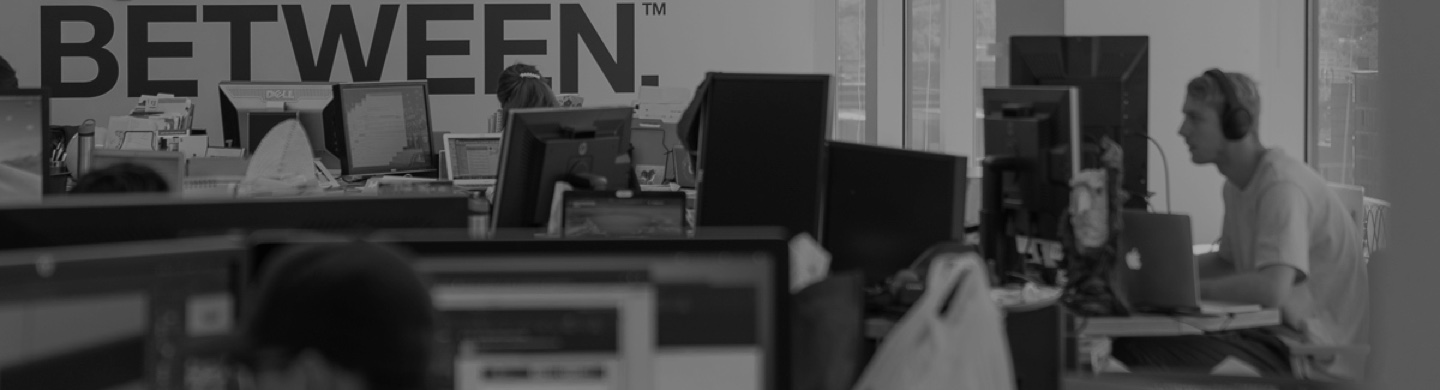
The geography became the pitch
For years, Omaha was the part of the story an ad agency might hurry past. Big national work was supposed to come from New York, Chicago or Los Angeles. Bailey Lauerman eventually stopped apologizing for the map. It asked what the map allowed the agency to notice.
Its answer is called “The Everything In-Between,” or EIB: the 92 percent of Americans who live outside the ten largest U.S. cities. That figure is the door, not the entire room. The agency says the useful distinction is less where these people live than how they live - with an emphasis on purpose, practicality and pride of place. It is a rebuke to the old phrase “Middle America,” which can compress Des Moines, Birmingham, Boise and Buffalo into one person wearing one flannel shirt.
This is where the company differs from a conventional regional agency. It does not merely claim to know “real people.” It has built instruments around the claim. BL INTEL offers access to a panel of more than one million people, one-time or recurring research, and social listening. Its EIB Influencer Network contains more than 200 manually vetted creators across 33 states. Its media group plans, buys, tracks and reports traditional and digital media, with programmatic buying and client dashboards under one roof.
“Middle America has been overgeneralized, underrepresented and underappreciated for a really long time.”Greg Andersen, CEO
There is an obvious limit. A national percentage is not a persona, and the EIB framing is least useful when a brand’s actual market is concentrated in the largest metros or outside the United States. It works when the category needs scale across varied American communities and the research is allowed to uncover differences, not sand them away. The panel matters more than the slogan.
First, find the sentence that failed
Bailey Lauerman’s more instructive case studies begin with something the category believed that stopped working. Movie theaters believed proximity decided where people went. Windshield-wiper advertisers believed drivers wanted feature demonstrations. Health insurers believed a promise of a simpler plan would be enough. OPPD, the Omaha public utility, performed thousands of essential tasks that customers rarely saw - then watched measured satisfaction decline.
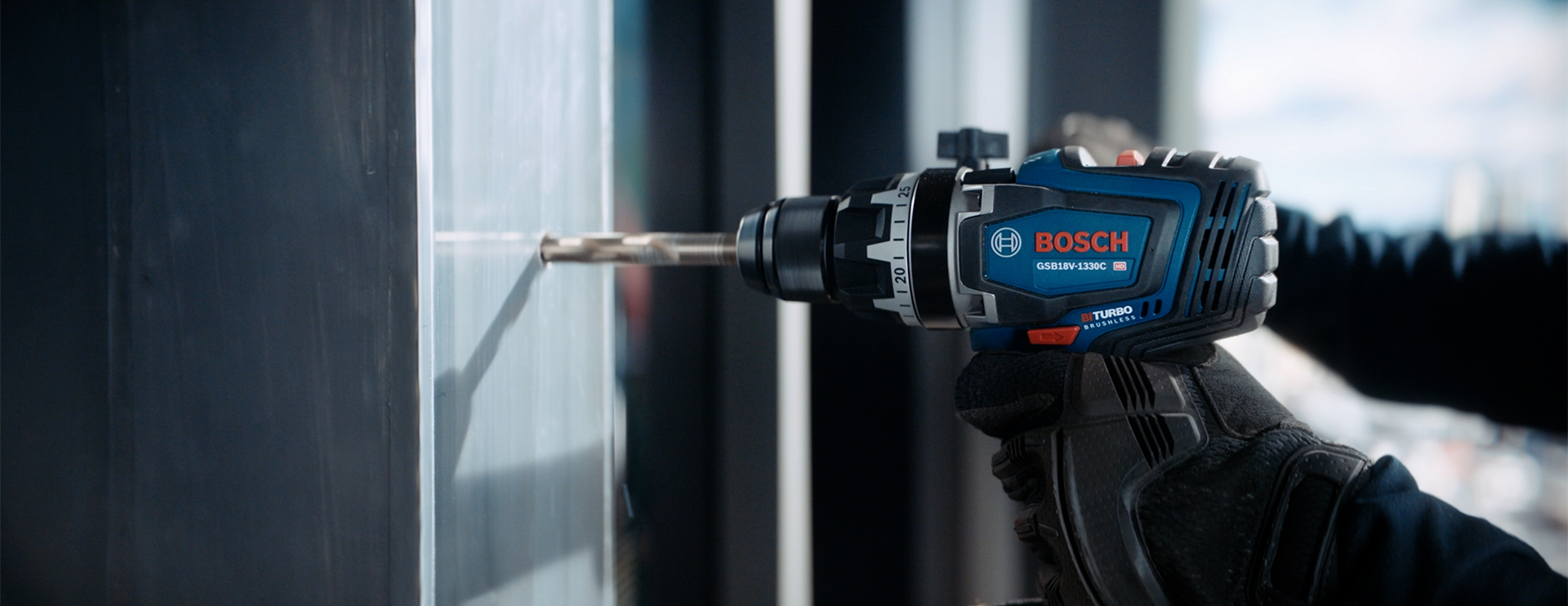
In each case, the repair was not an ornamental tagline. AMC first improved the physical experience with recliners, food and drinks; the agency then built a brand system around the reason to drive farther. For Bosch ICON wipers, feature talk gave way to the feeling of calm while driving through frightening weather. For OPPD, Bailey Lauerman chronicled the workforce for 45 straight days, producing fresh digital, social, radio and outdoor material in near real time. The work made invisible labor visible.
Everyone repeats a feature, a promise or a convenient assumption.
Research identifies why the audience ignores, doubts or cannot see it.
The campaign demonstrates the benefit in behavior, not adjectives.
The Surest health-plan campaign is the cleanest example of what changed the agency’s mind. Insurance is a low-trust category, and a claim that a new plan is “reimagined” sounds exactly like advertising. But test-market research showed that people understood the difference once they used the app: prices appeared before treatment, provider choice was visible, and there were no deductibles. So the campaign simply showed the product. Video completion ran nearly 10 percent above benchmarks, while click-through rates beat benchmarks by 116 percent. The repeatable move is almost embarrassingly plain: when the promise is unbelievable, demonstrate the mechanism.
The media desk is also a margin decision
Full-service can be a soft phrase. Here it includes a harder operational choice: bring programmatic media capability in-house. Bailey Lauerman’s media practice uses a consolidated platform for planning, buying, optimization and reporting, marketed under its Flyover Media capability. Its published Basis Technologies case study says the switch produced lower cost per thousand impressions, more impressions, better targeting and more time for strategic work and new-business pitches. No Bailey Lauerman-specific dollar cost is public. The more revealing policy is that the agency says efficiencies and buying savings are passed back to clients.
That makes the model legible. The company earns agency fees across strategy, creative, production, PR, social and media; the technology reduces the coordination tax. A single dashboard lets clients see pacing, conversion metrics and top performers. The scheme is attractive when a marketer wants an integrated team and sufficient media volume to benefit from consolidated buying. It is less persuasive for a tiny one-off assignment, or for a company committed to separating creative and media agencies as a check on each other.
Show the work while it is happening.
OPPD’s 45-day campaign, Kendall Motor Oil’s six-episode Mustang build and Bosch’s Route 66 trip all turn process into distribution. The product is not parked beside the content; its use creates the content.
A road trip is a media plan with mileage
In 2026, Route 66 and Bosch wiper blades both turned 100. Bailey Lauerman connected the anniversaries with a 2,400-mile trip from Chicago to Santa Monica. Automotive educator Jason Fenske of Engineering Explained joined creators Ben Lin and Ben Thorn of Gears and Gasoline. They documented landmarks, weather, Bosch inventions and the odd sight of campaign robots traveling the Mother Road. A three-part creator series published before the live tour had already drawn nearly 1.3 million views.
It is a particularly Bailey Lauerman arrangement. The route runs through the geographic argument the agency has been making for years. The creators supply trusted distribution. The trip tests the product in public. Nostalgia earns attention, but the road gives every stop a reason to exist. A brand can copy the structure without copying Route 66: find a cultural event that naturally exercises the product, recruit interpreters the audience already trusts, and make the journey itself the publishing calendar.
The agency’s longevity is less mysterious viewed this way. It began by owning a small publication, listened when advertisers wanted a bigger service, and kept moving toward the parts of marketing clients found difficult. It opened in Omaha for Union Pacific after being given odds memorably described as half an inch wide. It later made Omaha headquarters. What once sounded provincial became a listening post.
The clever part is not claiming the middle. Nobody owns 92 percent of a country. The clever part is behaving as if overlooked audiences deserve the expensive apparatus of attention: panels, listening tools, creators, planners, buyers and people willing to ask whether the first sentence failed. Bailey Lauerman found a business in the space between the obvious markets. The space was never empty.