In the spring of 2021, the easy part of Michigan's vaccination campaign was ending. The people eager to get a shot had already rolled up their sleeves. Uptake began to slow. The remaining audience was not waiting for a more polished slogan. It was wary, tired and living inside a public-health issue that had become political.
Brogan & Partners, the Ferndale advertising agency working with the Michigan Department of Health and Human Services, made a decision that explains the company better than a parade of awards ever could. It abandoned scripts and storyboards. Then it went outside and asked people why they had chosen to be vaccinated.
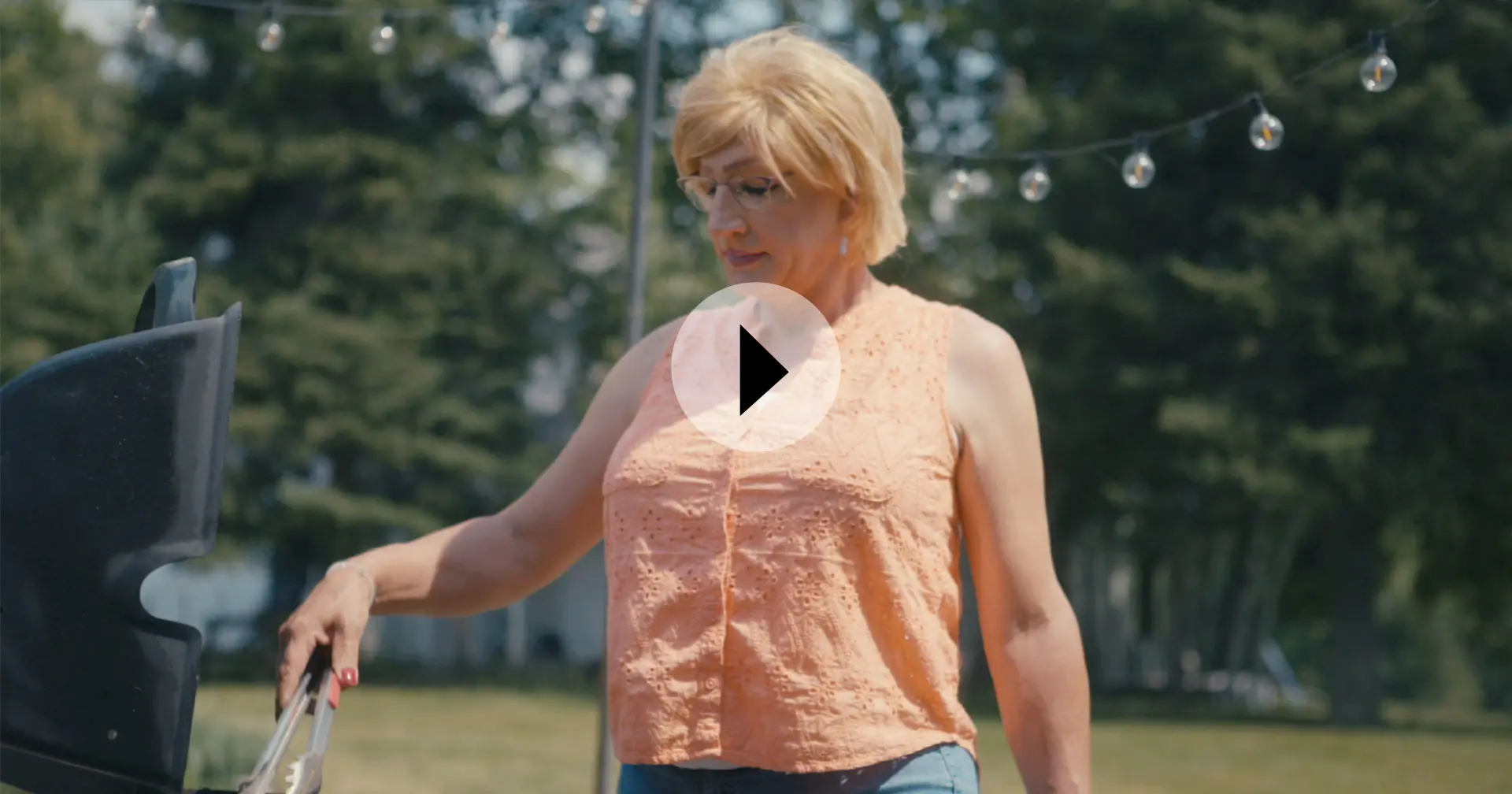
The answers came from physicians and neighbors, from people grieving someone they had lost and people who simply wanted dinner with friends again. “My Why” was built from those voices. Brogan had stopped treating reluctance as a media problem and started treating it as a trust problem.
“We abandoned scripts and storyboards and hit the streets, asking residents why they chose to get vaccinated.”Brogan & Partners, My Why case history01 / The unfashionable specialty
Selling the thing nobody wants to think about
Brogan is a full-service agency in the literal sense: research, strategy, brand identity, advertising, websites, analytics, social media, automation, production, media planning and media buying. But its memorable work occupies a narrower and less comfortable category. It explains vaccines to skeptical parents, recovery to teenagers, benefits to veterans and warning signs to people who may be standing near a future act of violence.
Those are not ordinary purchase decisions. The audience may distrust the institution, avoid the subject or fail to see itself in the message. A clever line cannot repair the wrong diagnosis. So the agency's practical product is often the diagnosis itself: interviews, polls, behavioral observation, focus groups and secondary research across more than 70 platforms, according to Brogan.

Consider its anti-drug work for Michigan. Focus groups revealed that teenagers did not accept the premise adults had brought into the room: marijuana was dangerous and unhealthy. Repeating the claim at a larger volume would have produced a larger failure. Brogan changed the frame to loss - jobs, friendships and futures. The resulting campaign recorded more than 1.9 million video views.
What changed their minds?
Brogan's public case histories are unusually candid about the moment before the campaign works. HIV resources existed, but too few people were using them. Michigan State Police wanted a more diverse recruiting pool, but applications from women and minorities lagged. Childhood immunization was stuck at 65 percent among Michigan children aged 19 to 35 months. The first thing to fail was not the advertisement. It was the assumption behind it.
The useful reversal
When evidence contradicts the brief, preserve the objective and replace the premise. Vaccine hesitancy did not call for more institutional authority. Research and community partners pointed to the people audiences still trusted, so neighbors and doctors became the messengers.
This is where Brogan differs from a production shop. It sells the right to change the question before it spends the client's money answering the wrong one. In the HIV campaign, interviews and message testing preceded the creative; the share of HIV-positive patients receiving care rose from 52 percent in 2011 to 64 percent after launch. That is an association reported in the agency's case study, not proof that advertising alone caused the change. It is still a better outcome to watch than applause for a television spot.
A necessary caution: a rising public-health measure has many causes. Brogan presents these figures as campaign-period results. The honest lesson is to connect creative work to a real-world measure without pretending the ad owns the whole outcome.
03 / Distribution is creativeThe Dollar Store receipt is a media channel
The agency's 2026 SNAP campaign used television, streaming, YouTube, radio, social media, outdoor and transit. Predictable enough. Then the plan kept going: gas-station television, grocery-store screens, Amazon lockers and Dollar Store receipts. The commercial was filmed in a grocery aisle, the place where benefits become dinner.
There is a useful distinction here. Broad reach makes a message available. Context makes it legible. Brogan's specialty-channel examples include HIV/AIDS information on coasters in gay bars and heart-health messages on hair-salon mirrors for African American women. These placements work because they borrow meaning from the room around them.
For the Michigan Veterans Affairs Agency, the “I Am a Veteran” campaign featured five underrepresented veterans speaking about real military struggles. Brogan reported more than 64 million impressions and 3.6 million video views. A companion effort aimed at Vietnam veterans tripled its impact through negotiated added-value media and exceeded 75 million impressions. Reach mattered, but recognition came first: people had to see themselves as veterans before the benefits message could belong to them.
04 / The bill, carefully readWhat did it cost?
Brogan does not publish a consumer-style rate card. Public procurement records offer a more revealing view. A Michigan MDHHS creative, media and clearinghouse contract carried an estimated base value of $39.765 million, or $13.225 million a year. A later 2025 schedule put the estimated annual budget at $30 million and Brogan's contractor fee at 7.6 percent.
Estimated annual campaign budget in the 2025 MDHHS pricing schedule.
Contractor fee in that schedule. The remainder covers advertising services and media, subject to project authorization.
The distinction is important. A huge contract ceiling is not the agency's revenue. It can include television inventory, digital placements, printing, translation and clearinghouse operations passing through the contractor. The fee covers research, account management, strategy, creative, production and overhead. For marketers comparing agencies, the transferable lesson is simple: ask which number describes work and which number merely passes through the work.
05 / A succession measured in decadesThe founder left slowly enough for the culture to stay
Marcie Brogan founded the agency in 1984 with an explicit ambition to advance women, promote diversity and celebrate creativity. Ellyn Davidson joined in 1994, fresh out of college. She became managing partner in 2010, then president. In 2017, after 23 years inside the company, Davidson bought it. The price was not disclosed.
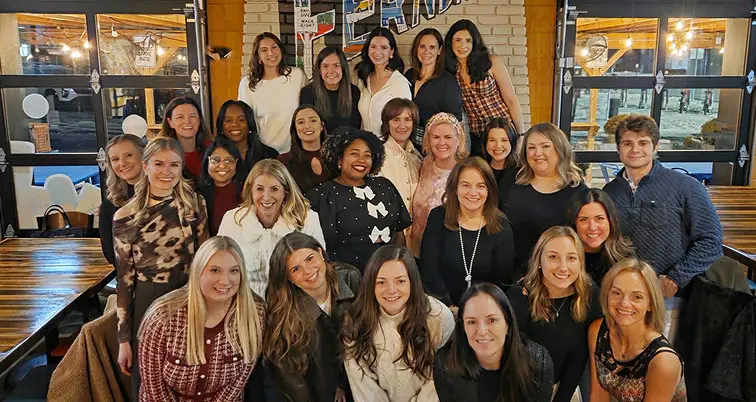
This was succession by apprenticeship. The firm remains certified as a Women's Business Enterprise and Women Owned Small Business. Its stated values are unusually plain: integrity, cheerfulness, hunger for success, creative thinking and winning as a team. “No divas here,” its culture page says. The annual Giving Tuesday practice is more specific. Since 2023, every employee has chosen a personally meaningful charity and Brogan has made a donation in that person's honor.
Five moves worth borrowing
Do not begin with the message. Begin with the reason the desired behavior is not happening.
If teenagers reject the health frame, do not polish it. Find the consequence they already believe.
When institutional credibility is weak, put the message in the mouth of a physician, neighbor or peer who still has it.
Grocery information belongs in aisles and on receipts, not only in an abstract audience segment.
Views are helpful. Visits, applications, enrollment and use of care get closer to the reason the campaign exists.
This playbook has conditions. It suits organizations with a defined behavior to change, access to the audience and enough budget for discovery as well as distribution. It is weaker when a client needs a quick burst of aesthetic production, refuses to let evidence change the brief or cannot provide a measurable next step. Specialty placements also demand local knowledge. A tactic that feels intimate in one community can feel opportunistic in another.
Brogan's market position follows from those constraints. It is smaller than a global network, broader than a healthcare-only boutique and more research-heavy than a commodity production vendor. Its alternatives include Michigan agencies such as GUD Marketing, King Media, Lambert, Change Media, LKF Marketing, SMZ and Fusion92. The defensible edge is not that Brogan can make an ad. Plenty of firms can. It is that four decades of difficult briefs have taught the agency when an ad is not yet the answer.
Keep exploring