The decisive moment in Asher Agency’s recent history did not happen in a pitch room. It began in a private conversation between two people who already knew where the copier jammed. Kara Kelley had joined the Fort Wayne firm in 2007 and become president. Megan Bennett was its chief financial officer. In the spring of 2021, they started talking about buying the company. By July 2022, they had done it.
There was no rescue narrative. The agency was operating, the clients remained, and the staff did not need a manifesto taped to every monitor. Kelley and Bennett wanted Asher to be independent and locally controlled again. Ash Crest Corp. came in as a minority investor and adviser. The day-to-day promise was almost provocatively uneventful: same people, same services, same vendors. The paperwork changed. The center of gravity moved back to Fort Wayne.
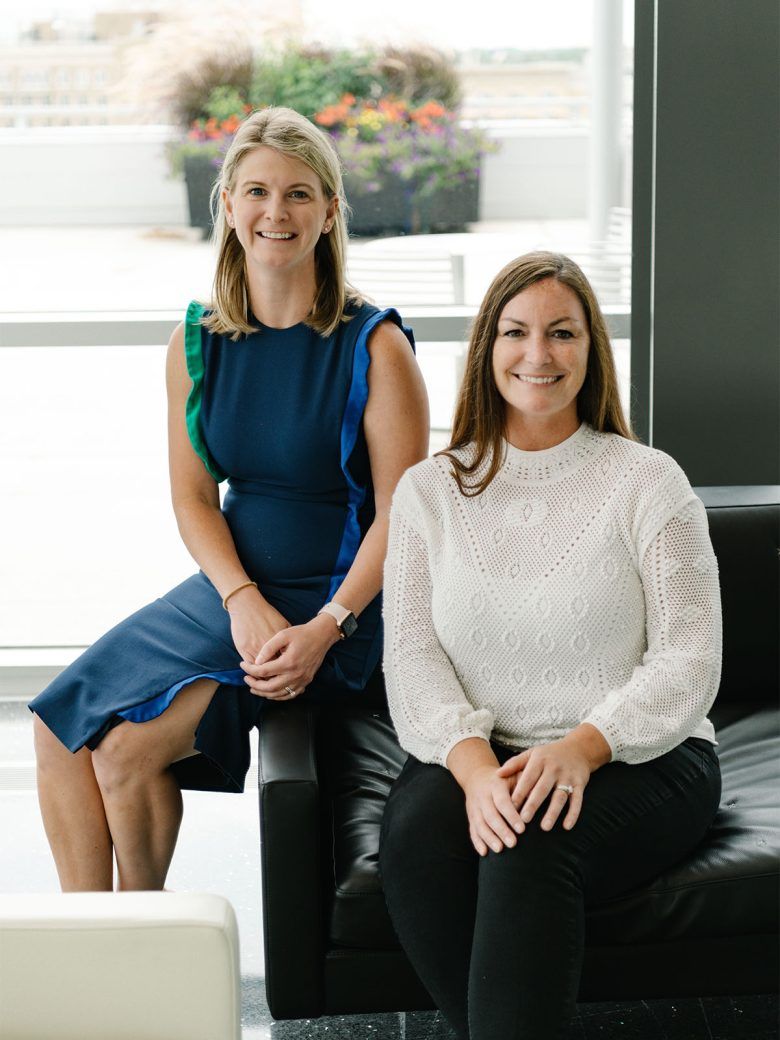
Megan Bennett and Kara Kelley knew the agency before they owned it. Useful when the renovation plan is mostly: keep the load-bearing walls.
The house by the river
Tim Borne founded the business in 1974 with one client and a government-relations brief. The agency grew into media and creative work from a Victorian house near the St. Marys River, then added reach through acquisitions and offices beyond northeast Indiana. Borne’s brother Tom helped manage that expansion. By the time Tim died in 2017, Asher’s public account of his career described 65 employees, multiple offices and more than $55 million in annual sales - a figure that included the large volumes of media the agency placed for clients.
That last distinction matters. An agency can look enormous if every purchased television spot passes through the top line. The more revealing measurement is what the staff can coordinate. Asher says its traditional media team has placed advertising in every US market and several countries. Its current footprint includes Fort Wayne, Carmel, Charleston and Washington, DC, plus remote staff. At its 50th anniversary in 2024, local reporting counted more than 40 employees and more than 100 clients.
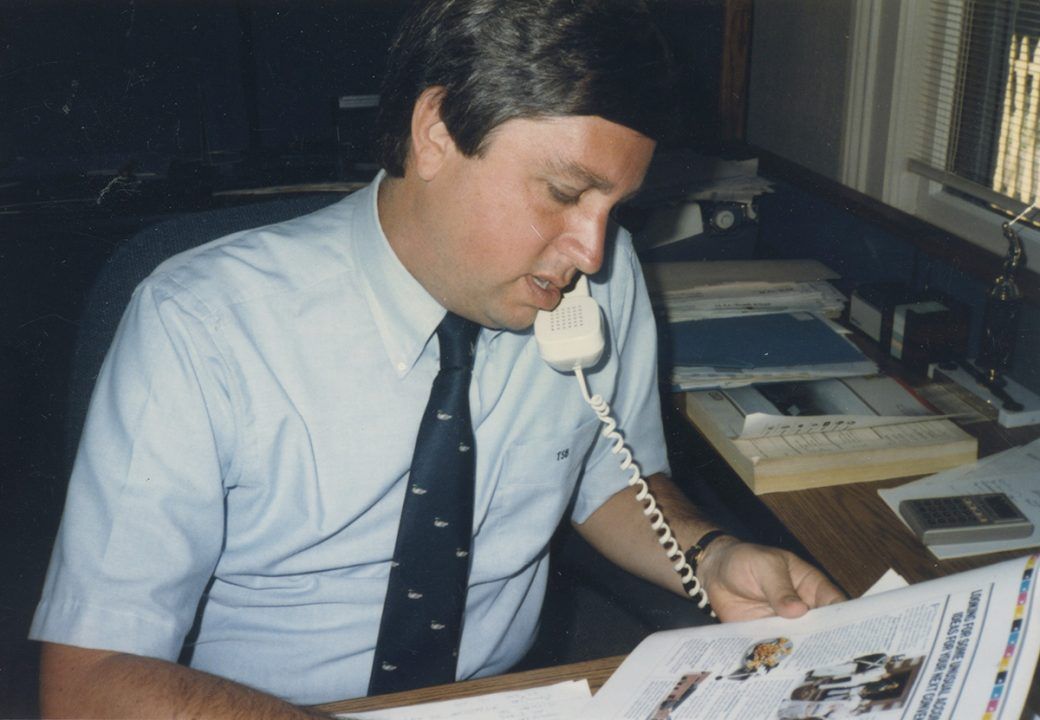
“Some clients have been with us for 30+ years.”Kara Kelley on trust, transparency and communication
The company’s position is unusual but legible. It is not a tiny local studio and not a global agency network. It sells the coordination of an integrated shop - account strategy, creative, media, digital, web, social, video, public relations and public affairs - with the local fluency of people who know that a franchise system is not one audience. It is a hundred operators, neighborhoods, budgets and grudges wearing one logo.
The first failure is usually an assumption
Look across Asher’s case studies and the same small drama repeats. Something stops behaving the way a client expects. Fort Wayne Community Schools saw enrollment and retention decline amid competition from private, suburban, online and home-school options. Fantastic Sams found that younger customers regarded it as a place for basic haircuts and older people. A Basecamp Fitness studio approached opening day as an unknown brand in a new market. Subway franchisees were losing the momentum of the famous $5 Footlong.
Asher’s first move is less cinematic than a brainstorm: narrow the mistaken assumption. For the school district, it identified opportunity groups and delivered English and Spanish messages. For Fantastic Sams, it let local lifestyle creators document color and styling appointments in their own voices, then paid to amplify the posts already earning attention. For Basecamp, it separated awareness, conversion and opening into three phases. For Subway, it paired a $3 daily sandwich with a $6 meal designed to protect both value perception and franchisee economics.
The media gets more interesting once the problem is precise. Anytime Fitness needed a national lead engine that still behaved locally. Asher ran paid search and social across dozens of markets, shifting creative, audiences and placements while the work was live. The campaign produced nearly 30,000 leads, reached 4.8 million unique people on Meta and finished 14 percent below its blended cost-per-lead goal.
Scooter’s Coffee presented the physical version of that puzzle. For a Candy Land limited-time offer, Asher reviewed more than 4,000 billboard locations, selected 550 that supported 624 stores, handled pricing and contracts, and got the campaign out in less than two months. It generated 245 million impressions. Scooter’s called it the best-performing limited-time offer in its history. The bright frozen drinks were the visible part. Site selection was the machine underneath.
A public-health campaign with a control group
Impressions are convenient because they arrive in large, flattering numbers. The Montana Department of Public Health and Human Services needed something harder. It wanted people to see opioid dependency as a disease that crossed demographic boundaries - and to believe recovery was possible.
Asher worked with state agencies, physicians and medical groups, then built television, digital video, outdoor, social, search and streaming media around people who complicated the stereotype of addiction. An epidemiological evaluation compared people exposed to the campaign with those who were not. About half of the exposed group strongly agreed Montana had an opioid problem, versus 31 percent of the unexposed group. Forty percent of social-ad viewers and 32 percent of television viewers said the work changed their perception.
This is the most useful answer to “what changed their mind?” The campaign did not rely on a testimonial from the agency about its own persuasiveness. It used an audience study. The creative had a thesis; the research checked whether the thesis traveled.
One accountable table
Asher earns money the ordinary agency ways: projects, campaigns, retainers and media management. It also hosts and maintains custom communication portals for a flat monthly rate, a product developed from the recurring headache of distributing approved materials through franchise systems. General pricing is private. One visible public benchmark came in 2025, when Fort Wayne approved a contract capped at $21,000 for Asher to develop messages, stakeholder material, video and public-engagement collateral around a major redevelopment selection.
The better business-model question is why a client buys several disciplines from one firm. Asher’s answer is fewer handoffs between the person who finds the audience, the person who writes the message, the person who buys the exposure and the person who reports the result. The agency’s Indiana WBE and federal WOSB certifications add another practical advantage: they can help corporations and government bodies meet supplier-diversity goals without separating the creative work from the media operation.

Give the creative a job
The portable Asher method is not a color palette or a media channel. It is a sequence. Decide what behavior should change. Find the audience for whom that change is plausible. Build the message around the obstacle. Stage the rollout so early results can alter later spending. Keep one cost or behavior metric where everyone can see it.
It only works if the organization can respond. A lead campaign will expose a weak follow-up system. Local franchise marketing stalls when operators cannot honor the offer. Optimization becomes theater when nobody agrees on the goal or allows spending to move. And a full-service agency is needless overhead when the assignment is a single, tightly specified production task. Integration has value when the problem crosses disciplines.
Kelley and Bennett changed control without pretending every operational detail needed reinvention. The most copyable decision may be the least dramatic one: know which parts of a company are assets before announcing that everything will change.
Asher’s 50-year story is easy to mistake for longevity alone. The better reading is about translation. Government relations became public affairs. Print proofs became responsive sites. A local restaurant offer became national broadcast creative. Traditional buying acquired a digital feedback loop. The agency kept changing the nouns and held onto the verb: make people do something measurable.