The property market in Azeroth has a peculiar advantage: nobody needs a mortgage. In February 2026, Zillow introduced a website for browsing homes inside World of Warcraft, complete with fantasy architecture and a very earthly urge to peek at somebody else’s decorating. We Are Royale helped make it happen. For a creative production company, that is a more useful introduction than a list of software or a reel of handsome explosions.
Zillow credited Royale and 72andSunny as partners. Visitors could explore selected homes and claim an in-game item; they could not buy a house, check a price or obtain a Zestimate. The commercial connection was easy to understand. A company associated with finding homes had found something relevant to do in a game where players were getting homes of their own.
A campaign with a front door
Royale gave the experience two fictional agents, Hazyl and Bek’tar, developed with Zillow and Blizzard. Their personalities shaped the listings and tours. An interactive map connected homes to their neighborhoods and plot numbers, giving players a way to carry their curiosity back into the game. Community-built homes supplied further material as the campaign continued.
The launch also supplied a less glamorous lesson. In a public post, Michael Chen, who worked on the campaign, said fans had brought the site to a crawl and that it was back online. That is a reported slowdown, not a technical diagnosis. Still, it puts a practical edge on the phrase “fan engagement”: the thing people are invited to use has to keep working when they arrive.
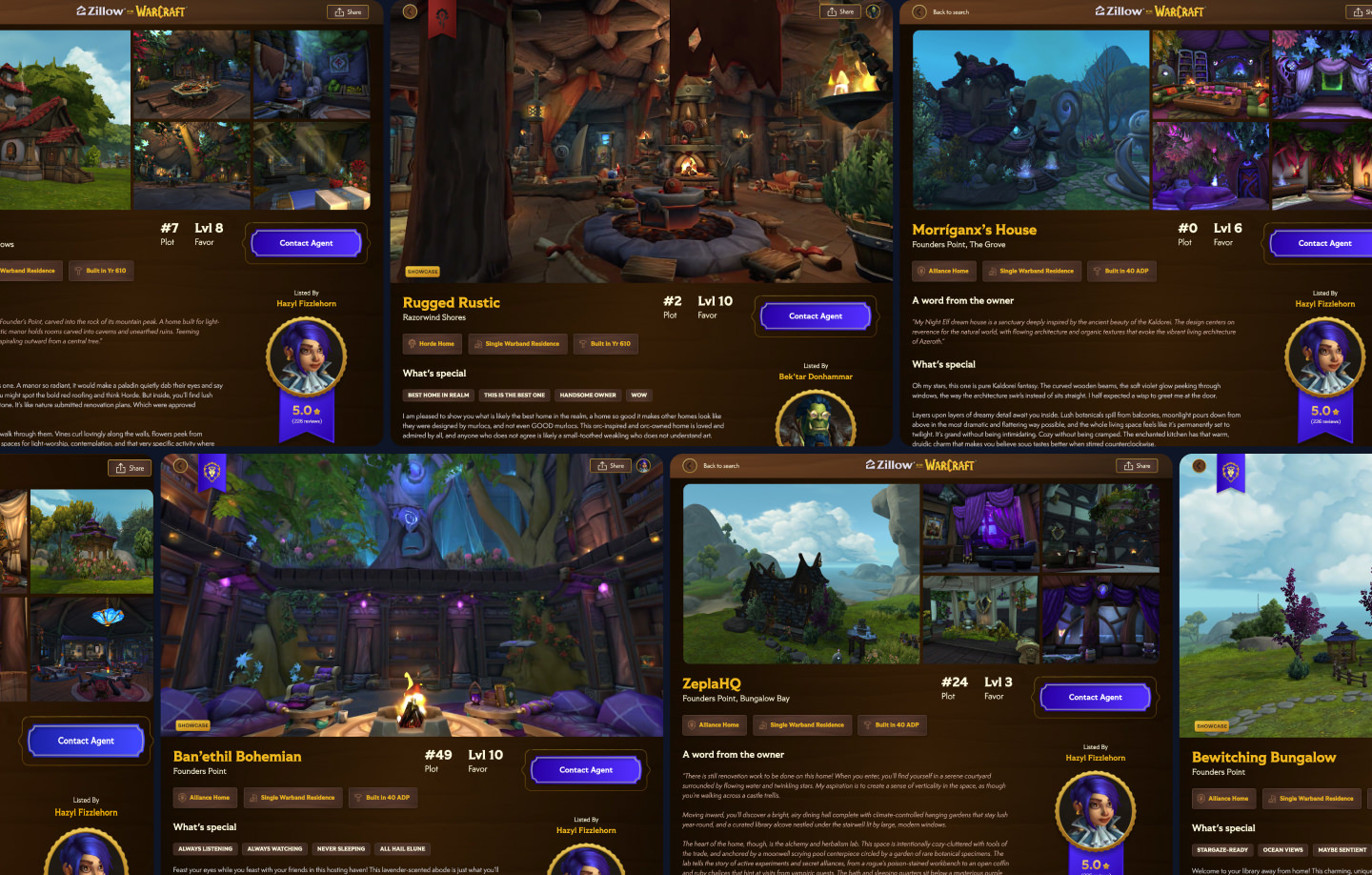
This is where Royale’s position in the market becomes interesting. Its output can resemble an advertisement, a small entertainment property or a useful website. The work is commissioned by businesses, but its success depends on whether the audience sees a reason to spend time with it. An invitation to participate carries a heavier obligation than an invitation to watch.
The travel brief that grew legs
For Square Enix’s Final Fantasy XIV expansion Dawntrail, the invitation was a vacation. Royale needed to interest current and lapsed players while making the world approachable to a broader audience. Its answer was a fictional travel campaign for Tural, the expansion’s newly playable continent, with actor Rhys Darby among its attractions.
Travel advertising offered a familiar language: destinations, things to do, local advice and the promise of getting away. Applied to a fantasy world, those conventions could carry both beautiful scenery and jokes. Royale organized the campaign in three phases, connecting its visual concept with an editorial idea across multiple formats. The pretend tourism business gave the pieces a shared reason to exist.
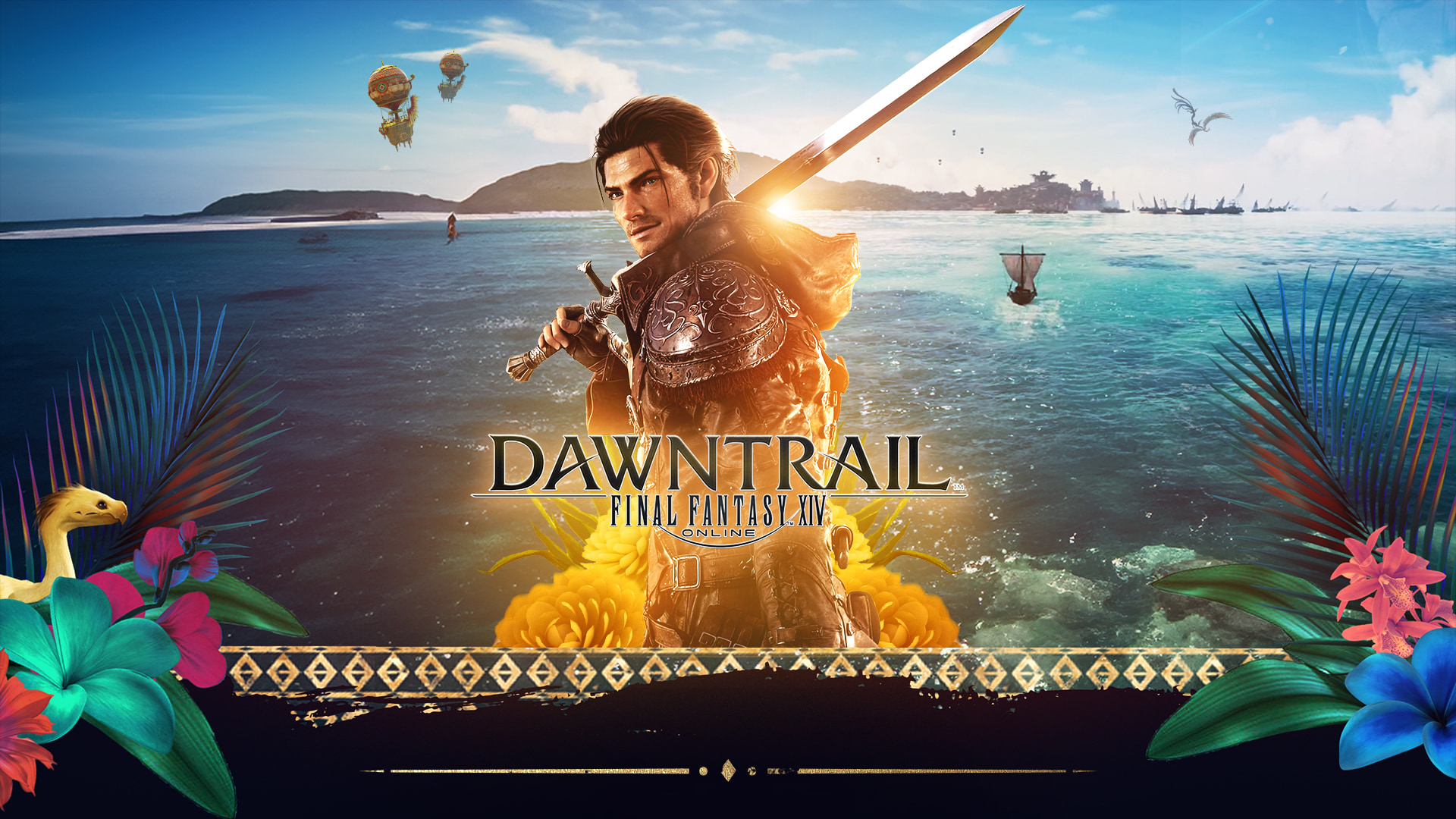
The website then outgrew its original assignment. Royale says it had considered a relatively simple microsite, but the creative platform suggested more stories to tell. It developed a fuller travel site with an alternate reality game, or ARG, built into it. That change matters: the larger production followed a specific narrative opportunity.
Give the curious something to find
Tour Tural rewarded investigation. A password-protected destination, clues hidden in content and a changing website made browsing part of the entertainment. Entering the right password triggered a glitching transformation tied to Solution Nine, a location in the game. The site could behave as though its fictional operators had lost control.
After the narrative concluded, Royale restored puzzle elements and made the takeover available for visitors to experience again, with a changed password. That decision gave late arrivals something to do. It also addressed a problem with scheduled online events: a campaign can be widely shared after its most interesting moment has passed.
A home listing.
Explore a home.
More player work.
Editorial reading of the Dawntrail and Warcraft projects, not a measured conversion funnel.
The 2025 GEMA Video Games Awards gave the Dawntrail launch campaign gold in website or microsite, with Royale’s Giant Skull brand-development work taking silver in the same category. An award establishes recognition by an industry program. The more transferable idea is the structure: start with a recognizable activity, then let the fictional world change the rules.
Somebody still has to build the sauna
Behind these elaborate invitations sits a company that knows how to produce a commercial. An earlier Final Fantasy XIV campaign contrasted the game’s free trial with gym memberships, streaming services and subscription boxes. Royale built the comedy around Roxy, an encouraging interrupter who appeared in ordinary people’s lives with an alternative way to spend their time.
The three-day, COVID-era shoot used a house and a gym. A fabricated sauna occupied an indoor basketball court. Character costumes created a harder decision: how to preserve the game’s extravagant designs without making the live-action result look silly. The Black Mage could lean on practical construction, while other characters required digital augmentation.
Royale handled the visual effects in-house, using computer-generated armor, weapons and motion capture. It delivered three sets of spots in 30-, 15- and six-second versions. Those particulars explain the business better than “content creation.” A client was buying an idea, a shoot, believable fantasy characters and finished material that could survive several advertising lengths.
One green logo, three bad places to spend the night
The studio’s entertainment work extends beyond games. For Huluween 2023, Royale and Hulu chose three horror setups: Frankenstein-style electricity, alien abduction and a creepy roadside motel. Each became a separate 3D environment that made the seasonal logo belong to its surroundings.
The result included IDs and practical graphics packages: endpages, title cards and transitions. Lighting carried the idea through the work, including composited Hulu green in promotional footage. It is a quieter kind of ingenuity than a secret password, but useful to the buyer. A seasonal identity has to keep making sense after another editor puts different programming inside it.
That repeatability is part of Royale’s appeal. A striking image can open a campaign; a coherent set of assets helps the campaign continue. The problem being solved is partly creative and partly operational: how to give many pieces the same recognizable voice without forcing every piece to do exactly the same thing.
Fans need an entrance, too
Enthusiasm for a game can become a barrier when its advertising assumes everybody already understands it. Square Enix’s Final Fantasy XIV introductory series approached the opposite problem. Royale created Kaz, a newcomer, and Mayra, an experienced guide, for a seven-part educational mini-series.
A pilot led to six more episodes. The studio wrote dialogue, designed and animated characters, illustrated backgrounds and directed voice actors. It also worked with Square Enix teams in the United States, Britain and Japan on gameplay capture, supplying branding and interface-versioning tools alongside the episodes.
The distinction between welcoming beginners and entertaining existing fans is commercially useful. Royale’s Oceania campaign addressed another audience boundary when Australian and New Zealand servers arrived in 2022. It adapted language for the two countries and delivered work across television-style spots, digital material, billboards and transit advertising. Knowing the audience meant more than recognizing a character.
Three founders, and a longer name
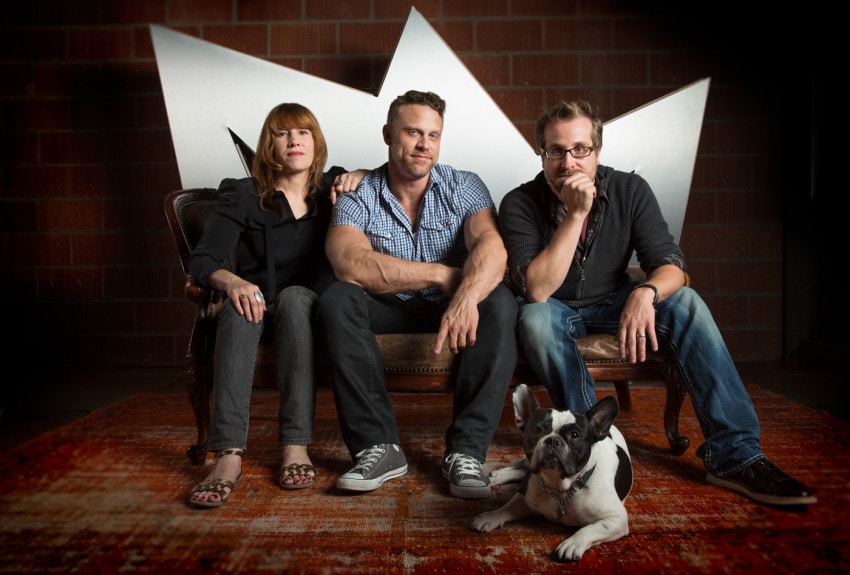
Jen Lucero, Brien Holman and Jayson Whitmore started Royale in 2007. The studio expanded to Seattle in 2013 and publicly embraced its fuller name, We Are Royale, in a 2015 identity refresh. Its current contact page lists Lucero as CEO and Holman as chief creative officer.
In a 2015 interview, the founders described growing from three people in a small Sunset Boulevard space into a studio handling larger assignments. The longer name emphasized a collective enterprise. The refresh included a manifesto with Voltron and Tom Selleck’s mustache: a reasonably efficient way to signal that the people behind the work had interests outside a conference room.
“We focus on the idea, and let design lead the technique.”
We Are Royale · 2015 manifesto
The founders also tied workplace efficiency to having a life outside the office. Current company material emphasizes experimentation and mentoring younger artists. Recruitment copy adds a more revealing flourish: familiarity with 1980s synth, and preferably Street Fighter II. The humor is consistent with a studio selling fluency in other people’s enthusiasms.
The bill is in the moving parts
Royale sells commissioned creative services to brands and their partners. Its listed capabilities bring strategy, identity, key art, filmmaking, animation, visual effects, interactive work and localization under one creative operation. Buyers can otherwise assemble that work across an advertising agency, production studio and digital specialist, or use their own internal teams.
The economic tradeoff is coordination. A connected campaign needs writers, artists, producers and developers to agree on how the same world behaves. Its scope also includes what happens after the opening film: versioning, new content and upkeep. For a buyer, counting those responsibilities before commissioning the work is more useful than treating the website as a free accessory to the commercial.
The approach needs favorable conditions. A puzzle asks for attention; an evolving site asks for continuing resources. A brand with little audience interest, a deadline that permits no testing or a one-off production budget should be cautious about borrowing the elaborate parts. A simpler execution can still borrow the underlying discipline.
Start with something the audience already enjoys doing. Give the brand a credible role in that activity. Make the first interaction understandable, then reward people who look closer. Royale’s projects make that advice tangible: a tour, a lesson, a house to inspect. The audience gets a little entertainment or help. The brand gets a reason to be there.
Enter the worlds
Explore Royale’s project archive, Zillow for Warcraft and the Tour Tural walkthrough.
Watch the Warcraft campaign video, the 2015 manifesto or more films on Vimeo. Read the Jayson Whitmore interview.
Visit the company website or follow LinkedIn, Instagram, X and Facebook.