In 2017, a masked superhero put on a wig and painted a landscape. The joke required almost no explanation: Deadpool was doing Bob Ross. A film advertisement had borrowed the patient rhythms of a television painting lesson, then let its least patient character loose inside them. You could enjoy the advertisement without having decided whether to see the movie.
- Entertainment craft, applied to films, games, and consumer brands.
- Audience insight connected to creative and production.
- A useful habit: find the conversation before writing the campaign.
Mocean helped make that teaser, “Wet on Wet,” alongside Big Picture Entertainment and 20th Century Fox. The credits matter. Entertainment advertising is a collaborative trade, and the agency’s contribution included creative direction, editing, production support, and graphics. The piece later received a Grand Clio for theatrical innovation. Its achievement was wonderfully specific: a trailer became something people could watch for its own sake.
For Mocean, the Los Angeles independent creative agency and production studio, that is a business proposition. A brand has something to sell. An audience has something else to do. The interesting work happens in the distance between those two facts.
02A teenager changes the brief
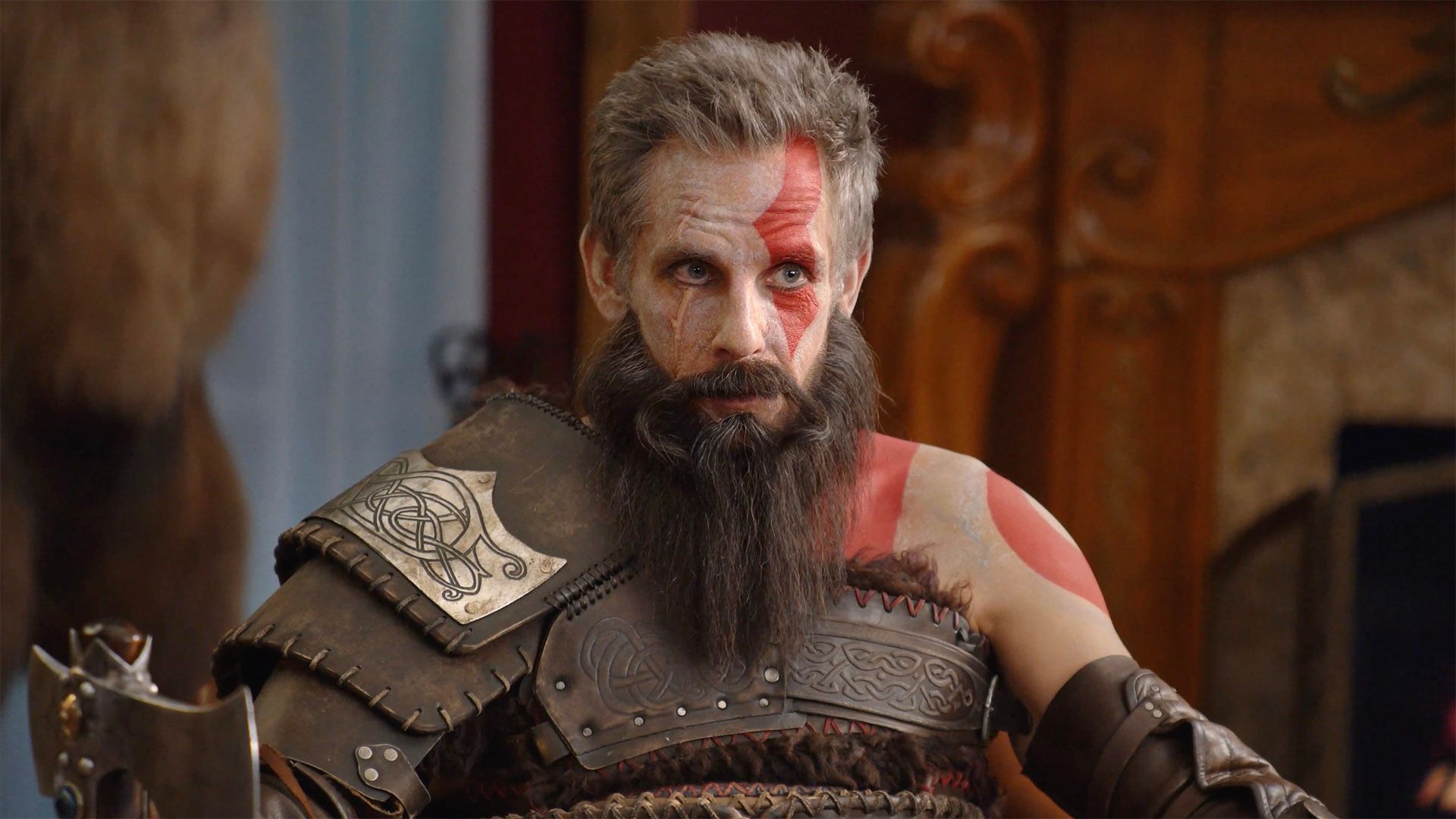
Consider its campaign for PlayStation’s God of War Ragnarök. The obvious material was combat, mythology, spectacle. Mocean’s case study describes finding another opening in fan memes about Kratos and his son, Atreus: an intimidating god was also an awkward parent. That observation changed the tone of the advertising.
The resulting campaign put Ben Stiller, LeBron James, and John Travolta alongside their children in a parenting-group comedy. It launched during the World Series, with an extended scene and versions for the celebrities’ social channels. The same underlying observation could support a broadcast spot and several more personal encounters.
The lesson is practical. Read what an audience is doing with a story before deciding what to tell it. A joke people already understand can open a door that a list of product features leaves shut. Here, the product supplied the emotional truth; the campaign supplied an unexpected way into it.
03Hollywood had a second customer
Michael McIntyre co-founded Mocean in 2000 after working in motion graphics at Craig Murray Productions. Murray had started that trailer business in 1986 and launched Mocean as part of its expansion. The company’s history therefore has two clocks: the older entertainment operation and the design-focused business established near Venice Beach.
By February 2023, Mocean said its consumer-brand business had increased 250% since 2019, citing assignments from Lucid Motors, Wynn Las Vegas, T-Mobile, The Cheesecake Factory, and Riot Games. That figure describes growth in one practice, rather than total company revenue. It nevertheless explains the attraction of looking beyond film releases.
The same announcement made McIntyre CEO and moved Murray to executive chairman. Entertainment experience had become something the agency could sell to companies whose products never appeared on a cinema screen. Today its work spans studios, streaming services, games, restaurants, and mobility. Its competition includes specialist trailer houses, social agencies, production studios, and broader creative agencies; the overlap depends on the brief.
2019 to February 2023 / Mocean announcement
04Cheesecake enters the conversation
The Cheesecake Factory offers a useful test of that expansion. Mocean’s 2026 case study describes shifting organic social content toward cultural conversations, including Love Island and Hannah Montana nostalgia. The assignment was to make a familiar restaurant feel present in the things its customers were already discussing.
The agency reports increases of 263% in impressions, 136% in engagements, and 148% in shares after the shift. Those are agency-reported changes, with no comparison period specified on the page. They describe distribution and response, rather than proving extra restaurant visits. Even with that distinction, the creative mechanism is clear: give a fan a reason to pass something along.
Waymo required a different response. Its case study describes an engagement beginning in mid-2023, when skepticism about autonomous vehicles made trust central to the brief. Mocean focused on actual rides and neighborhoods, adapting the work across platforms. A cheesecake joke invites recognition. A driverless-car story must also answer doubt. Cultural fluency means knowing the difference.
05The machinery behind the joke
In April 2026, Mocean introduced See Change, an operating model joining five practices: Strategy & Creative, Social & Community, Content Studio, Design Studio, and Post Studio. Laura Likos became president of brand; Ryan Bucci was promoted to chief creative officer of brand. The proposition was to keep an idea moving through one system from insight to completion.
Likos put the connection succinctly: “The best brand work has been borrowing from entertainment for years.” The organizational question is whether the people who understand an audience can stay close to the people who make the finished work.
MoceanFinish makes that question tangible. Its post-production specialists handle supervision, conform, color, sound design, and mixing. They describe joining projects at the beginning, planning camera workflows or managing mixed frame rates while edits develop. A campaign may need theatrical, streaming, broadcast, and social versions. Every version has its own technical demands; the joke still has to land.
This is a services business: clients commission creative thinking and the labor of making and delivering campaigns. For a buyer, the useful question is which parts of that chain belong in the assignment. Strategy, a recurring social program, and a finished trailer are different purchases, even when one agency can supply all three.
“The best finish starts at the beginning.”MOCEANFINISH


06What a marketer can steal
Mocean’s public record also includes harder changes. In a LinkedIn post about a strategic restructure, McIntyre acknowledged parting with colleagues. That admission belongs beside the agency’s recognition as a 2023 Best Place to Work for Innovators. A creative reputation does not remove the human cost of reorganizing a business.
Buyers can ask three questions: who studies the audience, who makes the work, and when will those people meet?
The transferable habit is to connect observation with execution. Find the audience’s existing language, identify the product truth it illuminates, and involve production specialists early enough to protect the idea. Measure the response without confusing attention with a sale.
The approach asks something of the client, too: room for a recognizable voice, access to the product, and willingness to participate in a conversation it cannot entirely control. A tightly prescribed message leaves less room for discovery. Mocean’s most instructive work begins when someone notices that the audience has already started telling a better story.