The heart survived the redesign. For Primary.Health, Signature Creative explored a stripped-back “P” and a wandering line drawing before returning to the symbol the client’s team already loved. The resulting mark became a colorful, layered heart, suggestive of an open book or a balloon. A company helping communities organize testing and vaccination needed to look approachable. Its designers found something worth keeping before deciding what to change.
That small decision offers a useful entrance to Signature Creative, an independent Southern California agency with Hollywood in its professional ancestry and a portfolio that wanders well beyond entertainment. Its assignments stretch from mobile experiences to luxury hospitality. The connective tissue is a practical question: how should an organization look, sound and behave when somebody actually encounters it?
The heart had earned its place
Primary.Health’s assignment involved research, a brand redesign, website development and product UX/UI. Signature reorganized website information, mapped the user journey and rewrote copy. The identity had to address institutions and individuals without sounding like two different organizations. Retaining the heart gave that work a familiar center.
There is a lesson here for anyone preparing a rebrand. Attachment is information. A familiar symbol can carry meaning that a fresh sketch has yet to earn. The useful question is whether it can stretch to fit the organization’s next chapter. In this case, the designers changed its expression while preserving its emotional role.
Hollywood, then the unpaid invoice
John Gheur and recording artist Poe co-founded Signature in 2004. Gheur had already worked in entertainment advertising; his professional history places him at DNA Studio before he started the company. Poe brought a career in music, including the albums Hello and Haunted. The founders’ backgrounds put visual storytelling and performance close to the business from the beginning.
In a September 2025 VoyageLA interview, Gheur described recognizing that consumer brands faced the same online-engagement problem as movie studios. He wanted to carry entertainment’s creative standards into other industries. The first headaches, however, were ordinary agency headaches: clients paying late. The 2008 financial crash then forced a rethink, while new mobile capabilities changed the work available.
“I chose to go with the flow instead of resisting it.”John Gheur, speaking to VoyageLA in 2025
He points to work with Qualcomm Labs, Ericsson One and DreamWorks’ Ptch as part of that evolution. Read as a business story, his account is less about one great pivot than repeated adjustments: finding a new use for existing creative skills as clients and technology changed.
A movie campaign you could carry
The Star Trek Into Darkness app made that combination tangible. Signature’s case study describes location-aware content using Qualcomm’s Gimbal technology and an audio-scanning feature that recognized promotional material. Watching movie content could become something a fan did inside a larger, rewarding experience.
The assignment crossed the boundary between an advertisement and a product. The agency describes research, technical architecture, prototyping, testing and ongoing support alongside creative assets and copy. It also lists a 2013 Hollywood Key Art Bronze award for the app. For a studio marketer, the attraction was the connection between a real-world encounter and a continuing digital relationship.
There was a less durable outcome elsewhere in the same era. Ptch, the DreamWorks-incubated video application Gheur says Signature helped build, was acquired by Yahoo in 2013. Contemporary reporting said the service would close in January 2014. An inventive interaction can outlive its original platform only as an idea. Buyers of experimental products still need a plan for ownership, maintenance and what happens to users when priorities move.
Healthcare, delivered in a box
Real Appeal, the weight-management program in Signature’s UnitedHealthcare portfolio, shows the agency working across a much broader experience. Its contribution included a member portal, mobile app, notifications, tracking tools and an at-home kit. The case study also lists 500 pages of content and 10 hours of video programming.
Those deliverables make the phrase “brand experience” unusually literal. Someone could encounter the program in a video, through a coach’s tools, on a phone or inside a package. Signature’s brief joined those pieces through communication centered on wellness and participation.
Scope reported in Signature’s case study. Deliverables describe the assignment, not a measure of clinical impact.
For an organization commissioning similar work, the useful move is to map the entire encounter before commissioning separate pieces. The email, the instructions and the interface should not require three explanations of the same service. Success depends on teams agreeing about the audience and vocabulary before the assets multiply.
A resort needs more than a monogram
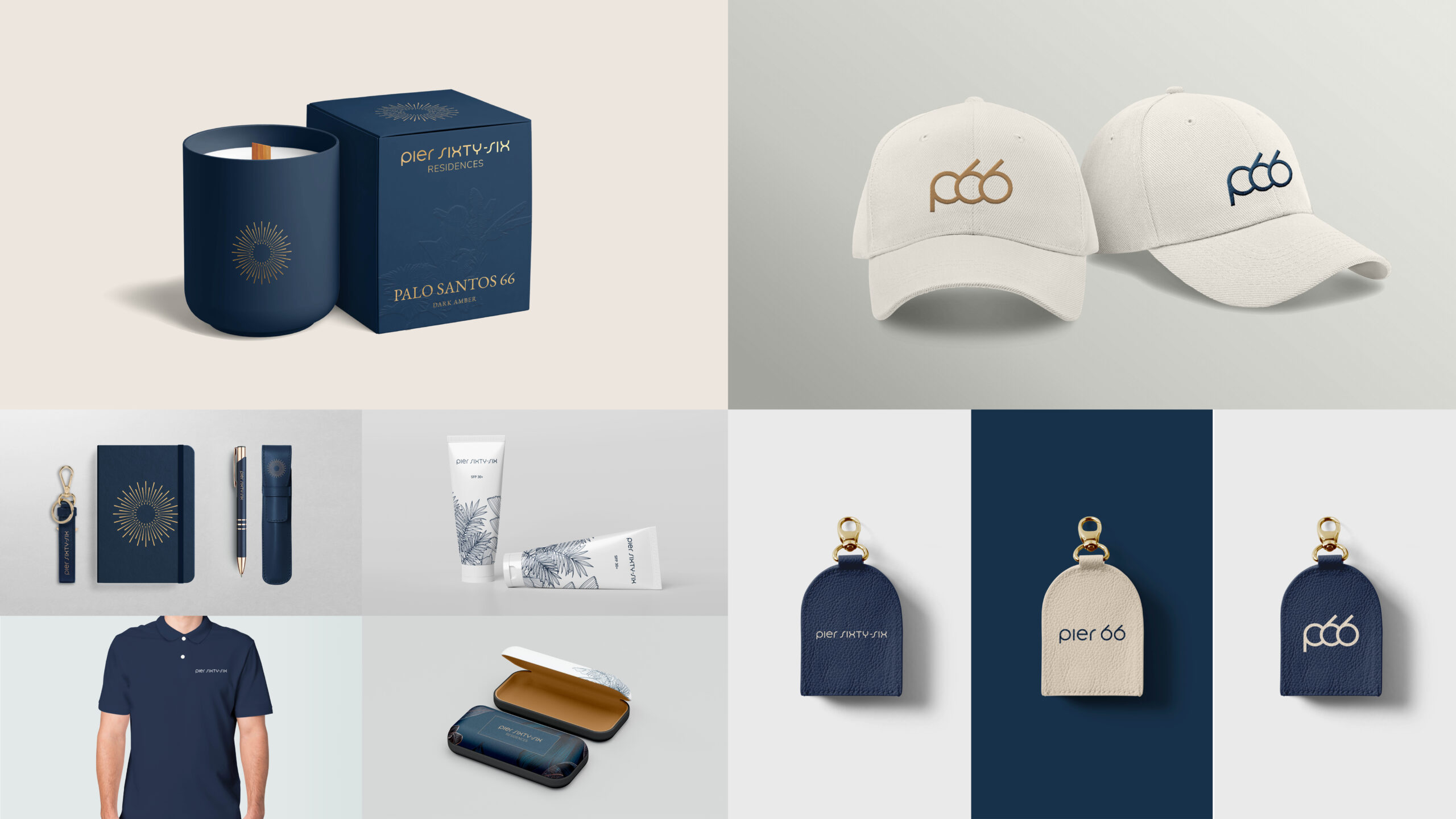
At Pier Sixty-Six in Fort Lauderdale, the problem was coherence across a destination with residences, a marina and a resort. Signature revised an existing logo and developed guidance for visual identity and tone of voice. It extended that language into websites, advertising, brochures, icons and physical materials.
The details are pleasingly concrete: property floor plans, collectible postcards, event gifts and proposals for guest-room extras. A brand system has to function at all those sizes. It should still feel related when the audience moves from a sales brochure to a luggage tag.
The separate Club at Pier Sixty-Six project takes inspiration from the tower’s silhouette, maritime history and Art Deco. Its visual language uses restrained nautical colors and custom typography; the website continues that quieter mood. This is a useful distinction inside a larger family of brands: related properties can share ancestry without having identical personalities.
Pixels, berries and the living-room screen
Signature’s Daring Ventures work heads in another direction. The venture-capital firm received a logo, identity guide and custom WordPress website, with retro pixel references, animations and bright colors. The aesthetic makes a deliberate contrast with the restraint of the hospitality projects. A studio selling judgment should be able to arrive at different answers for different clients.
Fruitist broadens the evidence again. Signature’s portfolio credits the agency with identity, character design, voice, packaging-related work, photography, communications and digital design. Selling berries puts the brand into a purchase context very different from selling a resort residence. The package and the website still need to tell a recognizable version of the same story.
For Ericsson One Ventures, the work included a console interface intended for viewing from across a room, a companion mobile app and communication guidelines. Signature also describes helping international sales teams localize materials. That brings the glamorous design question down to an operational one: can people elsewhere use the work correctly?
This breadth places Signature between a branding studio and a digital product consultancy, with campaign production in the mix. Its appeal to a buyer is continuity across those disciplines. The alternative is to assemble specialists independently, or combine an internal brand team with outside development. That can work well too; the tradeoff is who takes responsibility for the seams.
The price of bringing it together
Signature’s current homepage offers senior advice on positioning, naming, brand architecture and creative direction through retainers or sprints. Its broader services cover design, websites, mobile applications, ecommerce, content and immersive experiences. The commercial model is client work, with several ways to define the engagement.
Public listings give buyers a preliminary sense of scale. Gheur’s Behance profile advertises digital services from $10,000 and branding from $20,000. DesignRush lists a $10,000-$25,000 minimum-budget range and a $200 hourly rate. These are advertised indications, not the bills for Primary.Health or Pier Sixty-Six, and a scoped proposal determines the actual fee.
The sensible buying question is what the assignment includes. A positioning sprint, a complete identity system and an application build involve different commitments. Put research, revisions, development, content, approvals and ongoing ownership into the conversation early. A useful budget compares defined work with defined work.
A gallery in the agency’s orbit
The company describes a multidisciplinary, multilingual team and encourages staff to speak up in client meetings. Its expertise page says its people average 15 years of experience in at least two disciplines. That is the company’s own account of its staffing proposition: small senior teams, with a wider creative network available as scope grows.
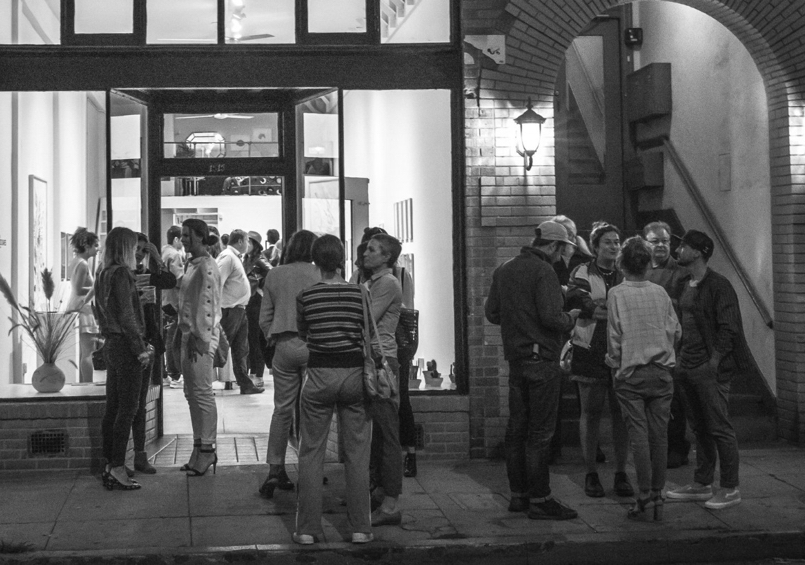
Its cultural life has a specific address in the story, too. SHOW Gallery was created by Poe and Gheur with curator Margot Ross. Signature’s About page describes a gallery and sound space that grew from a pop-up and ideas lab. The gallery presents local and international artists. Even the careers copy has an appetite: applicants willing to get hot wings with John are welcome.
For a prospective client, the strongest reason to look closely is the range of finished work and the decisions behind it. The approach suits organizations willing to connect strategy with implementation and give a creative team access to both. It is harder to use when every department controls one fragment and nobody can settle the brief. The Primary.Health heart is a modest reminder of what good judgment looks like: know what people value, then make it work in the world they are moving into.