A Sheetz truck has an obvious job: get the goods to the store. In 2018, Tattoo Projects and its convenience-store client gave the vehicle another assignment. Its sides became a canvas for original artwork. The delivery route became an exhibition route. Something built to disappear into the logistics of everyday life suddenly invited a second look.
- Strategy, advertising, digital, social, and production in one agency.
- Clients span convenience stores, motorsports, consumer brands, and higher education.
- The recurring move: find something a brand already owns and give people a new reason to care.
That is a useful introduction to Tattoo Projects. Founded in Charlotte in 2006 by Rudy Banny and Buffy McCoy Kelly, the agency works on the awkward space between having something worth selling and getting someone to notice. Its tools include positioning, design, websites, social content, and film. The interesting part is how those tools meet a particular problem.
01 / The truck hiding in plain sight
The Sheetz Fleet Art Project began with an audience that already cared. A call for entries attracted 130 artists across the chain’s six-state footprint. Eleven works were chosen, then applied to more than 100 trucks. Tattoo also produced artist profiles, a microsite, and merchandise featuring the designs. Merchandise proceeds supported Sheetz For The Kidz.
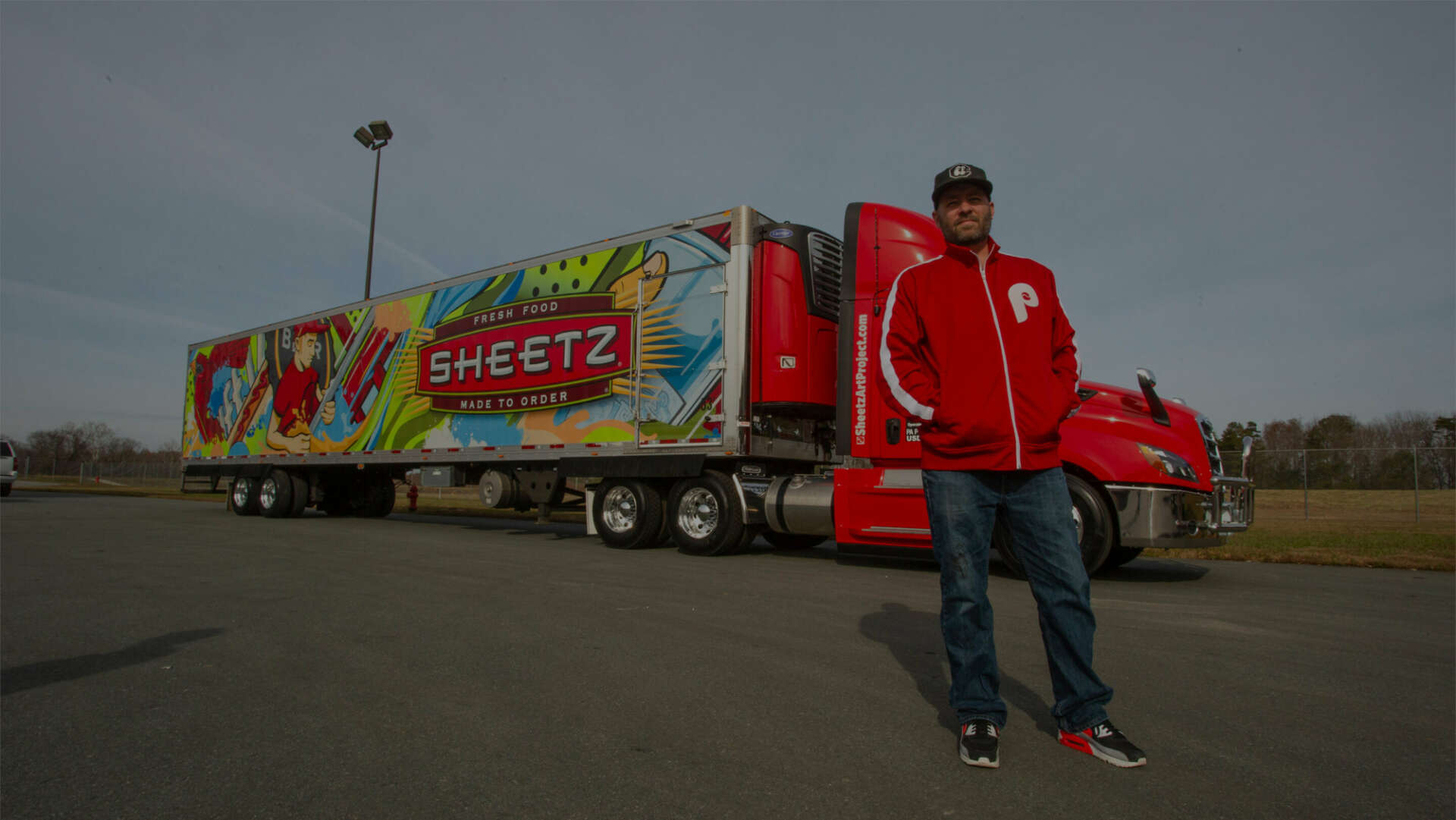
The sequence matters. The trucks supplied visibility. The artists supplied personalities and stories. The website supplied somewhere to go. Merchandise supplied something to buy, with a charitable purpose attached. Each piece had a job. A marketer could borrow that sequence for a different asset, provided there is an audience willing to participate.
- 01FleetBe seen
- 02ArtistsGive it a voice
- 03Films + siteFollow the story
- 04MerchandiseSupport the cause
Another Sheetz assignment faced a smaller, stubborn obstacle: the phrase “gas-station coffee.” As Sheetz improved its coffee offering across more than 500 stores, Tattoo developed the Sheetz Bros. Coffee identity and “Kick in the Beanz” campaign. Cups, carafes, serving stations, infographics, and a website made the upgrade visible. The product improvement gave the advertising something specific to explain.
02 / Selling the weekend
For Speedway Motorsports, the obstacle was less ordinary. COVID-19 had interrupted live gatherings. Around the spring 2020 Coca-Cola 600, Tattoo says it assembled television, digital, and social work in two weeks. The campaign addressed fans watching from home. Stickers and a winner-prediction giveaway gave them ways to join in.
The agency reports 70% ticket-sales retention during the pandemic, a 234% increase in overall impressions, and a 276% year-over-year increase in engagement. Those are different measures, and none by itself proves that advertising caused a ticket purchase. Read together, they describe the agency’s account of preserving a fan relationship while normal attendance was disrupted.
Different measures; no common denominator or sales-attribution method is published in the case study.
Its later racing work asks a different question: who has not come yet? For the EchoPark Automotive Grand Prix in Austin, the agency targeted residents and first-time fans alongside the committed racing audience. “Keep Austin Wheeled” borrowed from the city’s creative identity, including a custom typeface. A race could be marketed as a weekend people wanted to share with friends.
03 / A degree of clarity
Then consider a graduate degree. Duke Sanford School of Public Policy asked Tattoo to clarify its offerings as applications approached for its Master of Public Affairs. Here, attention depended on helping prospective students understand an educational choice. The agency positioned the MPA around experienced practitioners advancing their careers and contributing to their communities.
The messaging and design ran across digital, social, billboards, and print. The framework then extended to three additional graduate programs. This is the less photogenic part of brand work: making related offerings intelligible together. For a marketing team with several products, a shared structure can make each subsequent launch easier to explain.
These assignments put Tattoo among integrated agencies serving client marketing departments. A buyer could instead hire separate strategy, web, social, and production specialists, or assemble the work internally. Tattoo’s proposition is coordination: the people defining the idea also have access to the people building its website, filming its story, and distributing its content.
04 / The people who make it repeatable
That proposition needs machinery. Tattoo Content Studio describes a 30-by-30-foot cyc wall, cameras, lighting, and crews scaled to the assignment. Its work spans photography, editing, animation, and video. The wider agency sells projects and continuing agency-of-record relationships. Its inquiry form spans budgets below $25,000 to above $300,000. Those are planning brackets; a buyer still needs a scoped proposal covering deliverables and production.
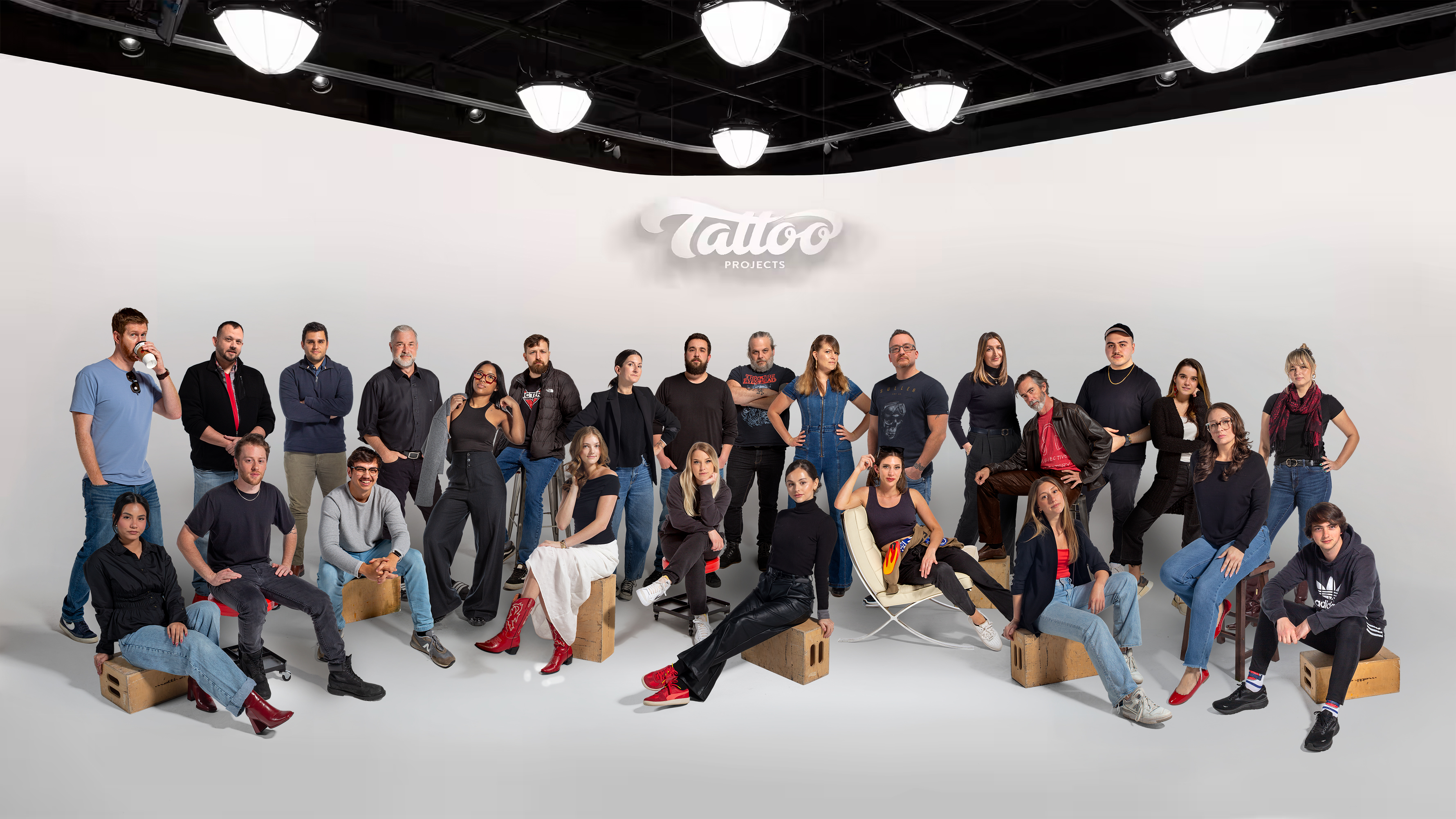
The organization has also had to survive change. After Banny’s death, McCoy Kelly helped arrange the next leadership chapter. Her 2021 departure announcement described departmental restructuring, new hires, and work on the building and studio. The current team lists Chad Brophy as chief creative officer and partner, alongside partners Andrew Hagopian and Scott Smith.
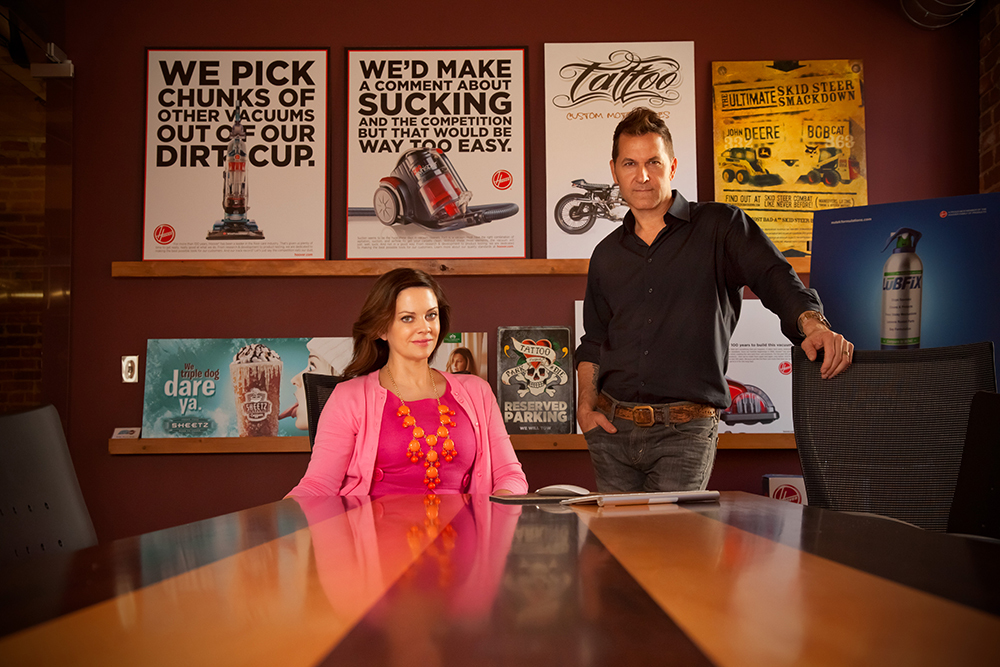
The agency’s published culture puts it neatly:
“Burn bright. Don’t burn out.”
Tattoo Projects / culture statement
Its Internship Academy gives that aspiration a concrete cost. The published model combines paid client work, portfolio assignments, benefits, and mentorship. Tattoo estimates six months of salary and benefits at about $20,000 per intern. Some mentor compensation is tied to intern outcomes. Training becomes an expense the business acknowledges and an outcome someone owns.
The lesson a reader can use is modest: inventory what already exists before commissioning something new. A truck, a fan community, or a complicated program list may contain the brief. The approach needs a credible product, an audience, and the ability to deliver on the promise. Otherwise, a more noticeable truck is simply a more noticeable truck.