There is a moment in every movie campaign when the glamorous work is supposed to be over. The photograph has been chosen. The title treatment has been debated into submission. Someone important has finally approved the key art. The image is done - except, of course, that it is nowhere near done.
It must now become a billboard, a trade ad, a newspaper placement, a phone banner, a desktop takeover, an email, a social post, a motion unit, a presentation slide and perhaps a box set. The billing block cannot become illegible. The actor’s face cannot disappear beneath a crop. A legal line must remain legal. Every platform has a different specification, and the deadline retains the cheerless confidence of a train timetable.
That troublesome interval - between the approved rectangle and the campaign that actually appears in the world - is where Bravo Design has made a business. From Burbank, the privately held design and production shop serves entertainment marketers with key art, adaptive creative, print, digital, motion, web and packaging. It is the sort of company whose best compliment is not necessarily “visionary.” On its own site, a client calls Bravo “the most dependable creative we work with.” Another says a short-timeline campaign would not have happened without the team. Those lines reveal the product more clearly than a trophy shelf could: fewer emergencies.
The multiplication problem
In ordinary conversation, “resizing” sounds trivial. Drag a corner, export a file, go to lunch. In entertainment advertising, adaptation is a sequence of judgments. A theatrical one-sheet is tall; a leaderboard banner is absurdly wide. The focal point shifts. Type that felt cinematic at 27 inches turns to dust on a phone. Motion creates time, which creates a new hierarchy: what does the viewer see first, and what survives if they look away after two seconds?
One look, many obligations
key art
The creative idea stays recognizable. Composition, emphasis, typography and technical delivery keep changing.
Bravo’s range matters because handoffs are expensive. A concept agency can invent the look, a production shop can version it, a motion team can animate it and a web studio can build the landing page. But each transfer introduces translation: new people learn the campaign, find the files, interpret the rules and ask the questions everyone thought had already been answered. Bravo’s pitch, implicit in its service list, is continuity. The same shop can move from idea to deployment without treating each format as an unrelated errand.
This is also why its market is narrower than “graphic design.” Bravo sits inside entertainment’s peculiar machinery. A public recruiting brief asks candidates to know awards advertising for the Oscars, Emmys, Tonys and Grammys; to handle billing blocks; and to follow client rules for fonts, files and data security. Those details are not decorative expertise. They are the little gates through which a campaign must pass before anybody sees it.
We couldn’t have done this campaign in such a short timeline without you.Client testimonial published by Bravo Design
A company named after the other founder
The origin begins before the company by almost three decades. In the early 1970s, Dan Arriola took what was meant to be a summer internship in Hollywood before entering the fire academy. The temporary job kept going. In 1974 he met Ramon Buensuceso, whose middle name was Bravo. They worked together for 27 years, long enough to accumulate the tacit knowledge that never fits inside a process manual: who needs which file, which detail is likely to bounce back, when “final” means final and when it very much does not.
In 2001 they formed Bravo Design. The name came from Ramon, not the cable channel - a distinction the company now makes with a small, earned wink. Dan’s youngest son, Daniel, joined after college in 2006. When Ramon retired in 2018, Daniel assumed his ownership role. Bravo describes the resulting arrangement as a father-son-and-dog-owned business.
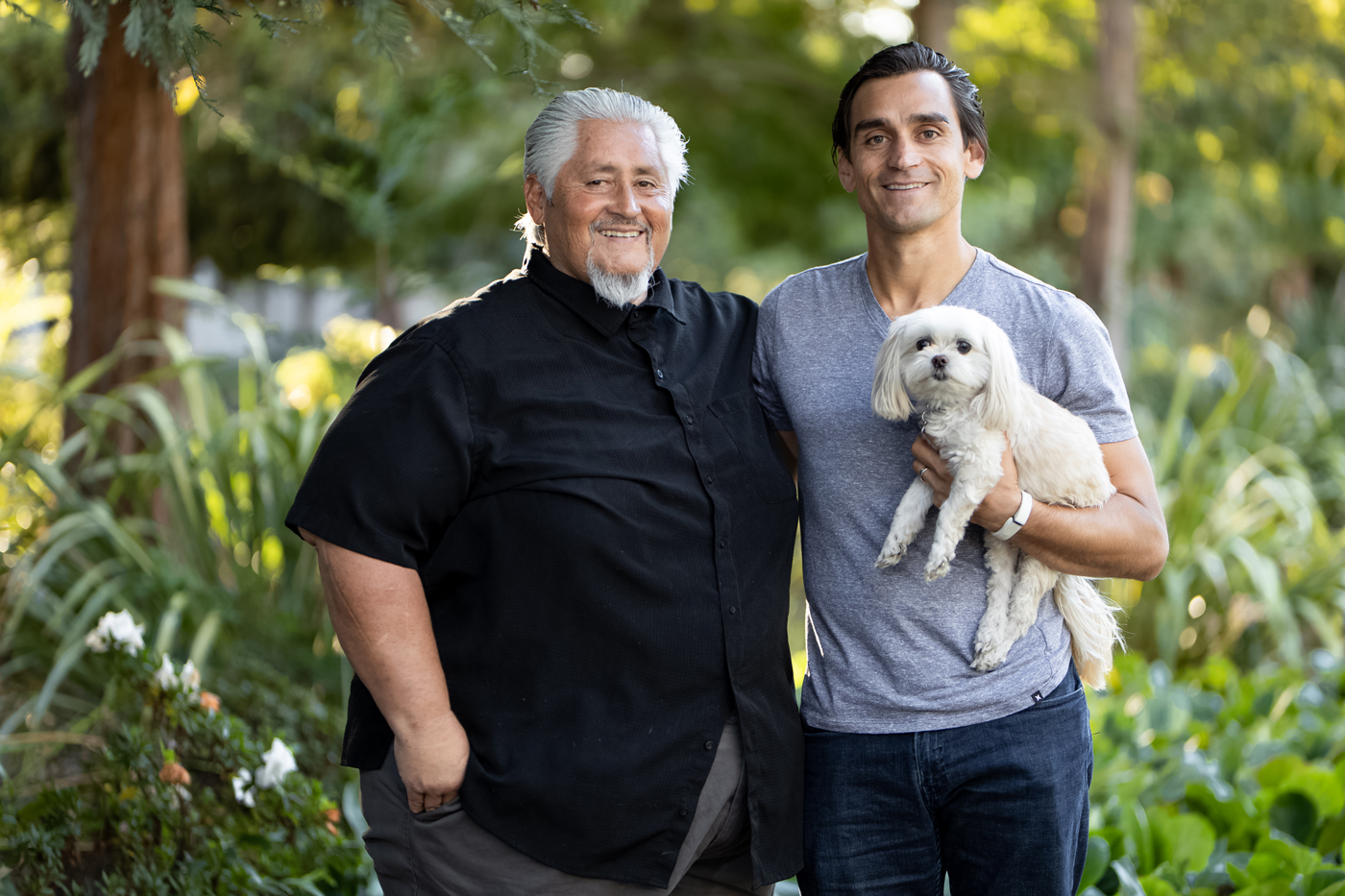
The joke works because the company is small enough for family ownership to mean something operational. LinkedIn places Bravo in the 11-to-50-person range. Supplied business data estimates about 17 employees. This is neither an individual designer with a laptop nor a network agency with floors of account management. It is a compact specialist that can remember how a client works.
From production shop to broader creative partner
Bravo did not begin with its current breadth. A former director, Heather Valle, describes helping start a creative division in 2014 inside what she calls a Burbank print-production studio. That is the useful hinge in the company’s story. Production gave Bravo a close view of where ambitious ideas become troublesome. Adding creative services let it move upstream without abandoning the discipline downstream.
The service spectrum
Today, Bravo advertises six digital lines - social content, web and mobile banners, email graphics, motion graphics, presentation decks and web design - alongside four print lines: adaptive production, key art, outdoor and publication ads, and specialty books and packaging. Public directories connect its work to Joker, Just Mercy and Ford v Ferrari. Its site displays Warner Bros., 20th Century Fox, Lionsgate and Paramount marks; another longstanding design directory lists Sony Pictures as a client too.
The business model is straightforward professional services: entertainment companies commission projects, and Bravo supplies creative and production labor. The more interesting economic fact is repetition. A film title changes, but the multiplication problem returns. Every launch, home-entertainment release and awards push produces another family of assets. Learn the protocols once, perform reliably, and the next assignment begins with less friction.
Dependability as a creative position
Creative firms like to describe themselves with the language of disruption. Bravo’s public vocabulary is more grounded: dedication, teamwork, thoroughness. Its job description rewards people who anticipate problems, accept feedback, work accurately and remain flexible when deadlines become unpredictable. That may sound unromantic until you imagine a campaign with a national media buy and the wrong export in the folder.
The company’s difference is not that competitors cannot make a banner or design a deck. Full-service entertainment agencies, in-house studio teams, specialist production vendors and freelancers all overlap with pieces of Bravo’s offering. The distinction is the combination: a small, experienced team willing to move between conception and adaptation, between a handsome key-art idea and the finicky delivery work that allows it to run.
Pick a recurring bottleneck with real consequences. “Everything after approval” is clearer and more defensible than “we make great design.”
Client protocols, platform specs and approval habits become an asset when the same kind of work repeats.
Production knowledge can support original creative because the idea begins with an understanding of where it must travel.
The model weakens when work is one-off, timelines are loose, formats are few or a client mainly wants broad strategy and media buying.
In 2025, readers of myBurbank named Bravo the city’s best graphic designer. It is a modest local honor, fitting for a company that has spent a quarter-century close to the studios yet largely outside the spotlight. The finished poster may get remembered. Bravo’s craft is making sure the poster can leave the frame.