construction-tech
(51)
Once For All Is Turning Construction's Paper Chase Into a European Data Network
Construction runs on specialist subcontractors - and a heroic quantity of paperwork. Once For All is betting that the same verified record can unlock a tender, flag a weak supplier and satisfy a regulator, without being rebuilt for every job.
The Software That Makes a Building Site Show Its Work
DataScope began with gates and attendance. Two decades later, its software records the untidy choreography of people, permits, plant and deliveries - and turns a building site into something its managers can actually read.
Causeway Is Building the Operating System Construction Forgot to Ask For
Construction runs on specialist software, stubborn spreadsheets and handoffs where useful data goes to die. Causeway's bet is that the industry's next productivity gain will come from connecting what already works.

BuildOps Put a Billion-Dollar Price on the Contractor’s Messy Back Office
Commercial contractors kept hospitals cold and data centers humming while their own businesses ran on spreadsheets, texts, and software sprawl. BuildOps turned that mismatch into a vertical SaaS company valued at $1 billion - but the real test happens during the three-month slog of changing how a shop works.

Breadcrumb Followed a QR Code From Contact Tracing to Construction’s Paperwork Problem
The Melbourne startup began with pandemic check-ins, listened when contractors asked for more, and built an annual subscription around the least glamorous - and most consequential - work on a jobsite.

BiltOn Put a Face Scan at the Gate - Then Turned Jobsite Paperwork Into Risk Intelligence
Construction runs on concrete, steel and an alarming amount of paper. BiltOn starts by proving who walked through the gate, then turns the resulting trail into something contractors, safety chiefs and insurers can actually use.

HeadLight Is Turning $20 Billion of Infrastructure Work Into a Searchable Memory
Road projects generate mountains of evidence and still lose the one photo that matters. HeadLight’s field-first software turns jobsite observations into a live, defensible record - but its value depends on disciplined adoption, integration and trust.

CamDo Turned a Paraglider's Battery Hack Into a $999 Jobsite Camera - Here's What Builders Can Copy
A camera that wakes up, takes the right frame and goes back to sleep sounds modest. On a construction site, that small trick became a hardware-and-software business built around fewer site visits, cleaner project records and equipment that can stay outside for months.

Fifth Wall Built a Venture Fund With a Customer List Attached
The Los Angeles firm turned real estate's slow technology adoption into a distribution strategy: owners supply capital and operating problems, while startups bring the software, hardware and climate tools.
Reece Built a $9 Billion Business Selling the Parts Nobody Notices
A century after H.J. Reece sold hardware from a truck, his name sits atop a trade network built around an unglamorous promise: have the right part, the right advice and the right delivery ready when the job cannot wait.
ICON Is Selling the Machine That Prints the Walls
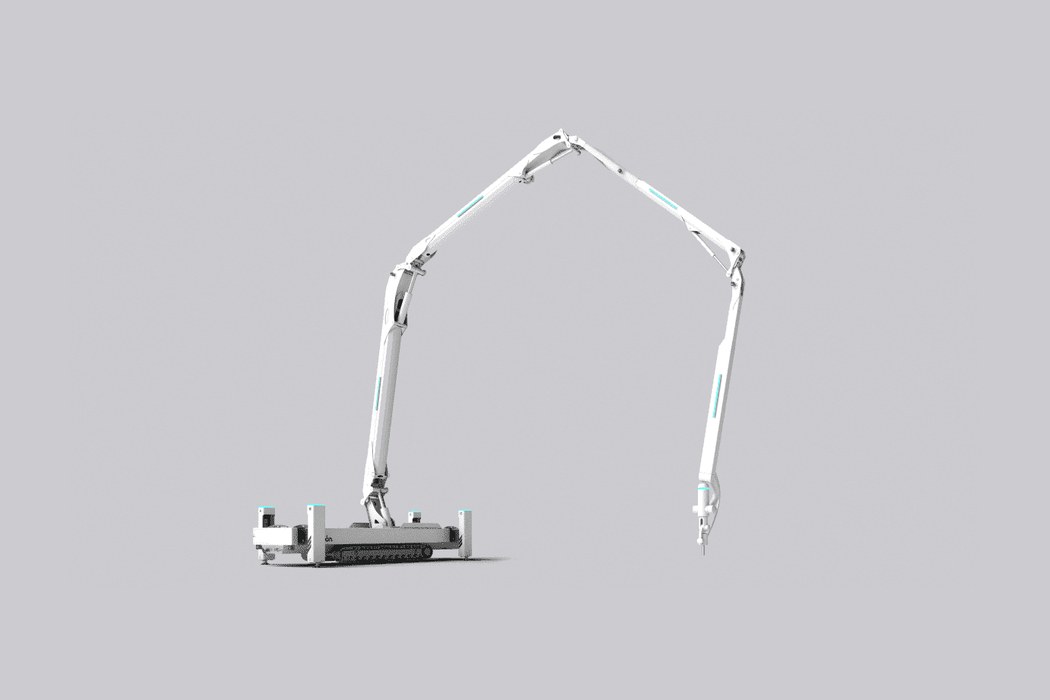
After years spent proving that a robot can print a neighborhood, ICON is putting its construction system in other builders' hands. The harder test starts now: turning spectacular machinery into ordinary infrastructure.

Procore Technologies
A carpenter who got tired of paper blueprints built the software the construction industry now runs on - and priced it so nobody has to pay per seat.
FlowManual
FlowManual is an AI platform for the back office of construction contractors. It reads specs, contracts, quotes, and invoices and automatically marks up scope, prices, deadlines, and exclusions, then compares bids against signed contracts and invoices against locked buyout prices to flag every scope change and price drift by severity and dollar impact. Founded in 2026 by Harvard dropouts David Shijoon Bae and Michael Lin, the company is part of Y Combinator's Summer 2026 batch and aims to cut the repetitive manual work of pre-construction so contractors can bid more and deliver at a higher standard.
Vobi
Vobi is a Sao Paulo-based, all-in-one project and construction management platform for small and midsize construction businesses across Latin America - contractors, remodelers, architects and engineering firms. It rolls estimating, budgeting, scheduling, a client portal, purchasing and payments (Vobi Pay) into one system, with AI agents for finance, procurement and work diaries. Backed by Y Combinator (W22) and MAR Ventures, the platform says it manages over R$5 billion in construction projects annually.

Downstream
Downstream is a Dallas-based online marketplace that lets construction contractors rent equipment, book waste hauling, and order jobsite services - dumpsters, porta potties, scissor lifts, forklifts, fencing, mobile offices - from a nationwide network of vetted suppliers. The platform delivers real-time pricing, multiple competing quotes per job, consolidated billing, Net 30 payment terms, and AI agents that read a contractor's rollout sheets or invoices to procure automatically. Founded in 2022 (originally as Trash Gurus), the company raised an $8M Series A in November 2025 co-led by Brick & Mortar Ventures and Moneta Ventures.
Trayd
Trayd is a New York-based back-office operating system built for specialty trade contractors, unifying payroll, HR, compliance, scheduling and real-time labor tracking in one platform. It automates the hardest parts of construction pay - union rules, Davis-Bacon prevailing wages, multi-state taxes and certified payroll - cutting weekly processing from 14 hours to 27 minutes while giving workers earned wages days sooner. Founded in 2021 by Anna Berger and Cara Kessler and backed by Y Combinator, Suffolk Technologies and White Star Capital, Trayd has grown revenue 600% year over year.
Autodesk
Autodesk is a design and make software company whose tools power the buildings, products, movies, and infrastructure of the physical world. Best known for AutoCAD, the company now spans architecture, engineering and construction (Revit, Civil 3D, Forma), product design and manufacturing (Fusion, Inventor), and media and entertainment (Maya, 3ds Max, Arnold). With roughly $6 billion in fiscal 2025 revenue and a near-fully subscription business, Autodesk's stated mission is to empower everyone, everywhere to design and make anything - increasingly with cloud platforms and AI woven into the workflow.

Civ Robotics
Civ Robotics builds autonomous ground robots and software that automate the slow, error-prone work of construction layout and land surveying. Its flagship CivDot robots mark thousands of survey coordinates per day at millimeter accuracy - up to 8x faster than traditional survey crews - letting a single operator stake out solar farms, roads, airports and earthworks without specialized surveying expertise. Founded in 2018 and based in San Francisco with roots in Tel Aviv, the company has deployed over 100 robots across 40+ countries and marked more than 10 million coordinates.
OneCrew
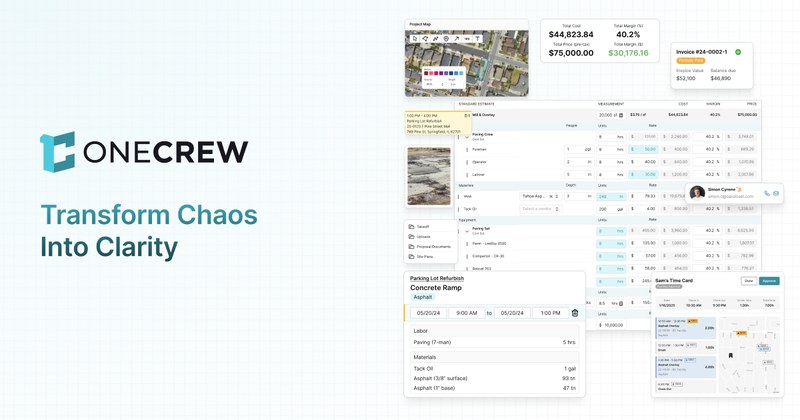
OneCrew is a San Francisco vertical-SaaS startup building the all-in-one operating system for asphalt and concrete paving contractors. Its platform stitches together CRM, estimating, scheduling, dispatch, field data entry, job costing, invoicing, integrated payments and a customer portal so paving businesses can run everything from lead to invoice in one place. Founded in 2021 by Ari Bleemer and Max Kostow, OneCrew has raised roughly $11.7M and reports customers seeing faster estimates and higher revenue after adopting the software.

UpCodes
UpCodes is a software company that turns the sprawling, jurisdiction-by-jurisdiction world of U.S. building codes into a single searchable, always-current platform. Founded in 2016 by brothers Scott and Garrett Reynolds, it hosts more than 5 million code sections across 1,700+ state and city codes and roughly 160,000 local amendments, updated thousands of times a month. Architects, engineers, and contractors use it to look up requirements, collaborate on compliance, and - since 2023 - ask questions of Copilot, an AI research assistant fenced into the codes that actually apply to a given project and permit year.

XBuild
XBuild is a San Francisco-based AI-native estimating platform for the construction industry, founded by former Uber and Postmates executives Jahan Khanna and Rob Moran with civil engineer Sharuk Khanna. Its agentic, chat-based system turns measurement reports and site photos into standardized, editable, code-compliant estimates in minutes. After launching an insurance-focused estimating product in 2025, XBuild says it has run 15,000+ projects representing roughly $250M in construction value and saved contractors 40,000+ hours. In January 2026 the company raised a $19M Series A led by N47, with Rackhouse Ventures and Andreessen Horowitz, to expand from roofing into concrete, painting, HVAC, plumbing and other trades.

AIMHI Construction App (AI meets Human Intelligence)
AIMHI (Artificial Intelligence meets Human Intelligence) is a women-led, Mindanao-based construction technology startup building the Philippines' first AI-driven, profit-first project management platform. Its Builder Suite and offline-capable mobile app give contractors, engineers, and project managers real-time clarity on costs, risks, and progress - even on remote job sites where the internet drops - helping them predict target profit early and avoid budget overruns.

Bundle
Bundle is an Oakland-based, AI-powered materials procurement platform built for design and construction teams. It lets builders and suppliers quote, buy, and manage construction materials from initial quote through delivery in a single system - offering a live catalog of 50,000+ products, multi-supplier quote comparison, delivery tracking, a reusable materials library, and automated reordering. Founded in 2021 by Stanford MBA classmates Janna Colucci and Edison Ding, Bundle targets the SMB residential and ADU segment, aiming to run purchasing 10x faster and cut material costs 10-20%.

Integrated Projects
Integrated Projects is a New York-based building-intelligence company that turns any physical building into accurate as-built digital plans. Through its IPX platform, it pairs LiDAR reality-capture (SCANIT) with machine-learning-driven point-cloud-to-BIM conversion (BIMIT) to produce standardized LOD200-LOD300 BIM and CAD files that owners, architects, engineers and contractors can view, query, measure and share in a browser. The company's pitch is simple: before you can renovate what a building should be, you have to accurately document what it is.

MiChamba
MiChamba is a Mexico-founded startup that turns WhatsApp into an operational management platform for frontline and deskless teams across Latin America and the US Hispanic market. Instead of forcing workers onto a new app, it layers AI agents - led by an assistant named MarIA - on top of the messaging tool people already use, converting informal chats into trackable tasks, reports, and productivity data. It raised a $2.25M pre-seed round in 2025 and counts Hilton, Pemex, and Repsol among 50+ customers in construction, hospitality, logistics, and industrial sectors.

Offsight
Offsight is a San Francisco software company building a project management and production platform for the offsite construction, modular and prefab industry. Its mobile-first software helps factories and specialty contractors track production, quality, materials and labor in real time - replacing the spreadsheets that engineered-to-order manufacturers have long relied on. Founded in 2014 by Vikas Murali and Andrew Xue, the company raised a $2.5M seed round and counts large builders like Performance Contracting Inc., McCarthy Building Companies and Z Modular among its customers.
Pegbo
Pegbo is a Menlo Park construction-technology startup that gives preconstruction teams AI coworkers to source, engage, and vet trade partners. Its platform searches a database of more than one million verified subcontractors and suppliers - filterable by scope, location, NAICS code, union status, and certifications like MBE, DBE, and WBE - then automates outreach, bid-coverage tracking, document collection, and compliance so general contractors and project owners can hit supplier-diversity goals faster and with less busywork.

Pirros
Pirros is an AI-powered content intelligence platform for architecture and engineering firms that lets designers find, compare, reuse and standardize Revit details and families across every project, team and office. Founded by former structural engineers Ari Baranian and Peter Johann, the Los Angeles company automatically ingests a firm's historical drawing sets and makes them searchable by geometry - no manual tagging - so designers stop digging through cluttered server folders and start reusing vetted work. Often described as 'GitHub for construction,' Pirros integrates directly with Revit and Autodesk ACC/BIM 360 and serves over 300 firms and 15,000+ users.

Roger
Roger (legally Iris Technologies) is a Salt Lake City-based construction-tech startup building an AI-powered collaboration workspace for construction project managers. By syncing with email tools like Microsoft Outlook and Gmail and layering on task boards, material trackers, and submittal logs, Roger turns the chaos of coordinating 50+ stakeholders into structured, trackable work. Its AI drafts follow-up emails, chases vendors on long-lead items, updates logs, and keeps details from slipping through the cracks - aiming to make every project run like a team's best project.

Shibusa Systems
Shibusa Systems is a Monterey, California construction-technology company reengineering how single-family homes and ADUs get built. Instead of shipping boxes from a factory, Shibusa pre-engineers every home in a digital Configurator and turns the messy jobsite into a predictable, kit-of-parts assembly it calls Precision Component On-site Assembly. The company claims it cuts build time by roughly 50%, costs by about 30%, and construction waste to under 5%, while delivering homes to Fortified Home resilience standards with low-carbon materials and no natural gas. Founded in New Orleans in 2019 and now based in Monterey, it is backed by seed funding and led by Wall Street veteran Katy Reynolds.