chiplets
(13)
The Chip Was Only the Beginning
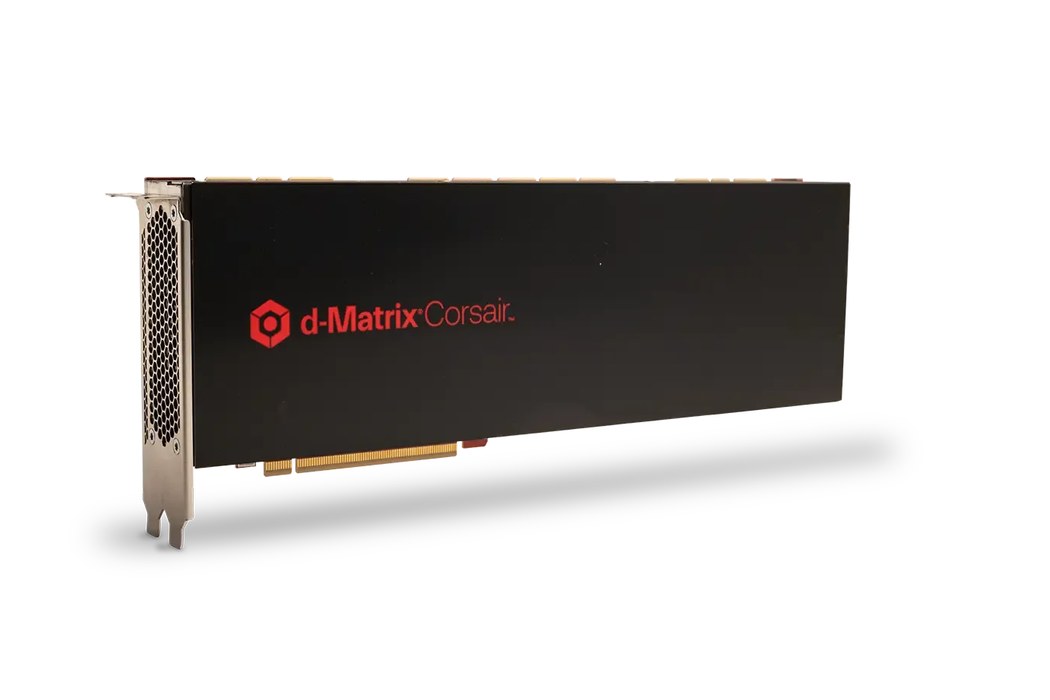
d-Matrix bet early that serving AI answers would become its own computing problem. Seven years later, the Santa Clara company is building the chips, network links, rack designs and software to solve it.

The GPU Company That Wants to Sell the Recipe
Raja Koduri has built graphics chips for some of the industry’s biggest names. At Oxmiq Labs, his wager is that the most valuable GPU might be one someone else can build.

The Most Valuable Part of the AI Chip May Be the Road Between Chips
Celestial AI wagered that the next AI crisis would not be thinking, but traffic. Five years, more than $520 million in funding and one multibillion-dollar acquisition later, the road between chips has become the main event.

Primemas Wants to Make the Most Expensive Part of a Chip Boring
Its Hublet architecture separates the clever part of a custom chip from the expensive plumbing around it. The bet is that AI builders would rather buy that plumbing once than reinvent it for every product.

Arteris Put a Tiny Internet Inside the Chip - Then Turned the Traffic Jam Into a Business
Modern chips are crowded cities, and the roads now matter as much as the buildings. Arteris turned that traffic problem into a licensing business used across more than 4 billion chips and chiplets - while learning that connectivity alone was no longer enough.

The AI Chip Company Betting the Future Won't Fit Inside One GPU
Tenstorrent is building AI computers from small, networked pieces - then opening the software so developers can see how the machine works. The wager is simple: in a market organized around one dominant GPU stack, flexibility can be a product.

The Machines That Teach AI Chips to Behave
Onto Innovation does not design the AI chip. It builds the eyes, rulers and feedback loops that help factories make those chips without wasting a fortune.
Baya Systems
AI chips are getting better at arithmetic and worse at waiting. Baya Systems is building the configurable on-chip roads - and the software map - meant to keep data moving before a costly design becomes silicon.

Movellus Inc.
Movellus is a San Jose semiconductor IP company that builds the invisible plumbing of advanced chips - the clocks, sensors, droop-response systems and on-die voltage regulators that keep high-performance silicon running fast without melting or missing a beat. Its flagship Aeonic platform reimagines traditional analog blocks as synthesizable, digital IP that can be dropped into an SoC design and ported across process nodes from 40nm down to TSMC 3nm. Founded in 2014 out of University of Michigan research, the company sells to teams building everything from ultra-low-power edge-AI devices to cloud datacenter and AI accelerators, and raised a $23M Series B in 2022.
Ferric, Inc.
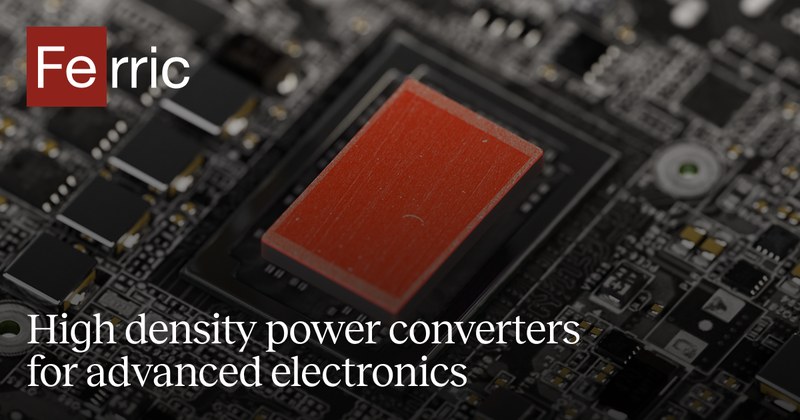
Ferric, Inc. is a New York semiconductor company that builds integrated voltage regulators (IVRs) - complete DC-DC power converters with thin-film magnetic inductors built directly into the chip. By shrinking power conversion down to silicon that can sit inside a processor package, Ferric cuts board space and bill-of-materials while improving energy efficiency, targeting the punishing power demands of AI accelerators, high-performance computing, and hyperscale data centers.
Avicena Tech
Avicena Tech builds LightBundle, a microLED-based optical interconnect that moves data between chips at terabit-per-second densities while sipping sub-picojoules of energy per bit. The Sunnyvale company is betting that the GPU clusters powering AI need a new physical layer - one that copper can't deliver and traditional silicon photonics can't match on power.
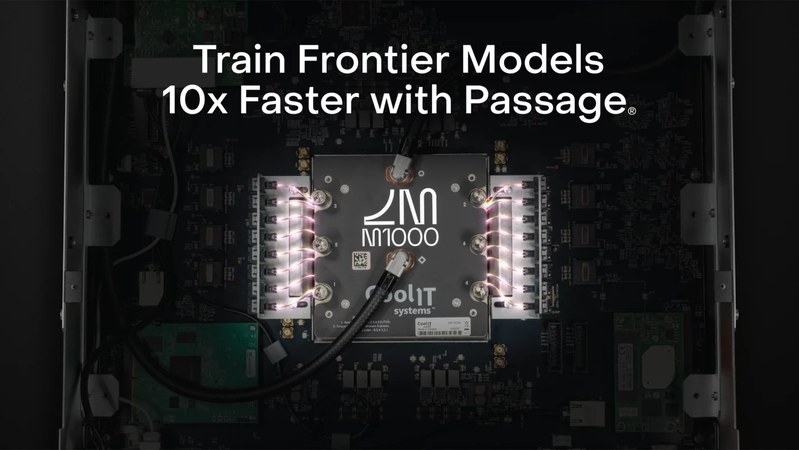
Lightmatter
Lightmatter is building a photonic supercomputer. The Mountain View company uses light, not electrons, to move data between AI chips - tackling the bandwidth and energy wall that's about to crash into the next generation of data centers. Its Passage interconnect and Envise processor aim to connect millions of chips at the speed of light.
Omni Design Technologies, Inc.
Omni Design Technologies builds high-performance, ultra-low-power semiconductor IP - the data converters and mixed-signal blocks that move information between the analog and digital worlds. Its Swift family of ADCs, DACs and analog front-ends sits inside SoCs for AI infrastructure, 5G/6G, Wi-Fi 7, automotive lidar/radar, satellite links, and quantum control, fabricated on processes from 28nm down to advanced FinFET nodes.