boston-startups
(23)
The Founder Who Quit Fixing Pitches and Started Rewiring the Room
After raising $9.6 million and still losing her first company, Allison Byers stopped treating access to capital as a pitch-deck problem. Scroobious is her attempt to turn cold outreach into useful relationships - for $30 a month, not a cut of the check.

SciAps Put a Materials Lab in One Hand - Then Sold for Up to $260 Million
SciAps began with a stubborn technical gap: the field's standard X-ray guns could not see the light elements its customers cared about. A decade of lasers, X-rays and muddy-boots product development turned that blind spot into a fast-growing instrumentation business.

The 10-Minute Robot Changeover: Southie Autonomy Wants the Line Lead to Run the Machines
Factories do not only need smarter robots. They need robots that can survive Tuesday afternoon - when the SKU changes, the labor roster thins, and nobody has time to call an integrator.

Visible Hands Is Rewriting Who Gets to Be Early
The Boston pre-seed firm does more than write small checks. It builds a scouting system, support network and regional fellowship machine around founders the venture market routinely reaches too late.

The Studio That Builds AI Companies for the Industries Silicon Valley Skips
A Boston venture studio is manufacturing AI startups for real estate, mortgages, and construction - the messy, high-barrier industries most software founders avoid. Here is how the co-founder model works.

OnRamp Wants to Own the First 90 Days of Every SaaS Deal
A Boston startup founded by two former VTS operators has raised $27 million betting that customer onboarding - not the sales demo - is where software deals are won or lost.
Sabrina Kelly
Sabrina Kelly is a people and talent leader who rose from technology recruiting to become President of Techstars, one of the world's largest startup accelerator and investment platforms. Over roughly a decade at Techstars she led People Operations globally, served as Chief People Officer, and built scalable HR functions across markets in the US and Europe. Earlier she recruited technical talent for names like Spotify, IAC, and Etsy in New York, and founded the HR function at CustomMade in Boston. She is known for an empathetic, direct, and pragmatic approach to building culture and managing distributed teams.

Irina Erenburg
Irina Erenburg is the founder, president and CEO of AVAVA, a Waltham, Massachusetts medical aesthetics company behind MIRIA, a new class of dermatology laser built on the company's proprietary Focal Point Technology. A biomedical scientist turned serial entrepreneur, she earned a PhD from the Mount Sinai School of Medicine and got her start negotiating high-value deals inside Boston's largest hospital network, where she helped shepherd startups including Zeltiq Aesthetics. She has co-founded R2 Dermatology and Soltego and, in 2024, raised $35 million to commercialize AVAVA's technology for treating skin of every tone.

Ivan Smolnikov
Ivan Smolnikov is the founder and CEO of Smartcat, an AI-powered language and content platform used by more than 1,000 corporate customers, including roughly 20% of the Fortune 500. A physicist by training, he co-founded ABBYY Language Solutions in 2004 and led it for over a decade before spinning out Smartcat as an independent company in 2016 to replace the slow, manual translation-agency model with software. He is building toward a future of work where human experts collaborate with AI teammates to unlock large productivity gains for global enterprises.

Jonathan Corbin
Jonathan Corbin is the co-founder and CEO of Maven AGI, a Boston-based enterprise AI company building autonomous agents that handle customer experience across support, sales and operations. He spent roughly two decades in customer success leadership - most recently as Global Vice President of Customer Success and Strategy at HubSpot, and earlier at Adobe, Marketo and Sprinklr - before starting Maven in early 2023 with Sami Shalabi and Eugene Mann. Under his leadership Maven has raised about $78 million, including a $50 million Series B in June 2025 led by Dell Technologies Capital, and its platform has autonomously resolved a large share of customer inquiries for enterprise clients.
Lior Div
Lior Div is an Israeli-born cybersecurity entrepreneur and the CEO and co-founder of 7AI, a Boston-based startup building swarms of autonomous AI agents to run security operations. A veteran of Israel's elite Unit 8200 intelligence corps, where he led a team that reverse-engineered hackers and earned the Head of Intelligence Corps Medal of Honor, Div previously co-founded the endpoint-security unicorn Cybereason in 2012. In 2025 he launched 7AI with longtime partner Yonatan Striem-Amit and raised a $130 million Series A led by Index Ventures, one of the largest Series A rounds in cybersecurity history.
Tanya Bakalov
Tanya Bakalov is the CEO and founder of HelloTeam, a Boston-based employee engagement and performance management platform she started in 2016. A Bulgarian immigrant and University of Delaware accounting graduate, she left Deloitte in 2005 to co-found SevOne, the network monitoring company she scaled with her husband from three people to more than 500 employees and roughly $100M in revenue before its acquisition. A 2016 EY Entrepreneur of the Year and Inc. Female Founders 500 honoree, she raised a $10M Series A led in large part by payroll billionaire Tom Golisano and is pointing HelloTeam at AI-driven employee retention.
Vishal Sunak
Vishal Sunak is a Boston software founder best known for co-founding LinkSquares in 2015 and running it as CEO for a decade, building an AI-powered contract-management platform for in-house legal and finance teams that raised roughly $161 million and grew to around 450 employees. Born in Brazil to Indian parents and raised in Rhode Island, he trained as an engineer, worked on military RF electronics, and cut his teeth in Boston B2B software at Backupify and InsightSquared before starting LinkSquares. He stepped back from the CEO role in early 2025, stayed on as a founding board member and advisor, and is now building a new, largely stealth venture called Joyride (joyride.ai).

Coach Wei
Coach Wei is a serial technology entrepreneur and the co-founder and CEO of Neural Galaxy, a brain-science company spun out of Harvard Medical School and MIT that maps the individual human brain and delivers personalized neuromodulation therapy for brain disorders. A Tsinghua University electrical engineer with an MS from MIT, he began building software at EMC before founding three venture-backed startups over two decades: Nexaweb (pioneering Rich Internet Applications), Yottaa (web performance and cloud), and now Neural Galaxy, which has raised roughly $100M including a $75M Series A. He holds six patents and was named to Boston's 40 Under 40.

Bennett Fisher
Bennett Fisher is the CEO of Pelotero, a player-intelligence platform that turns smartphone video and bat-sensor data into personalized training for baseball and softball hitters. A self-described 4X tech entrepreneur and category builder, he previously founded and exited Retroficiency (energy analytics, acquired by ENGIE Insight) and Pulsify (people analytics, acquired by Hire Technologies), and served as COO of Paceline. An MIT Sloan MBA, he now applies a career spent making messy data useful to the question of why most young athletes never find out how good they could be.

Dan Cornwell
Dan Cornwell is the founder and CEO of PrescriberPoint, a Boston-based, AI-enabled medication access platform that helps clinicians cut through the paperwork between writing a prescription and a patient actually getting their medicine. Spun out of Eli Lilly in partnership with BCG Digital Ventures, the company raised seed backing from an unusual coalition of would-be rivals - Lilly, Pfizer, Adobe and Mastercard. Before PrescriberPoint, Cornwell ran the nurse-staffing marketplace IntelyCare and advised companies on building disruptive businesses at BCG Digital Ventures. A Yale historian turned Wharton-trained operator, he keeps returning to the same problem: the messy gap between a good intention and a completed transaction.

Matthew Bellows
Matthew Bellows is a serial founder turned investor who is now Acting CEO of Averi, an AI-plus-human marketing platform in New York. He built and sold three companies - the mobile-games media bet WGR Media (to CNET), the sales-software pioneer Yesware (to Vendasta), and the digital financial-planning startup BodesWell (to American Express) - and now invests as a General Partner at Grit Capital. A longtime meditation teacher who studied Buddhist and Western psychology at Naropa, he is known for pairing hard-nosed sales discipline with a calm, mindfulness-first leadership style.

Andrew Le
Andrew Le is the co-founder and CEO of Buoy Health, an AI-driven health navigation platform he started out of Harvard Innovation Labs in 2014 after taking three years off from Harvard Medical School. A physician by training who once researched brain cancer, Le built Buoy to answer one deceptively simple question for people who reach for Google first: when do I actually need to see a doctor? Under his leadership Buoy has raised more than $66 million and reached millions of users, drawing backing from major insurers including Optum, Cigna and Humana.
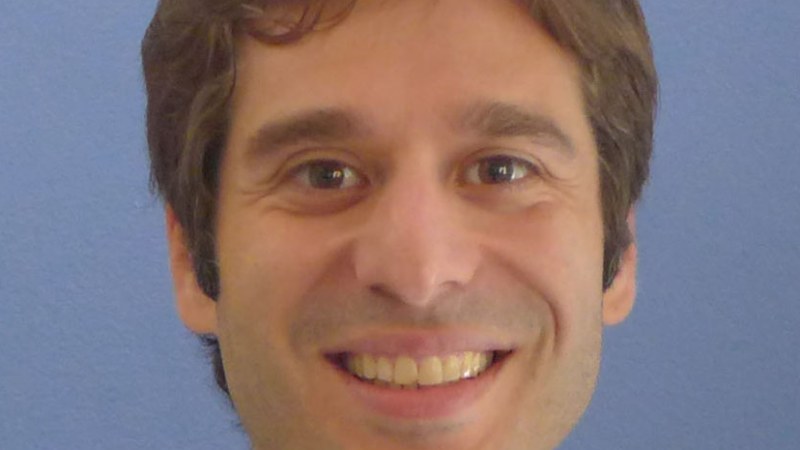
Jonah Lopin
Jonah Lopin is the co-founder and CEO of Crayon, a Boston-based market and competitive intelligence software company he started in 2015 with John Osborne. Before Crayon, he was HubSpot's sixth employee, running Customer Success from zero through the company's 2014 IPO. A Cornell physics grad with an MIT Sloan MBA, Lopin built Crayon on a simple frustration: companies obsess over their internal metrics while staying blind to what's happening in the market around them. His pitch is that competitive intelligence can be programmatic, continuous, and software-driven rather than a slide deck someone updates twice a year.
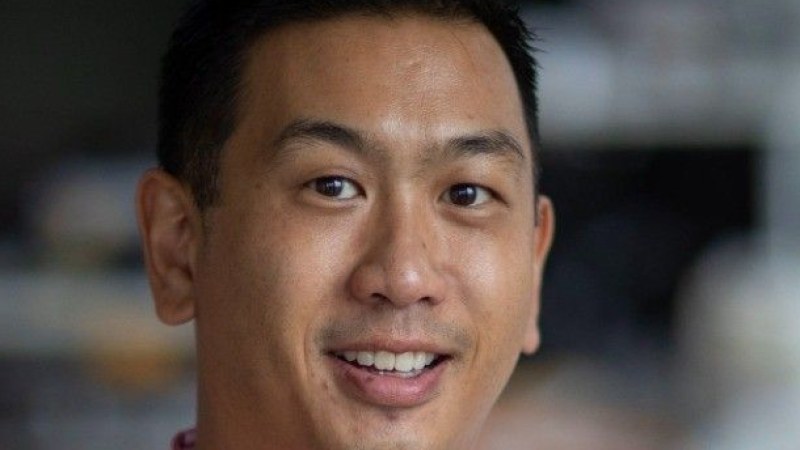
Andrew Lau
Andrew Lau is the co-founder and CEO of Jellyfish, the Boston company that pioneered the Engineering Management Platform - software that does for engineering organizations what Salesforce did for sales. An MIT-trained engineer who spent nine years running engineering at search pioneer Endeca, Lau reconnected with two former colleagues a decade later to build a tool that translates the work of software teams into language the business actually understands. Jellyfish has raised roughly $117M, tracks 600-plus engineering organizations, and sits at the center of the industry's loudest debate: how to measure what AI is really doing to software development.
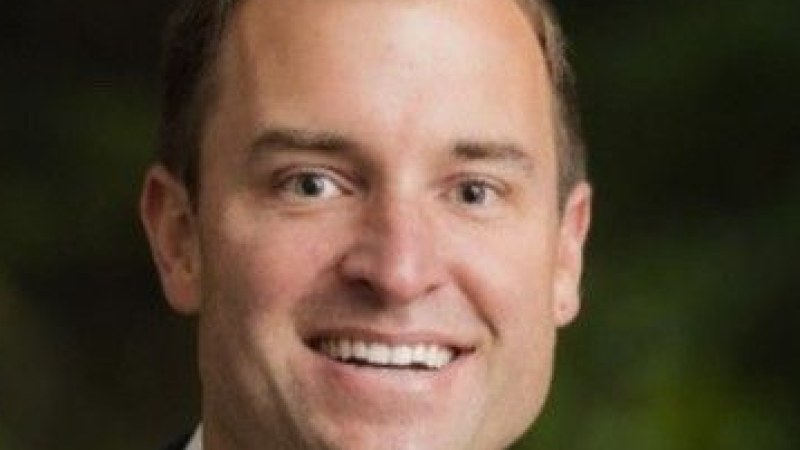
John Voith
John Voith is the CEO and co-founder of InStride Health, a Boston-based virtual specialty care company built to scale a proven hospital model for treating pediatric anxiety and OCD through insurance. A repeat healthcare entrepreneur who previously founded teledentistry company Virtudent and rose from intern to general manager at athenahealth, he pairs an operator's obsession with measurement with a mission-first conviction that evidence-based care should reach every family that needs it.
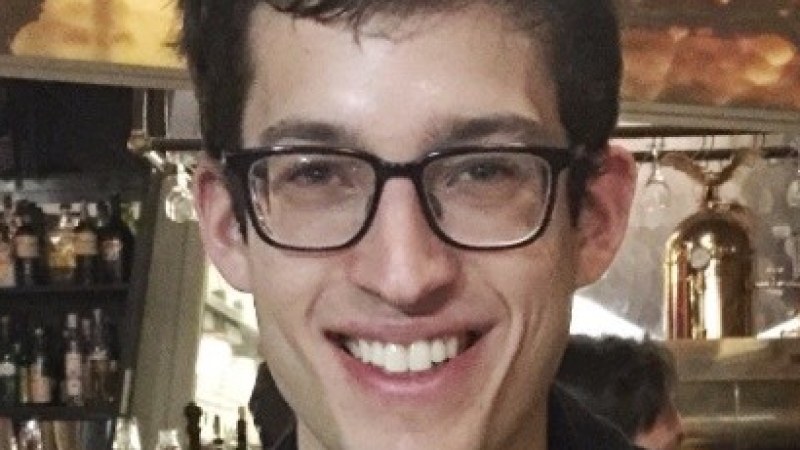
Matthew Arbesfeld
Matthew Arbesfeld is the CEO and co-founder of LogRocket, the Boston-based frontend monitoring and product analytics company he built with his lifelong best friend Ben Edelstein. The two met as one-month-old infants on a parental playdate and have been building software together ever since. A Thiel Fellow who dropped out of MIT in 2015, Arbesfeld first launched a developer deployment tool called AppHub before pivoting to LogRocket, the 'DVR for bugs' that lets engineering teams replay exactly what users did before something broke. LogRocket has raised about $55 million total, monitors billions of user sessions, and in 2026 launched Ask Galileo, an AI layer that answers plain-English questions about user experience.
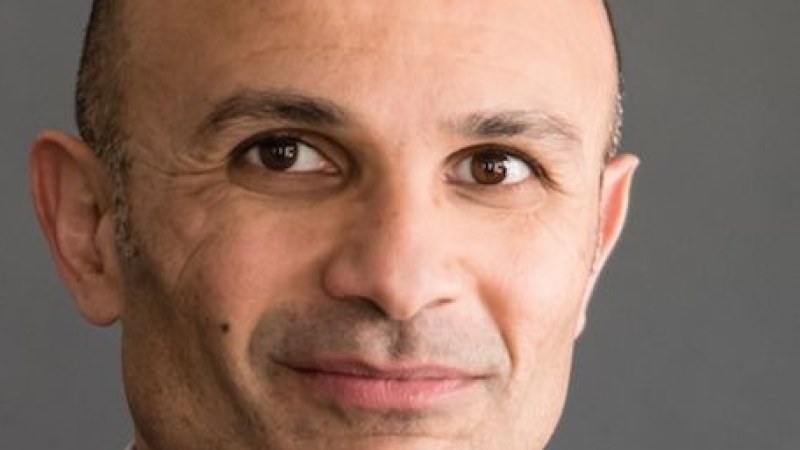
Vinay Mohta
Vinay Seth Mohta is the CEO and co-founder of Manifold, a vertical AI platform for life sciences that aims to make clinical research roughly 10 times faster and a tenth of the cost. An MIT-trained engineer who began at MathWorks and was an early team member at Endeca (acquired by Oracle) before co-founding and serving as CTO of Kyruus, Mohta started Manifold in 2016 as a pragmatic AI lab and has since rebuilt it into a product company tackling what he calls the 'Life Sciences Chasm.' He raised an $18M Series B in December 2025, bringing total funding to about $40M.