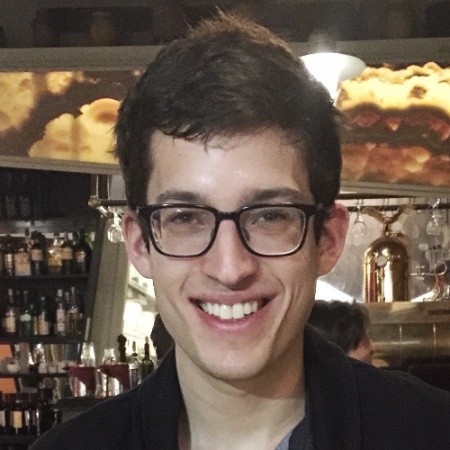
CEO & Co-Founder / LogRocket
Matthew Arbesfeld
He built the rewind button for the web with the best friend he met at one month old.
Boston, Massachusetts // Builder of session replay // Thiel Fellow
He built the rewind button for the web with the best friend he met at one month old.
Right now, somewhere, a user is rage-clicking a button that does nothing, and a support ticket is being typed in all caps. Matthew Arbesfeld built the tool that lets the engineer on the other end watch the whole thing back - every click, scroll, console error, and network call - as if it happened in their own browser. That is LogRocket, and Arbesfeld has been its CEO since 2016.
The pitch sounds simple: a DVR for bugs. The reality is a platform that, by the company's own 2022 count, expected to monitor more than 3.5 billion sessions and over 300 billion interactions in a single year. In 2026 he pointed that firehose at a new target. LogRocket launched Ask Galileo, an AI chat that unifies session replays, support tickets, and product data and answers plain-English questions about what users are actually doing. The company says it handles roughly 90% of queries about as well as a human would.
What makes Arbesfeld worth reading about is not the funding line, although there is one. It is that he kept building the same thing - tools for developers who are tired of guessing - through a string of products that mostly did not work, with the same partner he has known since before either of them could walk.
Most co-founder stories start at a hackathon or a job. Arbesfeld's starts in a stroller. He and Ben Edelstein grew up in the Boston suburbs and met as infants, on a playdate their parents arranged when the two were a month old. They never really stopped building together after that.
College split them up geographically but not creatively. Matt went to MIT to study computer science and electrical engineering. Ben went to Columbia. They kept shipping side projects across state lines. One of them, a real-time texting app called Cluck, ate a year of nights and weekends and finished with five users - a number that included Arbesfeld himself. He talks about it openly, which is rarer in founders than it should be.
In 2015 the trajectory bent. Rough Draft Ventures wrote a check, and the Thiel Fellowship - the program that pays young people to skip or leave college and build instead - accepted Matt. So he left MIT. The two went all-in on AppHub, a deployment tool for mobile developers that found real users at companies like NBC, SoundCloud, and Refinery29.
AppHub worked well enough to teach them what they actually wanted to build. While drowning in user-support requests, they kept hitting the same wall: a customer would report a bug, the developer would ask for a screenshot, and the back-and-forth would eat the afternoon. The fix, they realized one summer living together in San Francisco, hunched over a giant whiteboard, was to record everything the user did and play it back. LogRocket was born from that frustration in 2016.
A real-time texting platform. One year of nights and weekends. Five total users, the founder included. The first lesson in product-market fit by way of its absence.
A mobile deployment tool that actually shipped, used at NBC, SoundCloud and Refinery29. It worked - and it pointed straight at the next, bigger problem.
The pivot that stuck. Record the session, replay the bug. Thousands of signups off a Hacker News launch and a beta list. The third try became the company.
LogRocket's capital arrived in steps, each one funding more machine learning and more of the team. The 2022 Series C, co-led by Delta-V Capital and Battery Ventures, pushed the company toward doubling headcount and the sessions it watches.
The resume reads like a tour of places that take craft seriously. At Google, he shipped a browser API that still lives in Chrome. At Clara Labs he ran growth and lifted the trial-to-paid conversion rate by 200% in three months. He spent time in engineering at the Meteor Development Group, the team behind one of the era's most-loved JavaScript frameworks.
His co-founder is not a college roommate or a recruiter's match. They met at one month old and have been building together longer than most companies exist.
LogRocket has been called both "a DVR for bugs" and "a developer tool that sees you rage clicking." Both are accurate.
He hosts and appears on LogRocket's own shows, PodRocket and LaunchPod, talking shop with engineers and product leaders.
His GitHub handle is simply arbesfeld - no numbers, no flourish. Early enough to the platform to grab the plain version.
The createImageBitmap API he built at Google is the kind of plumbing millions of web pages use without anyone noticing. The best infrastructure is invisible.
His advice to founders is unglamorous: align teams with data, then go find your second product-market fit. LogRocket itself was the second one.
The throughline of Arbesfeld's decade is impatience with guessing. AppHub guessed at what developers needed and got close. LogRocket replaced the guess about why a bug happened with a literal recording. Ask Galileo, the 2026 launch, takes aim at the next guess: the analyst staring at hours of replays, trying to spot the pattern.
Instead of scrubbing through sessions, a team types a question - why are users dropping off at checkout, where is friction spiking - and the AI answers by reading across replays, support tickets, and product data at once. LogRocket says it gets roughly nine in ten of those questions right. That is the aspiration distilled: make understanding users effortless so software teams can get back to building.
For a founder who started with five users on an app he wrote himself, the arc has a certain symmetry. He spent years learning, painfully, what users actually do versus what they say. Now he sells the shortcut.
Make debugging and understanding users effortless by unifying session replay, product analytics and AI - so teams stop guessing why people struggle.
Same problem, same partner, three products. Tools for developers who are tired of guessing, built with the friend he met before he could talk.