BREAKING: Jellyfish tracks 600+ engineering organizations $117M raised across Seed to Series C From a team of 8 at Endeca to CEO of a category "When in doubt, make a decision" 60%+ of orgs report 25%+ AI productivity gains MIT computer science to the corner office BREAKING: Jellyfish tracks 600+ engineering organizations $117M raised across Seed to Series C From a team of 8 at Endeca to CEO of a category "When in doubt, make a decision" 60%+ of orgs report 25%+ AI productivity gains MIT computer science to the corner office
Co-Founder & CEO — Jellyfish

Andrew Lau

He spent nine years measuring engineering from the inside. Then he built the company that measures it for everyone else.

Boston, MA Engineering Management Platform Endeca Mafia MIT
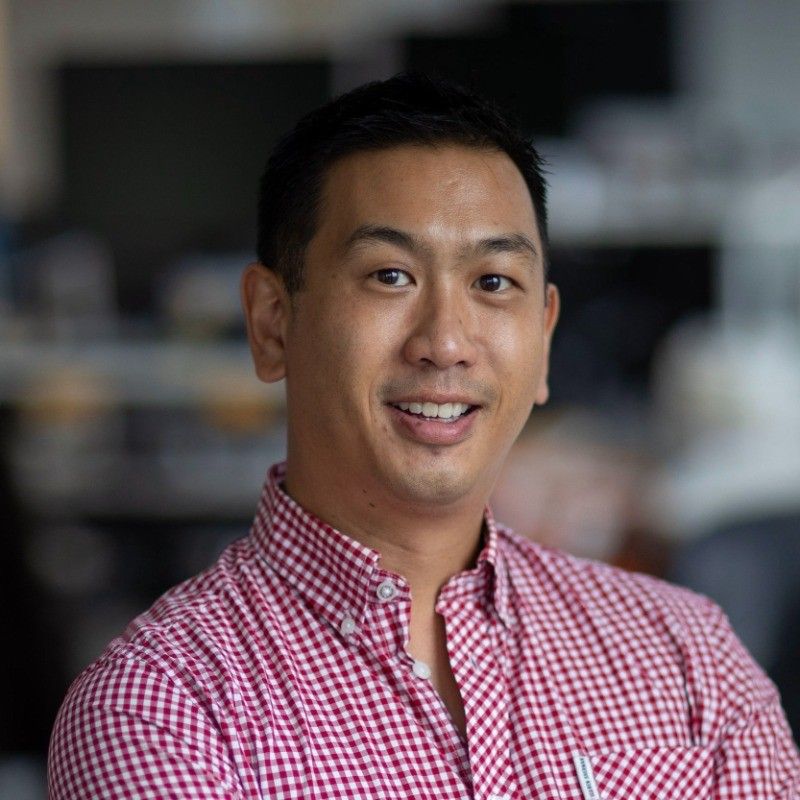
Andrew Lau, co-founder and CEO of Jellyfish

The face behind DevFinOps. Calm in a room arguing about what AI is really doing to your codebase.

600+
Engineering orgs measured
$117M
Total funding raised
9 yrs
Running engineering at Endeca
2017
Year Jellyfish was born
The Brief

A scoreboard for the people who build the software

For most of corporate history, the engineering org has been a black box. Sales had a number. Finance had a number. Marketing had a funnel. Engineering had a backlog, a roadmap, and a vague promise that things were on track. Andrew Lau spent the better part of a decade living inside that black box, running engineering at the Boston search pioneer Endeca, and he came away convinced the silence was a design flaw, not a fact of nature.

Jellyfish, the company he co-founded in 2017 with Phil Braden and Dave Gourley, exists to break that silence. The pitch is unusually blunt for enterprise software: do for engineering what Salesforce did for sales. Plug into Jira, the source code, the calendar and the org chart, and translate the daily churn of pull requests and standups into something a CFO can read without an interpreter. Where is the money going. What is it buying. Is the roadmap a fantasy or a plan.

The category even got a name that only an engineer-turned-operator would love: DevFinOps. Today Jellyfish sits across 600-plus engineering organizations, which means Lau is running one of the few companies with a panoramic, data-level view of how software actually gets made. That vantage point turned out to matter enormously the moment generative AI arrived and every executive on earth started asking the same question: is this stuff actually working?

Lau is now one of the most-quoted voices on that question, not because he has an opinion to sell but because Jellyfish has the receipts. When McKinsey wanted to talk about measuring AI in software development, they called him. His answer came with a number attached: across the organizations Jellyfish tracks, more than 60 percent see at least a 25 percent productivity improvement from AI tooling, and the companies that go all-in - 80 to 100 percent developer adoption - have seen gains north of 110 percent in joint research with OpenAI.

He resists the hype anyway. The interesting part of those numbers, he argues, is not the headline gain but the spread - the gulf between the teams that figured out how to absorb AI and the ones that bought licenses and changed nothing. Measurement, again, is the point. You cannot manage what you refuse to look at.
Will this still be a problem when the company is twice this size?
Andrew Lau, on how he decides what is actually worth fixing
Origin

Eight people in a room, and a lesson that stuck

Rewind to 1999. Endeca was eight people. Lau, fresh from stints that read like a tour of the early internet - a program management seat at Microsoft, software engineering at IBM and Wind River, a turn at Inktomi, the search engine that powered Yahoo - signed on early and stayed nine years. He has said the thing that hooked him was the intimacy of building with a small, cohesive team, the feeling that everyone in the room could see the whole machine at once. That feeling became a thesis. Most of his career since has been an attempt to give larger teams that same clarity back.

Endeca also gave him something rarer: a network. The alumni scattered into the Boston tech scene and founded enough companies to earn the nickname the Endeca mafia. Two of those alumni, Braden and Gourley, would become his co-founders. But not right away. Lau caught the entrepreneurial bug, left to found LoopIt, a social retail-tech startup that was acquired, and then served as Chief Strategy Officer at the ad-tech company Nanigans. He refuses to file LoopIt or Nanigans under mistakes. He files them under growth.

Nearly a decade after Endeca, the three reconnected. The problem they had each felt as technical leaders - nobody could see inside engineering - was still unsolved, still expensive, still everywhere. Lau's rule kicked in: do not let the opportunity pass. They built Jellyfish.

The "mafia" he came from

Endeca's alumni seeded a generation of Boston startups. Lau is one of them - proof that the best companies leave behind people, not just products.

Engineer to CEO is not a promotion

He describes the jump as a career change. The job forced him to learn sales, fundraising and storytelling from a standing start - skills no codebase teaches.

The Long Way Around

Career, in receipts

1998

Program Manager at Microsoft.

1999

Software Engineer at Inktomi, the engine behind Yahoo Search.

1999–08

VP of Engineering at Endeca. Joined at eight people. Met his future co-founders.

2009

Founded LoopIt, a social retail-tech startup. Later acquired.

2012

Chief Strategy Officer at ad-tech company Nanigans.

2017

Co-founded Jellyfish with Phil Braden and Dave Gourley.

2021

Jellyfish raises $31.5M Series B.

2022

$71M Series C led by Accel, Insight Partners and Tiger Global.

2025

State of Engineering Management report on AI; research partnership with OpenAI.

2026

McKinsey taps him to explain how to measure AI's real impact on code.

The Numbers Behind the Hype

What AI is actually doing to software teams

Drawn from the engineering organizations Jellyfish tracks and its joint research with OpenAI. Lau's whole point: the average hides the action. Adoption is what separates a press release from a productivity gain.

Orgs seeing at least a 25% productivity gain from AI60%+
Gain at 80–100% developer adoption (with OpenAI)110%+
Engineering orgs in Jellyfish's measured view600+
In His Own Words

Four rules, no fog machine

When in doubt, make a decision.
I try to be authentically myself.
You never know when your paths might cross again.
Will this still be a problem when the company is twice this size?
The Operator

How he runs the room

Authentic over executive

He leads with humility and refuses the CEO costume. No persona to maintain means no energy spent maintaining one.

Decide, then adjust

Analysis paralysis is the enemy of a scaling company. Empower the team to choose, move, and correct in motion.

Plan for the next size up

His favorite filter is forward-looking: solve tomorrow's problem, not today's. The company you are building is bigger than the one you have.

The long game on people

In an industry that loves a scorched-earth exit, he bets on relationships. Paths cross again. He acts like it.

Pays it forward

Mentors MIT students through Delta V, UPOP and Catalyst - returning the early bet someone once made on a kid at a company of eight.

No "mistakes," only reps

LoopIt and Nanigans were not failures on his ledger. They were tuition, and the lessons compounded into Jellyfish.

Margins & Marginalia

Things you would not find on the org chart

Tour of the early webIBM, Microsoft, Yahoo Search, a search pioneer - his resume touches nearly every layer of the late-90s internet before he ever sat in a CEO chair.
The Salesforce lineThe whole company pitch fits in nine words: do for engineering what Salesforce did for sales.
Member, Endeca mafiaA founder lineage traced back to one Boston search company. He is a card-carrying alum.
A reunion worth $117MThe decision to rebuild with two old colleagues became a venture-backed category. Some coffees pay off.
To give technical leaders the same data-driven credibility their peers in sales and finance have always had - and to keep that scoreboard honest as AI rewrites how software gets built.
The aspiration, in one breath
Spread It

Share Andrew Lau

in · LinkedIn X · Twitter f · Facebook IG · Instagram