There is a particular kind of waitlist that haunts families: the one for a child who is anxious now, in a way that bends the whole household out of shape, with the nearest evidence-based clinician booked solid for months and charging cash. John Voith built a company aimed squarely at that waitlist. InStride Health, where he is CEO and co-founder, does not try to invent a new cure for pediatric anxiety and OCD. It takes one that already works inside a hospital and figures out how to deliver it virtually, across a state, paid for by insurance instead of out of pocket.
That distinction - scale the proven thing, don't gamble on the novel one - is the whole personality of the company, and arguably of the founder. InStride's clinical engine is the McLean Anxiety Mastery Program, developed by his co-founders Dr. Mona Potter and Dr. Kathryn Boger, two clinicians who spent years refining group-based cognitive behavioral therapy with exposure and response prevention at McLean Hospital. Voith's job was never to second-guess the medicine. It was to wrap the medicine in a company that could survive contact with insurers, geography, and growth.
He came to it with an unusually specific resume for the task. Voith rose from intern to general manager at athenahealth, the company that made its name untangling the plumbing of American healthcare. There he ran interoperability - patient record sharing, closed-loop ordering, scheduling - the deeply unglamorous machinery that decides whether care actually moves from one place to another. If you wanted to design a training program for someone who would later have to make a hospital protocol travel through a virtual network and a billing system, you could hardly do better.
Before InStride, he tested the thesis once already. In 2017 he co-founded Virtudent, a teledentistry company, starting as COO and finishing as CEO. Dental care is not mental health, but the structural problem rhymes: take care that usually requires a specific chair in a specific building, and find a way to bring it to people who can't easily get there. Virtudent was the rehearsal. InStride is the performance with higher stakes.
When InStride launched publicly in October 2022, it did so with $26 million and a vow that sounded almost modest next to the usual startup bravado: scale a care model that already had outcomes data behind it. Voith's framing of the market was characteristically flat and unromantic. "There's a shortage of providers who provide evidence-based care," he said - not a shortage of need, not a shortage of apps, but a shortage of people delivering the treatment that actually moves the numbers. By 2024 the company had raised $56 million in total, with backers including General Catalyst, .406 Ventures, Valtruis, Mass General Brigham Ventures, and the Hopelab Foundation.
The numbers InStride reports are the kind that justify the whole detour through insurance contracts and clinician hiring: a reported 97% of program graduates show clinical improvement, 81% of caregivers report reduced strain, and 98% say they would recommend it. Early data put the average reduction in anxiety symptoms around 48% after eight to twelve weeks. For a founder whose first operating principle is to know the numbers, these are the ones that matter.
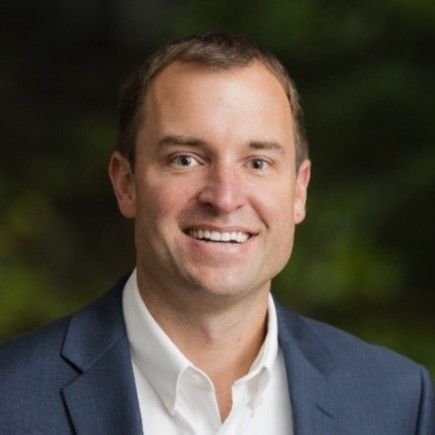 The operator's face: half spreadsheet, half mission statement.