blockchain
(116)
Pi Network has the crowd. Now comes the economy.
A daily tap brought millions of people into Pi Network. Its harder experiment is turning that habit into apps, payments, and things worth coming back for.

Sweet gives fandom something to do.
A highlight can sit in a wallet forever. Sweet is betting that fans would rather put it to work - collecting, competing, and earning a reason to come back.
Saison Capital knows who might buy your big idea
Credit Saison’s venture arm pairs early money with a harder prize: access to financial institutions. Its blockchain push shows how an investor can help build the market a startup needs.
Blockwave Labs and the business of making money move
First came wallets, then loyalty points, then trading vaults. Now the Seoul builder is bringing its blockchain experience to the less glamorous business of payments and settlement.

TriPlay wanted your music to travel without a passport
A family-photo problem became a bet on media that moves freely between devices. Two decades later, the owner of eMusic is taking that argument from personal collections to music royalties.
Avalanche wants to give business a chain of its own
FIFA wanted more control over its digital collectibles. Avalanche’s answer was a blockchain FIFA could call its own - and a cheaper way for the next business to follow.
Lab49 knows why your beautiful banking app is broken
A financial technology consultancy built its business where design meets the awkward machinery of money. Its work reveals why the most useful upgrade may be the one a customer never sees.
Sejong and the art of knowing when to stop
The Korean telecom company walked out of a spectrum auction, moved its network business into a subsidiary, and began pruning its mobile ambitions. Its changing shape reveals the unglamorous economics behind the digital world.
Gala and the trouble with owning the farm
The people who helped make virtual farms a business now want players to own the land. Gala’s experiment has grown into games, music, film and a blockchain - with some very real bills attached.

Phantom’s $3 Billion Bet on Fewer Instructions
Crypto asked people to become their own bank. Phantom bet they would prefer an app. A friendly ghost, a Solana beachhead and $268 million in funding have turned that wager into a much bigger ambition.

PIP Labs Bet on Every Idea. The Data Won.
The Palo Alto engineers behind Story built a blockchain for anyone's intellectual property. The lesson from rights holders, AI labs, and a data startup they incubated sent them toward a narrower, more practical trade: proof that training data can be used.

The Token Was Never the Property
Jointer tried to turn commercial property into something you could buy by the dollar and leave by the click. The twist was realizing that a digital deed was not enough - liquidity had to be designed as the product.
FinTech Consult Sells the Six Months You Cannot Afford to Waste
A 19-person network in 18 markets helps fintech founders turn a country on a slide into customers, partners and regulatory conversations on the ground. The proposition is refreshingly plain: buy local context before you buy an overseas mistake.
CV Labs puts a price on getting in the room
A CHF 29 day pass opens the door to Crypto Valley. Behind it, CV Labs runs a more ambitious business: helping blockchain founders find the people, discipline and capital to build a company.
OXBC’s £99 proposition: keep the right people in the room
Born from an Oxford blockchain course, OXBC turned a shared education into a membership network. Its story shows what introductions can accomplish - and where collective enthusiasm needs a harder question.
EMURGO built Cardano’s front door. Now it has to help users leave.
The company behind Yoroi spent years turning Cardano into something people could use. A wallet security incident has put that commercial mission through its hardest test.
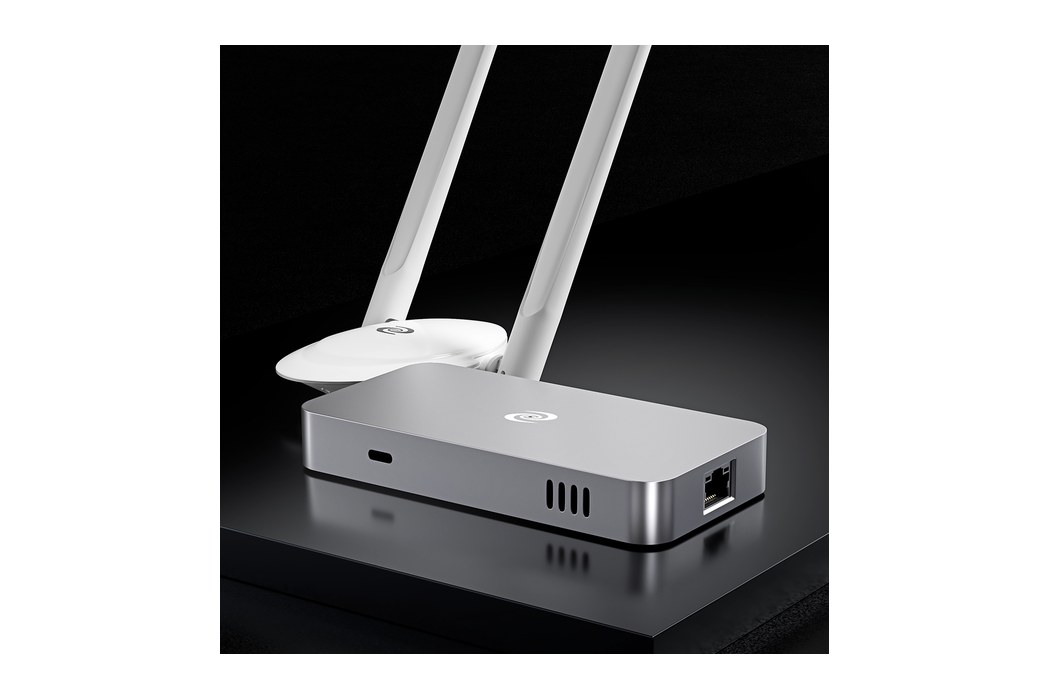
The Box That Pays You Back for the Bandwidth You Already Waste
No app, no monthly bill, no login screen. Deeper Network sells a matchbox-sized router that guards your whole home network and turns your leftover bandwidth into crypto - and it is one of the few DePIN projects with a product you can actually hold.

The NFT Toolkit That Became Takashi Murakami's Tech Shop
NiftyKit spent the NFT boom making smart contracts feel less like software engineering and more like a creative tool. Then Takashi Murakami's company bought the whole shop - and the public platform went dark.

The Blackstone Alum Betting That Wall Street Runs on Blockchain Next
Alex Marinier left private equity to write the earliest checks into blockchain finance. Six years and one Polymarket later, New Form Capital is raising again - and the institutions it once worked for are finally listening.

The Venture Studio Betting That the Best Startups Will Be Hybrids
Walsh Karra Holdings is assembling a portfolio where AI meets farms, finance meets infrastructure, and capital comes with operators attached. Its wager is that the next durable companies will be built between sectors, not inside a single lane.
How a Bought Domain and a Matt Damon Ad Built a 150-Million-User Crypto Empire
It bought one of the most valuable domains on the internet, put its name on a Los Angeles arena, and spent a decade with no outside investors. Then Citadel Securities showed up.

The Blockchain Agency That Started With $10,000 and a Newborn
Jarred Winn left Binance, spent his last $10,000, and built one of the Bay Area's first blockchain-focused marketing agencies. Eight years later it runs on brand, automation, and AI agents.
The Quiet Firm in Chapel Hill That Grades Venture Capital's Rich List
TrueBridge Capital Partners has spent nearly two decades buying into the funds most investors can't get into - and quietly building the model that decides who tops the Forbes Midas List.

Outlander Capital Wants to Sell You the Blockchain Without You Ever Seeing It
The Dallas firm behind the "Invisible Wallet" is quietly converting patents, pop songs, and NFC tags into assets you can trade - and betting most people will never notice the blockchain underneath.

Pointer.Capital Is Turning a Web3 Thesis Into a Wider Frontier-Tech Bet
The Delaware firm began with a conspicuous taste for Web3 and private cities. Its next act is broader: a $60 million Fund II vision spanning AI, blockchain, cybersecurity, energy and deep technology - with a far-flung investor network as the connective tissue.

The Foundation Building Solana - Then Trying to Get Out of the Way
Solana's Swiss nonprofit does not own the network. It funds public goods, nudges validators, courts institutions, and now builds practical rails for payments and AI - all while trying to make itself less essential.

The Blockchain That Handed the Keys to Its Own Community
A nonprofit built around a Turing Award winner's cryptography is doing something most crypto projects only talk about: giving up control on purpose.

The Insurance Policy That Watches the Weather, Not the Wreckage
Arbol turns rainfall, wind speed and temperature into financial triggers. Its wager is that climate insurance can move faster when the argument over damage is replaced by a line in the data.
The Firm That Publishes Its Homework
Cathie Wood built ARK Invest on a heresy in money management: tell everyone what you are buying, why, and when - then let them watch.
Blockskye Wants to Make the Corporate Travel Expense Report Disappear
Most business trips still move through a thicket of cards, agencies and expense reports. Blockskye is betting that one shared record - from booking to reimbursement - can make the whole trip cheaper, clearer and strangely uneventful.