For years, EMURGO wanted to make entering Cardano easier. Its Yoroi wallet spared users a cumbersome blockchain download and put digital assets within reach of a browser or phone. In April 2026, the company introduced SecondFi, a broader financial platform intended to turn that access into everyday spending and on-chain services. By summer, the practical question had reversed: how could users get out?
Yoroi and SecondFi are winding down following a June security incident. An official FAQ updated September 8 puts the theft at approximately 16.1 million ADA, valued there at about $2.6 million, from 374 wallets. The company’s immediate work includes migration and an asset-recovery process. For a business founded to make blockchain commercially useful, it is a painful test of the word “useful.”
Yet EMURGO’s history is bigger than its wallet. It has financed startups, trained developers, supplied tokenization technology and followed Indonesian coffee beans through their supply chain. Understanding the company means following those practical experiments, including the moments when the original plan stopped working.
June 21-23, 2026. The incident total is distinct from EMURGO’s investment commitments.
A commercial job in a technical family
Ken Kodama founded EMURGO in Japan in 2017. Now headquartered in Singapore, it is one of Cardano’s founding entities, alongside the organizations responsible for developing and supporting the network. Its particular assignment has been commercial adoption: finding businesses, products and customers for the technology.
That gives EMURGO an unusual position. It is a company with products, an ecosystem investor and a partner to organizations building their own services. It does not own every application running on Cardano. Nor is it interchangeable with the Cardano Foundation or Input Output, the network’s other founding organizations.
Its customers and counterparts change with the job. A financial institution may need tokenization infrastructure. A startup may want investment and technical introductions. A developer may need training or better tools. A retail customer historically wanted a wallet that made sending, staking and managing ADA understandable. The shared market is Cardano; the purchasing decisions are quite different.
This breadth is EMURGO’s distinction and its management problem. Success requires software teams, investors and commercial partners to deliver something together. A signed agreement is an input. A customer completing a task is the outcome.
First, make the coffee legible
One of EMURGO’s clearest enterprise examples arrived in 2020, with Blue Korintji Coffee and the Indonesian processor ALKO. The problem was familiar to anyone paying extra for a bag of beans: a claim about origin is only as convincing as the records behind it.
EMURGO’s traceability system helped record harvesting, processing and shipping. In a company-published interview, ALKO chief executive Suryono described a cooperative bringing together 620 farmers working roughly 415 hectares. He said the implementation followed numerous consultations. This was a workflow project with people who handled actual crops.
The revealing detail was a change in daily habits. ALKO placed greater emphasis on classifying coffee cherries by quality and harvest area. The software encouraged more disciplined records, which could help explain a premium product to buyers. There is a copyable idea here: begin with information a customer already needs and make collecting it part of the job.
The boundary is equally practical. A ledger records what participants enter. It cannot inspect a coffee cherry. The value depends on the quality of those observations, the cooperation of suppliers and whether buyers care enough to use the information.
The money was meant to build a market
EMURGO approached adoption from another direction in September 2021, establishing a $100 million Cardano ecosystem investment vehicle spanning EMURGO Ventures and EMURGO Africa. The targets included startups and infrastructure companies that could make the network more useful.
In September 2022, Kodama told CoinDesk that EMURGO planned to invest more than $200 million over three years. The money would come from its own capital, with $100 million earmarked for Africa. Projects on other networks could qualify if their products integrated Cardano.
Those figures describe capital allocated or promised to an ecosystem. They should not be read as a conventional funding round in EMURGO, revenue or proof that every announced dollar was deployed. Adding the announcements together would be an especially unhelpful shortcut.
The commercial logic is straightforward: finance the services a network needs, and more people may have a reason to use it. Venture holdings also offer potential investment returns. EMURGO’s technology services, education and financial partnerships sit alongside that investing activity. This is a portfolio of commercial approaches rather than a single subscription product.
Different announcements. Neither is a verified external funding round in EMURGO. Neither establishes realized revenue.
A stablecoin changes hands
USDA illustrates how EMURGO’s role has shifted. The company announced plans for a dollar-backed Cardano stablecoin in November 2022. By July 2024, it was acknowledging difficulties bringing the product to market and announcing that the launch would proceed under Encryptus ownership.
EMURGO would supply technology. Encryptus brought experience in large crypto transactions and conversion into local currencies. EMURGO’s March 2025 newsletter subsequently described USDA’s debut, identifying Anzens Inc. as issuer and BitGo Trust as the custody partner.
That division matters. “EMURGO’s stablecoin” is convenient shorthand that obscures who performs which job. Issuing an asset, supporting its reserves and maintaining its blockchain infrastructure are separate responsibilities. The practical lesson from the change is to assign each responsibility explicitly, particularly when a product’s first route to market has stalled.
Tokenization remains central to EMURGO’s stated direction. Its fintech offering targets businesses connecting conventional assets with blockchain transactions. But converting an asset into a token does not manufacture buyers. The proposed service still needs a useful market, workable redemption arrangements and an operator capable of delivering the underlying promise.
Roles described in EMURGO’s March 2025 launch update.
The checkout becomes the destination
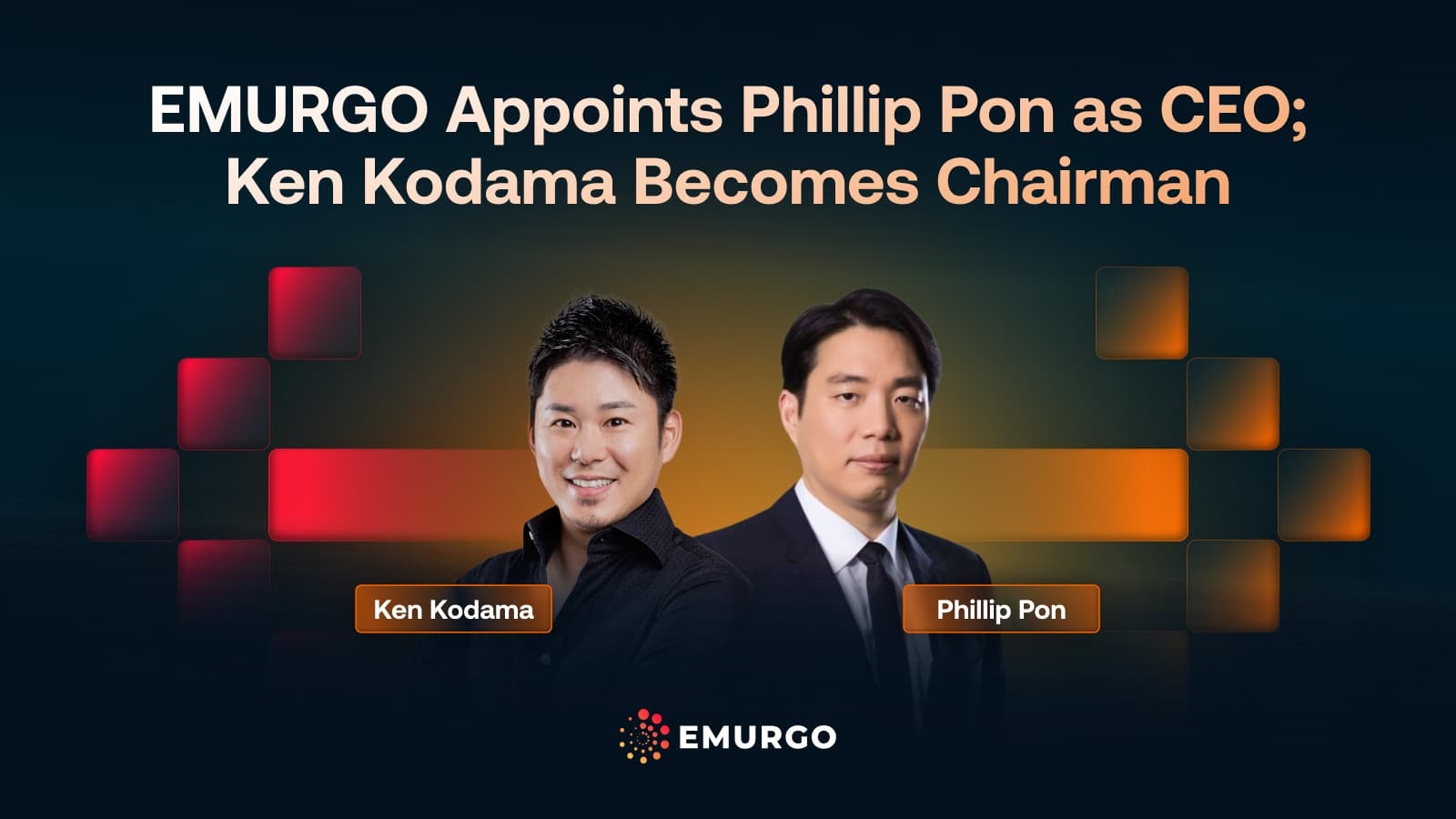
In April 2025, Phillip Pon became chief executive while Kodama moved to chairman. The priorities were asset tokenization, stablecoins and wallet infrastructure. “This transition allows me to focus on long-term strategy while supporting our broader ecosystem expansion,” Kodama said.
The change also acquired an organizational explanation. In its November 2025 leadership recap, EMURGO acknowledged that branding and direction across earlier sub-projects had created confusion about positioning and responsibilities. It described a more unified strategy and closer coordination with other Cardano organizations. That is a useful admission from a business whose reach had become part of its pitch.
At the Cardano Summit that month, EMURGO announced a card partnership with Wirex. The idea was to place Cardano inside an existing payments app, using Wirex’s distribution and card infrastructure. The announcement cited more than six million Wirex users. Those were potential users reached through a partner, not six million proven Cardano Card customers.
Issuance depended on eligibility and geography. A proposed non-custodial phase was forecast for 2026. The distinction between the launched arrangement and a future phase matters when evaluating a product that promises to connect crypto with ordinary shopping.
The wallet becomes the urgent business
Yoroi had been a particularly tangible achievement. Launched in 2018, it offered a lightweight, open-source route into Cardano. Users could manage assets without downloading the entire chain. Over time, its functions expanded to include application connections, swaps and governance participation.
SecondFi was introduced on April 22, 2026, as the next step: an experience organized around spending, sending, staking and asset management. It took the commercial ambition further into daily financial life.
The incident arrived between June 21 and 23. The current official explanation identifies a cryptographic flaw in transaction-signature generation that, under certain conditions, exposed affected private-key material through public data. It says the issue affected a specific set of addresses, and that hardware-wallet users were not compromised by this incident.
The consequences went beyond patching software. EMURGO stepped down from the Pentad coordination group in July to concentrate on recovery. The wallet websites now announce a wind-down. By early September, the support material distinguished migration of remaining assets from a recovery process for affected holdings; the latter still had a provisional September launch target.
For existing users, the relevant product is now that official support process. Recovery commitments should be judged by assets actually returned. They cannot be counted as completed reimbursements simply because a plan has been announced.
Recovery commitments should be judged by assets actually returned.
The test ahead
Count completed jobs
EMURGO’s wider ecosystem work includes developer education and partnerships with universities. Its 2024 review described Aiken courses and the SmartBlocks learning program. Such efforts address a basic commercial dependency: applications need people who can build them.
But developers, partners and wallet users all have alternatives. Cardano’s wallet directory includes Lace, Eternl and VESPR. Other blockchain ecosystems have their own investment programs. For an enterprise, a conventional database may be sufficient if a shared blockchain adds little to the actual workflow.
The strongest lessons in EMURGO’s history are specific enough to borrow: interview the processor before designing the traceability system; separate the issuer from the technology supplier; distinguish a partner’s audience from paying customers. Those approaches work when responsibilities are clear and participants have reasons to cooperate.
EMURGO helped build the entrances to Cardano’s commercial world. Its next assessment will be less abstract than the size of that world: whether people can finish the immediate, necessary job of getting their assets safely into their own hands.
Keep following the story
Company channels, product updates and a conversation from the investment desk.