Before Dragonfly could decide which founders deserved its money, it had a smaller problem: getting founders to take it. Established crypto investors already occupied the good seats. A new firm needed a reason to be invited into the room. Its first answer was geography. It would connect people building in America with people using, trading and building crypto in Asia.
- Capital for crypto companies, protocols and financial infrastructure.
- A $650 million fourth venture fund, announced in February 2026.
- Founder support that extends into recruiting, research and market access.
That origin helps explain the company today. Dragonfly sells a proposition familiar to anyone who has hired a specialist: knowing the right thing matters; knowing how to get it done matters too. Its recent investments put that proposition into the unglamorous business of moving money. The interesting question is how a small advantage becomes an institution.
01 / An invitation before a lead check
The 2018 launch named Bo Feng and Alexander Pack as founders and announced a $100 million fund. Feng brought experience investing in China; Pack had worked at Bain Capital Ventures. The starting portfolio already exceeded 20 investments. The thesis crossed both borders and asset types, including crypto funds, financial infrastructure and protocols.
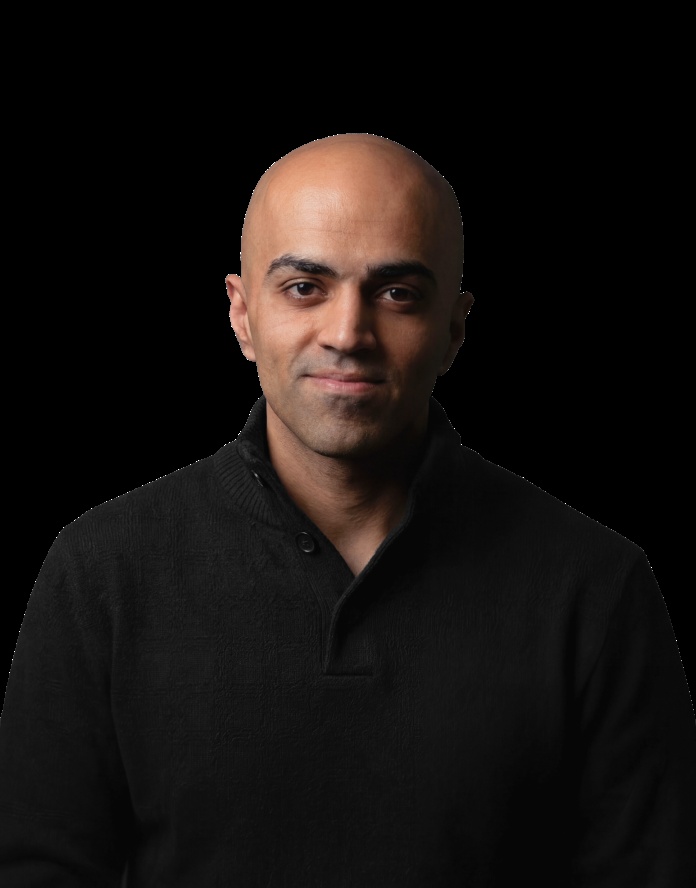
In his later account, Managing Partner Haseeb Qureshi describes the early limitation plainly. A bridge between markets could earn Dragonfly a place in a financing without making it the lead investor. The promise opened a door; it did not confer authority. Making the connection useful required coordination across languages and time zones, including punishing hours and late calls.
Read this as a business lesson, and the sequence is revealing. First, offer something specific enough to be needed. Then use the work to learn what customers actually want. The copyable part is the narrow entry point. Copying the global footprint without the relationships would merely reproduce the travel schedule.
02 / Bigger funds, different obligations
By May 2022, Dragonfly announced the final close of a $650 million third venture fund, exceeding a $500 million target. The company announcement listed KKR, Tiger Global, Sequoia China and Invesco among institutional backers, alongside endowments, pensions and sovereign wealth funds. This was capital entrusted to investment vehicles. Calling it Dragonfly’s sales would be an accounting magic trick.
In August that year, Dragonfly acquired MetaStable, a crypto hedge fund founded in 2014, and dropped “Capital” from its public name. The acquisition broadened a platform that included venture and liquid strategies. It also came during a market retreat. Buying an established operation was a concrete commitment to the sector, rather than simply another statement of confidence.
The platform has two constituencies: the investors supplying capital and the founders receiving it. Dragonfly advertises checks from $3 million to more than $30 million, spanning seed to Series B and beyond. For a founder, that means a potential financing partner through several stages of growth. For a limited partner, it means exposure to a manager’s selection of companies, protocols and assets. Private-fund economics generally involve management fees and a share of investment gains. Those economics create a business for the manager, but they do not make a large fund synonymous with a profitable portfolio.
The fourth fund’s $650 million close, announced in February 2026, repeated the third fund’s size. Repetition is instructive here. The story is not an ever-steeper fundraising curve. It is the ability to raise another substantial pool while the sector’s mood had darkened. Raising capital, of course, does not establish what investors will ultimately earn.
03 / Follow the payment
Conduit offers a useful view of the work beneath the crypto vocabulary. Businesses need to move money between countries and currencies. A blockchain transaction alone does not solve the whole journey. Someone still has to connect local banking, digital dollars and the recipient’s currency.
In May 2025, Dragonfly and Altos Ventures co-led Conduit’s $36 million Series A. Conduit reported more than $10 billion in annualized transaction volume, with a network spanning 14 currencies and more than 20 banks across nine countries. Those are company-reported figures at the time of the round. The $36 million was the entire financing, not Dragonfly’s disclosed individual check.
Mesh approaches a neighboring problem: fragmentation between wallets, exchanges and assets. Dragonfly led its $75 million Series C in January 2026 at a $1 billion valuation. Consumers could spend one asset while merchants received their preferred stablecoin or fiat. A good payment experience often makes the elaborate machinery disappear from view.
“Payments are entering a new era where value moves as software.”
Rob Hadick / Dragonfly General Partner
Mesh financing announcement, January 2026
Dragonfly also worked with Artemis and Castle Island on stablecoin payments research. The researchers spoke with 20 companies and collected estimates from 11 others. Their sample reached roughly $72 billion in annualized payments in February 2025. The distinction matters: a payment sample answers a more useful question than treating every blockchain transfer as somebody buying something.
04 / Useful after the wire lands
Money is one of several things a founder needs. Dragonfly’s compensation research tackles another: deciding what to pay people when compensation can mix salary, equity and tokens. Its public benchmarks cover roles from engineering to marketing, with additional breakdowns for portfolio companies. Recruiting support and a portfolio job board extend that operating role.
The market is crowded with specialist alternatives, including Paradigm, Polychain, Pantera and a16z crypto. Competition also coexists with cooperation: Paradigm participated in Mesh’s Dragonfly-led round. A founder choosing among firms should ask which partner understands the actual obstacle - recruiting, market entry or payment infrastructure - and can help remove it.
The conditions matter. Cross-border connections have little value to a team without cross-border demand. Payment infrastructure needs usable local connections and willing businesses, not merely a token. And a patient investment strategy requires capital that can tolerate waiting. Dragonfly’s history suggests a practical discipline: make the promise specific, build the capacity to deliver it, and keep checking whether anyone needs the result.