A crypto wallet is a peculiar invitation. Here are the keys to your money. Please keep them safe, understand a new vocabulary and avoid signing anything disastrous. For a technology promising wider access to finance, the entrance exam could be remarkably discouraging. Phantom was founded on a useful suspicion: perhaps the customer was not the problem.
- The job: hold, send and trade crypto, connect to blockchain apps, and increasingly pay for ordinary things.
- The bet: a wallet with less friction would bring more people onto open financial networks.
- The price: free to download; a 0.85% Phantom fee on most swaps, with other costs possible.
- The catch: easier controls do not remove self-custody responsibilities or market risk.
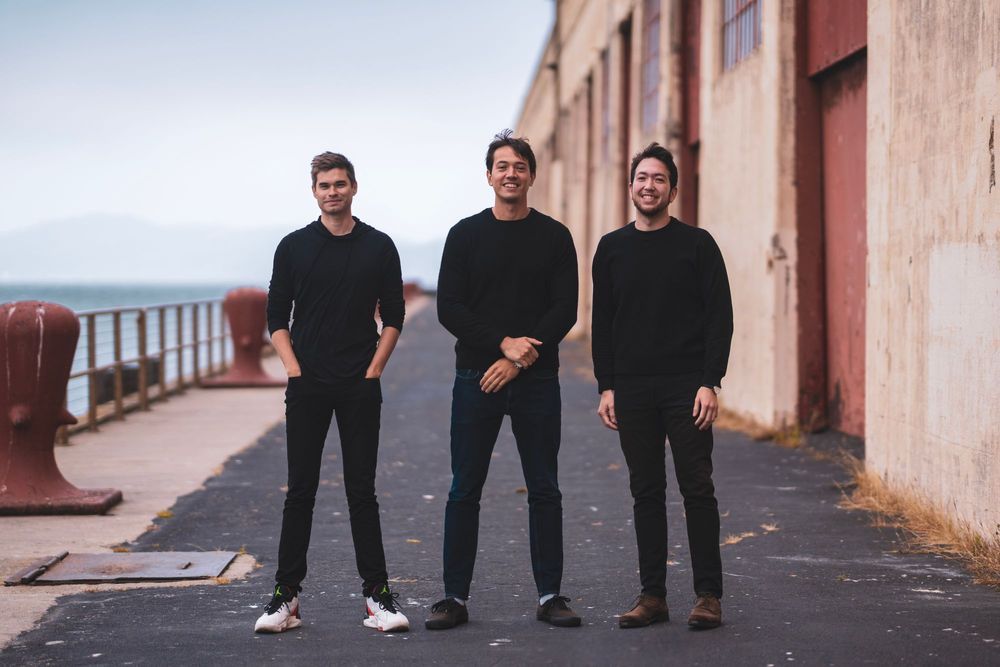
Founded in 2021 by Brandon Millman, Francesco Agosti and Chris Kalani, Phantom began with Solana and a consumer problem. The founders had worked at 0x, the crypto trading infrastructure company. They knew how much machinery sat behind a transaction. Their opportunity was to spare the person making it a tour of the engine room.
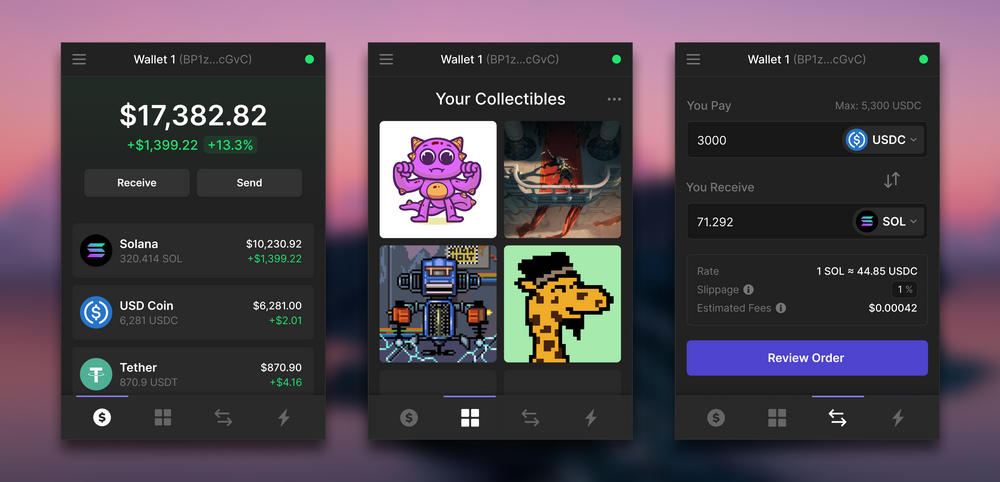
The result is a browser extension and mobile app that lets people manage digital assets while retaining control of their keys. It serves traders, collectors and people exploring decentralized finance. Developers connect their applications to it. To a newcomer, it can be the place to receive a first token. To a frequent trader, it can be the place where most of the day happens.
01 A small door into a busy street
Solana offered a practical starting point: fast transactions and low network costs. A wallet’s elegance is difficult to appreciate while waiting for an expensive transaction to finish. Phantom could improve the interface while the network supplied conditions in which that improvement mattered.
The company’s early history has the compressed quality of a busy restaurant opening. In-app swaps arrived in June 2021. A $9 million Series A followed in July. By October, Phantom said cumulative swap volume had passed $1 billion. There was evidently an appetite for doing something with crypto after buying it.
In January 2022, Phantom announced a $109 million Series B led by Paradigm and released its iOS app. Android followed in April. The company reported more than two million monthly active users just six months after public launch. Mobile mattered because a wallet confined to a desktop browser has a rather literal limit on where it can accompany you.
Ethereum and Polygon joined the public product in May 2023. This was an expansion of the founders’ original intention to go multichain. It also made the interface promise more demanding: several networks, one place to see assets, fewer manual switches. People should not need to organize their financial lives according to a software developer’s map.
02 The ghost has a business model
The friendly purple ghost is an unusually cheerful host for a serious business. Phantom worked with Bakken & Bæck on its 2023 brand refresh, and with F37 Foundry on a custom typeface. Making finance approachable is partly about what the software does and partly about whether it looks as though it expects you to understand it.
But friendliness does not pay the engineering bill. Phantom is free to download; its current swap documentation lists a 0.85% fee on most swaps. For a $1,000 trade subject to that rate, Phantom’s fee is $8.50. Network fees, provider charges and the difference between an expected and executed price can increase the total cost.
Phantom fee only. Other charges and execution costs may apply.
This puts Phantom in the business of useful activity, rather than simply counting downloaded apps. A wallet that makes transactions convenient has opportunities to earn from those transactions. It also has an incentive to keep people trading. Readers should distinguish a well-designed trading experience from a good reason to trade.
The numbers have become substantial. Forbes reported $320 million in 2025 revenue, up from $200 million in 2024, and 22 million active users in its February 2026 profile. Those are reported figures for a private company; the user figure was not identified as monthly. Phantom’s own January 2025 announcement reported 15 million monthly active users and $25 billion in user self-custodied assets. Assets in users’ wallets are not company revenue.
03 What broke behind the button
The simple interface concealed some decidedly difficult work. In April 2022, Phantom acknowledged slower loading as its user base expanded, along with RPC connection problems affecting Phantom and the wider Solana ecosystem. A handsome screen is scant consolation when the connection behind it refuses to cooperate.
Security brought a sharper lesson. In September 2021, Halborn alerted Phantom and other browser wallets to the vulnerability later called “Demonic.” Under specific device-access conditions, an attacker could retrieve a recovery phrase imported into the extension. The problem reached beneath the reassuring surface of the product to the handling of a secret.
Phantom says fixes began rolling out in January 2022 and users were protected by April. It rewrote how it generated seed phrases and hired Oussama Amri, the researcher who discovered the issue. That response is more instructive than a claim of invulnerability: change the mechanism and bring the person who understands the failure inside the team.
The same logic appears in later acquisitions. Bitski joined in 2024 to help with embedded wallets and onboarding. Blowfish brought fraud-protection expertise. Buying specialist knowledge is one way to make a consumer product look less complicated. The complexity has to be handled somewhere.
“No more seed phrases.”
Brandon Millman, on Phantom’s onboarding ambition
In November 2024, Phantom detailed a setup using Google or Apple login and a four-digit PIN. Its distributed key-management system separates the material needed for recovery; the full seed is reconstructed on the user’s device after authentication. Self-custody survives, while the initial experience becomes more familiar. The customer’s burden changes; the engineering burden grows.
04 A wallet walks into a coffee shop
By 2025, Phantom was building for two quite different appetites. Perpetual futures, launched in July with Hyperliquid, addressed people who wanted more ways to trade. Terminal, announced in beta in November, put charts and position management on a desktop screen. A wallet could become a trading desk.
Cash, introduced in September, asked another question: could that wallet become useful when you were finished looking at prices? It holds CASH, a dollar-pegged stablecoin on Solana, in a separate self-custody account. Its premise is ordinary spending and transfers without treating every payment as an expedition.
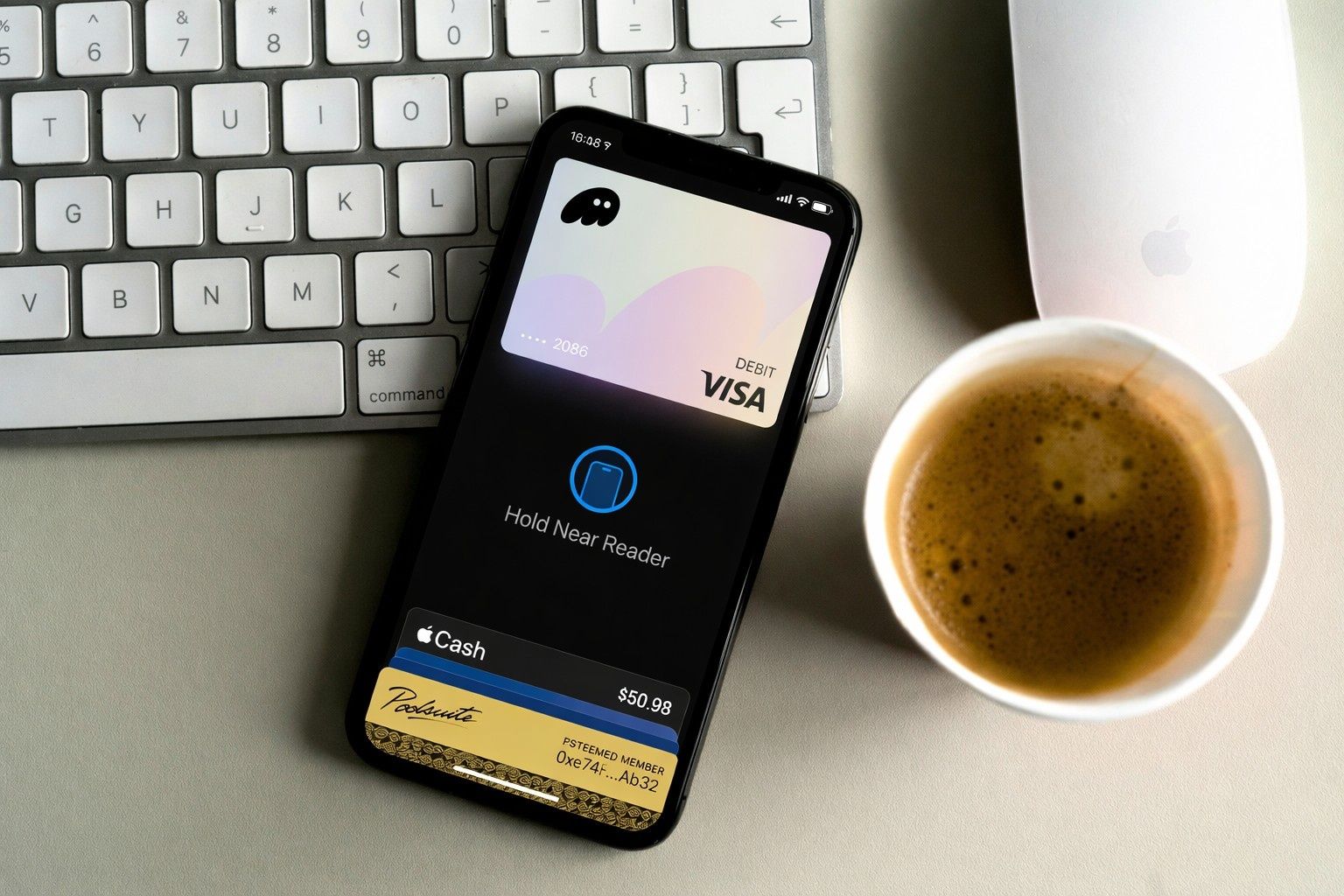
The bank connections involve familiar intermediaries. Stripe handles eligible funding; Bridge manages bank-transfer connections and the card program; Lead Bank issues the prepaid Visa card. A payment converts CASH to dollars so the merchant can receive a conventional card transaction. The shopper’s experience is simpler because the partners handle the junctions.
Expanded US access was announced in March 2026. Current help documentation excludes New York from US bank and card features and requires identity verification for those connections. The card is currently virtual. An open blockchain can be global while the services connecting it to banks remain regional. Product design cannot repeal geography.
05 Copy the work, not the wallpaper
Phantom sits between blockchain infrastructure and the person trying to use it. MetaMask and other wallets offer alternative entrances. Exchanges such as Coinbase, and trading apps such as Robinhood, compete for activity with different custody arrangements and services. Phantom’s proposition combines user-controlled assets with a consumer interface and access to outside applications.
There is a lesson here for builders far from crypto. Start with a task people already want to perform. Remove the steps that make them feel incompetent. Choose infrastructure that lets the experience work. When support or security exposes a recurring problem, invest in the underlying system. A friendlier colour palette is pleasant; a reliable transaction is persuasive.
The company’s published culture fits that approach: a fully remote team, two global offsites a year and operating principles built around users, pragmatism, empowerment and iteration. Principles become interesting when they have consequences. Acquiring onboarding and security teams, rather than insisting on inventing everything internally, is a concrete example of pragmatism.
There are limits to the formula. People who want a custodian to recover access may prefer a different arrangement. Unsupported networks still require another wallet. Leveraged trading can liquidate a position, however tidy the controls. A popular token can be a bad investment. Phantom can reduce the effort of participating; it cannot guarantee the result.
In June 2026, the Ventuals team joined Phantom’s trading and data teams, another indication of where the company is placing its effort. Its original wager has grown: make the entrance easier, then see how much of financial life people will bring through it. The ghost is friendly. The work behind it is expensive.