Eighteen minutes is a long time to admire a progress indicator. In September 2026, Zerion explained that some users had been waiting that long for a bridge to move their crypto between networks. The route might save a few cents. The customer still had to sit there. Someone had made the price smaller without making the experience better.
- For users: a self-custodial wallet and a view of scattered crypto holdings.
- For builders: the interpreted wallet data behind that view, sold through an API.
- The useful lesson: ask what your customer is paying in time as well as money.
Zerion’s answer was admirably specific. Its redesigned app prefers a faster bridge route when that route costs no more than ten cents extra compared with the cheapest option. No manifesto required. A small allowance for impatience would do.
That decision is a useful way into this company. Crypto enthusiasts have spent years debating who owns the money, who verifies the transactions and which network deserves attention. Zerion works on the less glamorous question that follows: once you have all this freedom, how do you actually use it?
A loan that could leave
There is an earlier demonstration worth remembering. In 2019, Placeholder’s Brad Burnham described watching his colleague open a Maker loan through Zerion, then repay it through another application. The transaction crossed an institutional boundary that barely existed. The interface had helped arrange the loan; it did not own the customer’s ability to service it.
Burnham’s analogy was the early internet, when a browser made an unfamiliar network easier to navigate. His observation was more modest than a prediction about prices: separating a service from its interface gives people choices. Those choices create a fresh problem. Someone has to help people find their way.
“With choice comes complexity.”
Brad Burnham · Placeholder · 2019
Evgeny Yurtaev, Alexey Bashlykov and Vadim Koleoshkin founded Zerion in 2016, according to its funding announcements. By December 2019, it had raised a $2 million seed round. Yurtaev told CoinDesk that the money would support more protocol integrations and additional developers. User feedback was already influencing which protocols the company added.
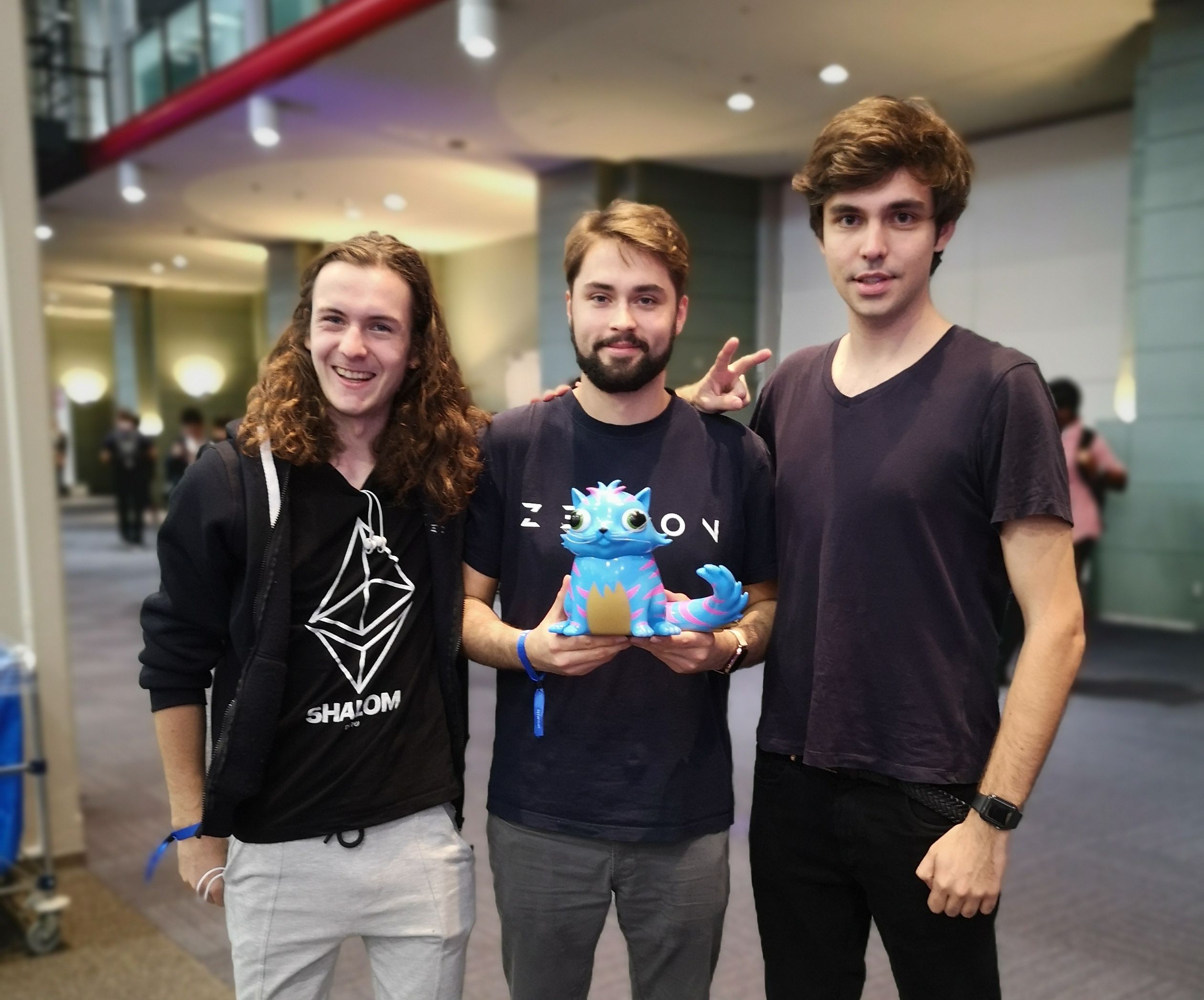
Today the company describes a fully remote workforce with hubs in London and Lisbon. Its careers page promises employee options and emphasizes personal responsibility. The language of owning your work fits a business selling ownership of financial accounts, though a published value is an aspiration rather than proof of how every working day feels.
The balance is only the beginning
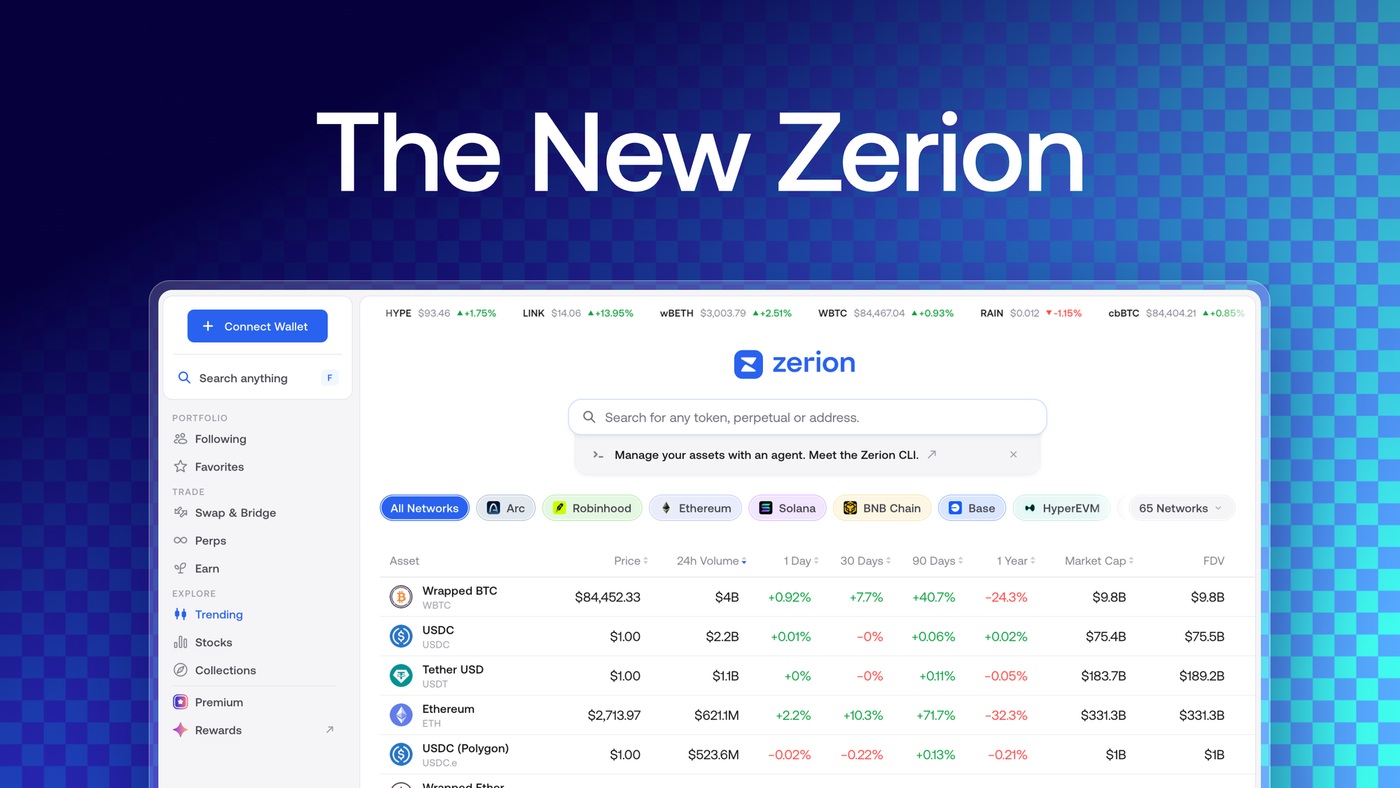
Zerion’s consumer product combines a wallet with portfolio tracking. Users can hold their own keys, follow addresses, inspect transactions and trade through decentralized venues. Its mobile app and browser extension provide routes into onchain applications; its web app gives portfolios and markets more screen space.
The difference between a wallet and a useful financial picture becomes obvious when money starts moving into DeFi. A token can be lent, staked or placed into a liquidity pool. A simple balance list may show a receipt token while leaving the underlying position thoroughly obscure. Owning something and understanding what you own are separate accomplishments.
Values · labels · positions · history
This is where Zerion’s expertise sits: recognizing what blockchain activity means, attaching names and prices, and gathering positions across supported networks. A watch-only address can be followed without importing its private key. That matters to someone who wants a dashboard for a hardware wallet, or simply wants to inspect another public address.
The wallet launched in May 2022 with more than ten networks and an unusually playful accessory: Zerion DNA, a generative NFT avatar that evolves with activity. Financial software seldom supplies a changing digital portrait. Here, identity became part of the product rather than a photograph beside an account number.
Solana joined the wallet in June 2025. The newer portfolio redesign adds searchable favorites and a dedicated place for followed wallets. These are ordinary conveniences in a world that sometimes treats ordinary convenience as an insufficiently ambitious goal.
Selling the machinery
The interesting commercial turn is that other companies need the same interpretation. Zerion sells its data through an API, allowing developers to request normalized balances, positions and transaction histories rather than assemble everything from raw blockchain records.
Safe provides a good example. In Zerion’s account of the integration, Safe users could see ordinary token balances but had trouble seeing assets deployed in DeFi. Safe selected the positions endpoint to bring that working capital into its own interface. Names, values and protocol metadata arrived together. The security product could concentrate on security.
OpenSea’s case is more numerical. Its OS2 token-trading launch needed coverage across eighteen chains. Zerion’s case study says its wallet-positions endpoint replaced a substantial internal indexing project. OpenSea CTO Chris Maddern credited the integration with bringing the feature to market three months faster than an in-house build.
That is a customer’s estimate, not a controlled experiment. It still identifies what was being purchased: time, coverage and maintenance someone else had already undertaken. Zerion can compete for a consumer’s wallet while supplying components to other wallet products. The screen and the machinery have different buyers.
Its 2026 command-line toolkit extends that machinery to AI agents. The agent receives wallet and market data, then can help prepare portfolio answers or transactions. The same principle survives the change of interface: intelligence needs something intelligible to read.
The bill, and the limits
Zerion earns money through consumer transaction fees, Premium subscriptions and API plans. Its current Premium page advertises $99 a year for one wallet, including reduced swap and bridge fees, profit-and-loss views and full transaction-history exports. Those benefits favor someone who trades or investigates portfolios frequently.
The API’s February 2026 explainer lists paid plans starting at $149 a month, alongside a free developer tier and negotiated enterprise pricing. Builders are buying an ongoing service. They still need to check network coverage, data freshness and request limits against their own application.
For consumers, a clear portfolio cannot remove market risk or make a dangerous contract safe. Zerion publishes wallet audits, makes its extension code public and offers transaction previews and allowance controls. These are useful controls; the person signing still has decisions to make. Self-custody also means taking responsibility for recovery credentials.
Wallets such as MetaMask, Rainbow and Phantom are alternatives for different routines. A portfolio tracker may suffice for someone who only wants visibility. A developer needing bespoke contract queries may prefer a raw-data platform. Zerion’s proposition is strongest when a usable wallet-level financial picture is the thing being built.
A blockchain that stopped
The company also tried owning more of the stack. ZERO Network launched in 2024 as an Ethereum layer-2 associated with Zerion, promoting transactions without user gas fees. Its official site now says the blockchain has stopped producing blocks and is no longer operating. It directs people with remaining funds to a recovery-request form.
A shut-down network belongs in the story alongside the continuing wallet and API. It is a reminder that removing friction can require very different businesses: interpreting other networks’ data, routing their transactions, or running a network yourself. Success at one does not establish the economics of another.
Copy the question
The ten-cent decision is the piece a reader can borrow without writing a smart contract. Find the metric your product optimizes. Then ask what inconvenience that metric conceals. Cheap shipping with an uncertain arrival, a low fare with an exhausting transfer, a quick signup followed by hours of setup: the invoice is only one measure of cost.
Zerion’s customers did not need a lecture about bridges. They needed their tokens to arrive. The company’s useful move was to take that complaint literally, put a number on the trade-off and change the route.