The first thing a crypto wallet asks of a newcomer is trust. It asks for attention to unfamiliar words, confidence in a string of characters, and a willingness to press a button whose consequences may be difficult to undo. Brandon Millman spent years near the machinery behind those buttons. When he and two colleagues started Phantom, they chose to work on the moment a person meets the machinery at all. It is a smaller sounding problem than rebuilding finance. It may also be the one that decides whether anybody stays long enough to use it.
Millman is the co-founder and CEO of Phantom, a wallet that began on Solana in 2021 and grew into a multichain consumer app. The company now speaks in the language of a finance platform, but its origin lies in a less grand observation. A wallet is frequently a person's first contact with crypto. If that first contact feels like a software installation from another century, the promise of everything behind it remains theoretical. The point has become familiar in hindsight. It was less fashionable when much of crypto's attention was fixed on protocols, tokens, and the cleverness of the underlying code.
A student of the first screen
There are early hints of Millman's taste in the projects he listed from his time at Duke University. In 2012, he helped make FlickStream, an app that let people in a room flick photos from their phones onto a shared screen. It won a North Carolina regional Facebook Hackathon. Another student project, PromptU, distributed group reminders through mobile notifications, email, and text. Winston, built as an iPad app, attempted to surface information relevant to a conversation. These were experiments, not a straight line to Phantom. They do show a recurring interest: getting useful software into the flow of an ordinary interaction.
Millman graduated from Duke in 2013 with a degree in electrical and computer engineering and computer science. He went to Twitter, where he spent more than four years as an engineer. He later described becoming disillusioned with the familiar machinery of consumer growth: the tests, the metrics, the pressure to increase time spent. That experience matters because Phantom did not begin with an engineer untouched by mainstream product design. Millman had seen how consumer software is measured, tuned, and delivered at scale. He wanted a different set of incentives to work on.
In 2017, he moved into Ethereum and joined 0x, the project working on decentralized exchange infrastructure. He spent roughly four years there, eventually in an engineering leadership role. It was a seat close to the tools that developers were building and to the friction that users encountered. The decentralized exchange could be sophisticated; the person arriving with a wallet still had to understand what it meant to connect, sign, approve, and transact. Each extra demand on the user put another crack in the journey.
“Wallets are often people's first experience with crypto.”Brandon Millman, 2022
That sentence contains the commercial case for Phantom and the editorial one. The wallet is usually presented as a container: a place to hold assets and authorize transactions. Millman saw it as the lobby, reception desk, and set of directions. It could determine whether a developer's work was accessible at all. It could also make a market feel either open or reserved for people prepared to read an instruction manual. For a founder with a background in both consumer software and crypto infrastructure, the mismatch was hard to ignore.
The bet inside the bet
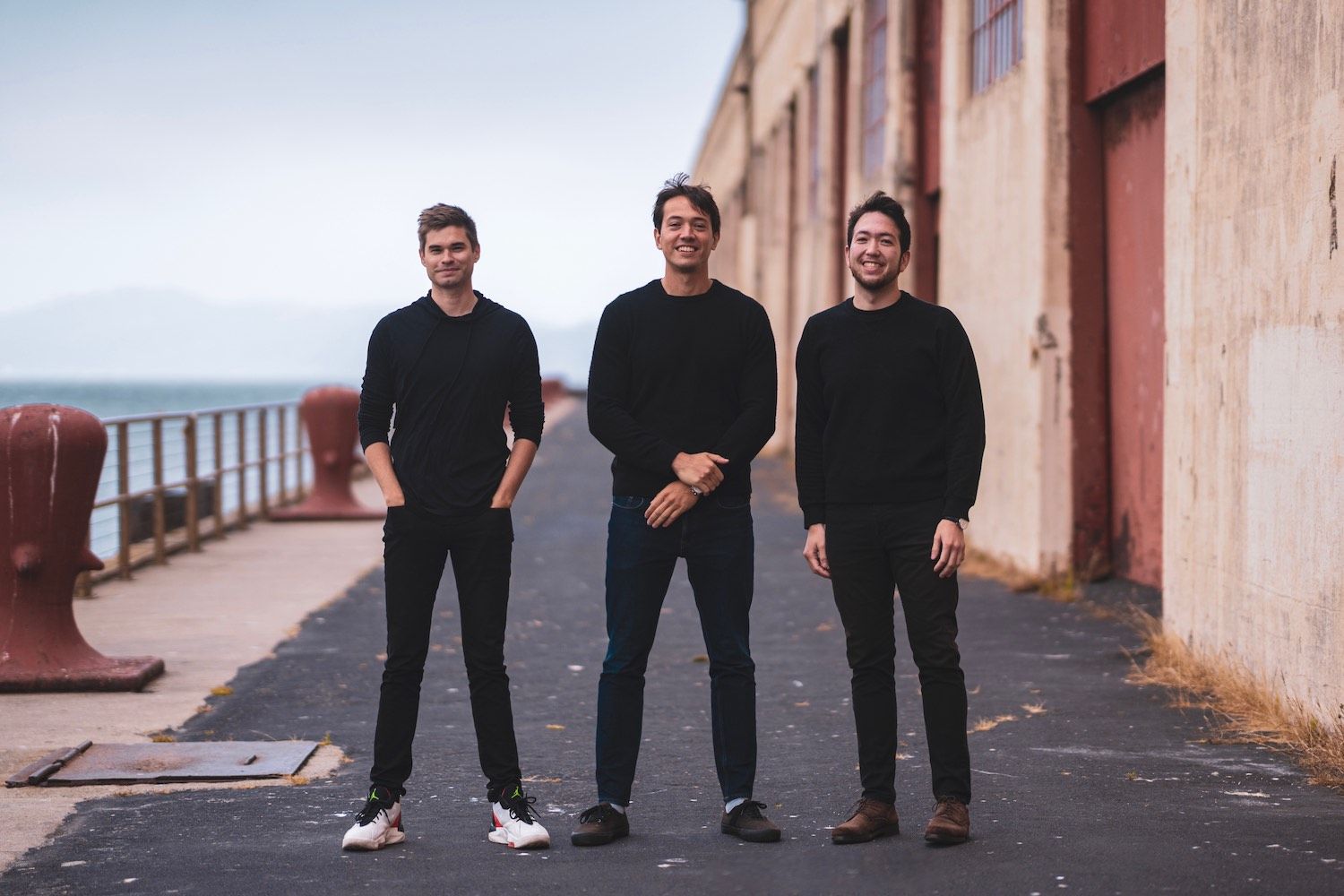
Millman teamed up with engineer Francesco Agosti and designer Chris Kalani. Phantom's own account dates the founding group to January 2021. They chose Solana for their first wallet. It was an early, conspicuous choice. Millman has explained that the group wanted room to rethink the wallet experience and believed Solana offered a practical environment in which to do it. The choice was technical, but also social: a young ecosystem gave a new product a chance to become the familiar way in.
The trio was hardly alone in believing that crypto could become easier to use. Their distinctive wager was to make the wallet itself the consumer product. Phantom began with a community of about 40,000 active beta testers. The team put design polish near the center, a decision that sounds cosmetic until one remembers what the design needed to explain. A balance, a swap, an unfamiliar asset, a request to approve a transaction: every one of these arrives with a risk of confusion. The color of a button cannot solve that risk by itself. The ordering of information and the words next to the button can help.
Growth came quickly. Phantom reported more than a million users in 2021 and later said it had passed three million. Millman pointed to several forces in the early surge: Solana's expansion, the arrival of people drawn by NFTs, and the move onto phones. NFT users often approached crypto differently from the earlier crowd of DeFi specialists. They might begin with a piece of art or a community rather than a trading strategy. A wallet aimed at them had to feel less like a developer console. Phantom released an iOS app in early 2022 and entered an Android beta soon after.
The numbers are easy to put in a chart. The less photogenic work sits below them. Millman described building a support system in which requests came in as tickets, were tagged by category, and received responses. It was a deliberate answer to a common industry habit of sending everyone into a busy chat server and hoping the right person noticed. Customer support was a source of product information as well as a service. When a person is confused about a transaction, the distinction matters considerably.
What happens when the door works?
The question changed as Phantom grew. In January 2022, the company announced a $109 million funding round at a $1.2 billion valuation. It then broadened beyond its original Solana focus. A multichain wallet had to smooth over differences between networks without pretending those differences did not exist. The design brief became more demanding: let people find what they need, understand what they are signing, and avoid traps in an environment where anyone can send a token or build a page that looks reassuring.
Millman has spoken publicly about phishing and malicious transactions, and Phantom built features such as spam filtering, token verification, transaction simulation, and alerts. These are not glamorous ornaments on a polished interface. They are part of what makes the interface honest. A wallet that makes an unsafe action feel effortless would be a poor guide. It must sometimes interrupt. Product design in crypto carries that awkward duty: give people control while making the moments of danger legible.
By January 2025, Phantom was reporting more than 15 million users and had raised a $150 million Series C at a $3 billion valuation. Those figures are company milestones, not proof that every user has found crypto simple. They do explain why Millman's definition of the wallet has expanded. A product that people open to check a balance can also become the place where they swap assets, find an application, send money to a friend, or reach a market. The larger the role, the more consequential the first screen becomes.
Millman has described a future in which a wallet sits at the center of a person's financial life. In his account, the work runs through several mundane sounding improvements: easier onboarding, clearer discovery, and better help when something goes wrong. Phantom introduced social login and usernames, reducing the need to begin with a seed phrase or a long address. The company has also pushed toward wider trading and market access. The aspirations are expansive; the actual experience will be judged in taps, fees, warnings, and the time it takes a user to understand what happened.
A wider room, a heavier responsibility
In March 2026, U.S. commodity regulators issued Phantom a staff no-action position covering specified software activity that would connect users with registered derivatives market participants. The letter has conditions and a narrow scope. Its relevance to Millman's story is the shift in the type of doorway Phantom is building. The company was no longer only trying to introduce people to tokens on a new chain. It was working through how a self-custodial interface could sit in front of established, regulated markets.
Three months later, Millman announced that the team behind Ventuals was joining Phantom's trading and data groups. He described open markets and perpetual futures as a growing focus. It is a long way from a browser extension that helped people explore Solana. It is also a familiar move in the history of successful interfaces: the place where people first arrive eventually wants to become the place where they do everything. The hard part is keeping the directions clear as the building adds rooms.
Millman's path gives that challenge a particular shape. At Duke he built small tools to make information and social exchange feel immediate. At Twitter he learned the discipline, and the frustrations, of large consumer products. At 0x he learned what crypto's infrastructure could do and how little of that potential a difficult first experience might reveal. Phantom joined those lessons in one deceptively plain object: a wallet. The company has grown well beyond that first version, yet the original test remains. A newcomer opens the app. Does the next step make sense?
That question does not fit neatly into a valuation or a slogan. It is answered each time someone sees an unfamiliar request and knows what it means; each time support resolves a problem in human language; each time a feature hides needless complexity without hiding a material risk. Millman's ambition is global, and Phantom's products have grown to match it. The work still begins with an individual standing at the entrance, deciding whether the door is for them.