Imagine opening a wallet app and asking a modest question: how much money is in here? Somewhere behind the screen, software must find an answer on a blockchain, return it quickly, and keep doing so when thousands of other people ask at once. The customer sees a balance. The developer sees a small operations department threatening to form.
Alchemy makes its living in that gap. It provides the APIs and infrastructure that connect applications to blockchain networks. Its customers can borrow a functioning back end instead of maintaining the nodes, data access, and monitoring themselves. For a company named after the conversion of ordinary metals into gold, its commercial trick is pleasingly practical: turn somebody else’s maintenance problem into a service.
- The job: read blockchain data, watch events, and send transactions.
- The buyers: developer teams, wallets, marketplaces, and financial companies.
- The meter: compute units, with free, usage-based, and enterprise plans.
- The twist: a broad platform has begun handing some jobs to partners.
The balance is simple. The answer is work.
A public blockchain is a shared record, but that does not make it a convenient application database. A wallet needs balances and history. A marketplace needs ownership and metadata. A trading product needs fresh events. Each question places a different demand on the machinery underneath.
Alchemy gives those demands names. RPC APIs provide node access for queries and transaction submission. Token, Transfers, and NFT APIs turn particular kinds of onchain information into usable responses. Webhooks send notifications when relevant activity happens; WebSockets maintain live connections. A developer can assemble a portfolio tracker, a marketplace, or a payment interface from these pieces.
That division matters. Polling repeatedly for something that has not changed is a remarkably expensive way to discover that nothing happened. Event notifications offer a different workflow. Likewise, an API that returns token metadata saves an application team from building that particular data pipeline. The attraction is accumulated engineering time, measured one avoided chore at a time.
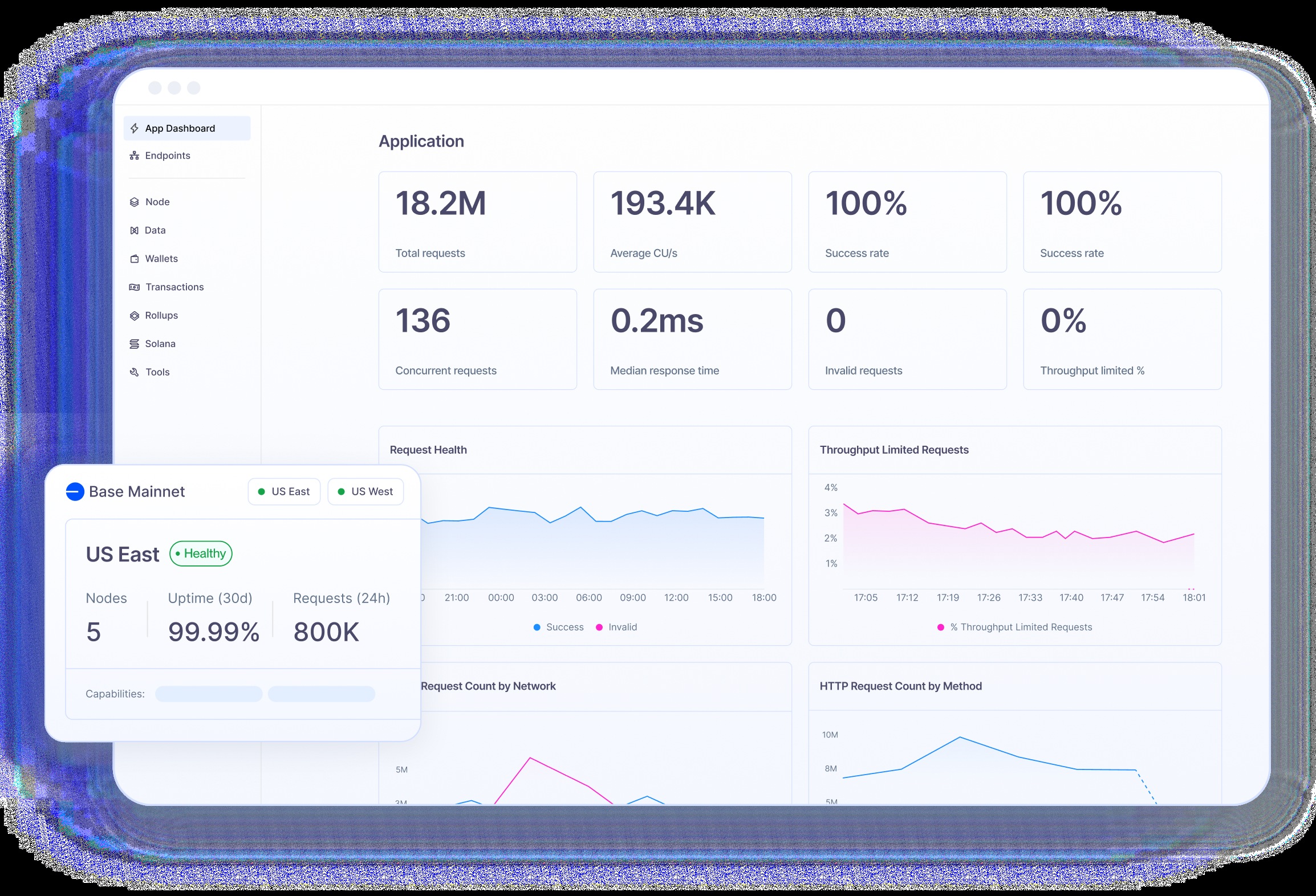
Its customers span quite different products. OpenSea represents the marketplace side; Phantom and Solflare the wallet side. Alchemy’s company materials also name Robinhood and Stripe. These names help explain the market position: the company sells to teams building the experience, while the people using that experience may never learn who answered the underlying request.
Two computer scientists, one recurring chore
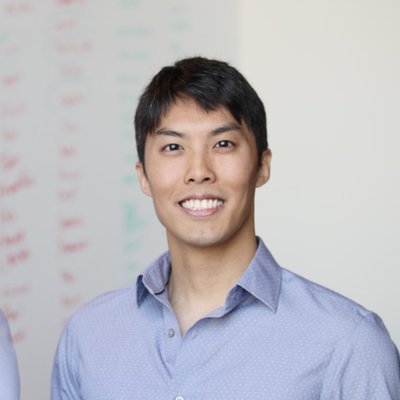
Nikil Viswanathan and Joe Lau founded Alchemy in 2017. Both earned bachelor’s and master’s degrees in computer science at Stanford. Viswanathan’s background includes work on products at Google, Microsoft, and Facebook. Today he is CEO; Lau, previously CTO, is president, focused on financial-services adoption.

The company’s mission is admirably easy to remember: “Bring blockchain to a billion people.” Its route to that audience runs through developers. Sell the builders dependable components, and their applications supply the distribution. Alchemy’s careers page makes the temperament explicit with values including ownership, customer obsession, and “The fast eat the slow.” It also advertises group meals and retreats. Even a business devoted to invisible infrastructure needs visible colleagues.
Investors paid for that prospect at a brisk pace. In April 2021, Alchemy raised an $80 million Series B led by Coatue and Addition. In October, a $250 million Series C led by Andreessen Horowitz valued it at $3.5 billion. In February 2022, another $200 million investment, led by Lightspeed and Silver Lake, set a $10.2 billion valuation.
Equity raised in each round. These bars measure financing, not sales.
That last distinction deserves attention. A financing valuation is a price agreed in a particular transaction. It is not an annual revenue figure, and the February 2022 number should keep its date attached. Alchemy’s business is usage and contracts; the valuation measures investors’ expectations of where that business could go.
The bill arrives in compute units
The entry point is free. Alchemy’s published plan includes 30 million compute units per month. Its pay-as-you-go rate is $0.525 per million compute units, with enterprise volume discounts, support packages, and signed service-level agreements available. Those are published prices checked in September 2026.
A compute unit is a billing measure of the work performed, rather than a promise that every request costs the same. More or heavier API calls can increase a bill. So “How many users will we have?” is only the first budgeting question. “What will each user cause us to ask?” is the one that gets interesting.
Illustrative base usage cost at the listed PAYG rate. Excludes discounts, add-ons, gas, and other charges; the free tier is a separate plan.
Transactions introduce another expense. Gas sponsorship lets an application pay a network fee for its user, rather than require that person to acquire a gas token first. The resulting interaction can feel ordinary: press a button and proceed. The fee still exists. Someone has simply arranged for the business to receive it.
Alchemy’s transaction tools include smart-account support, bundling, and gas management. They suit teams trying to remove awkward wallet steps, provided those teams can budget sponsorship and set appropriate controls. Removing a visible payment obstacle creates an invisible cost-management task. Hospitality has always worked this way.
The platform that learned to delegate
Alchemy expanded through acquisitions with distinct purposes. ChainShot, bought in August 2022, brought developer education. Alchemy said its previously paid course content, costing upwards of $3,000, would become free. Better-trained developers are potential customers who can actually use the product.
Satsuma, acquired in September 2023, brought blockchain indexing and became Alchemy Subgraphs. Bware Labs followed in August 2024, adding a Romania-based infrastructure team and a European presence. The announcement described more than 40 developers and engineers joining, along with infrastructure and support capabilities.
Then the catalog changed. Alchemy Subgraphs was sunset on December 8, 2025; its query endpoints were discontinued. Customers were directed to Goldsky. The change is a concrete limit to the idea that buying a product means maintaining it indefinitely. For a customer, integration work does not end when the purchase order is signed.
A platform’s history includes the products it stops asking customers to build upon.
YesPress
The wallet boundary shifted too. Current documentation marks Account Kit’s embedded wallets, signer support, and key management as deprecated, directing new integrations to Wallet APIs. In April 2026, Alchemy announced a partnership combining Privy’s embedded wallets with its own gasless transaction infrastructure. Privy handles authentication and keys; Alchemy handles another part of the transaction path.
These announcements do not disclose a private change of heart. They do show a changed product boundary. A developer copying the approach can separate jobs that must work together without insisting that the same vendor perform every one. The practical requirement is clear ownership when something goes wrong.
Which machine answers the question?
Alchemy’s engineering expertise sits beneath those APIs. Cortex, introduced in July 2025, is its engine for routing, scaling, failover, and data consistency. The company describes globally deployed servers, regional failovers, and routing that keeps requests near healthy infrastructure. The intended benefit is a fast, consistent answer without requiring customers to operate that system.
There are alternatives. Quicknode offers multichain APIs, data streams, webhooks, and dedicated infrastructure. Infura supplies managed blockchain APIs too. Developers can run their own nodes. Alchemy’s case therefore depends on the fit of its tools, support, data coverage, and operating cost for a particular application. A dramatic benchmark from one workload does not settle every purchasing decision.
- 01Your applicationAsks for data or sends a transaction
- 02AlchemyRoutes the request and returns the response
- 03Blockchain networkSupplies state and processes transactions
Simplified architecture. Alchemy supplies access; the underlying network still determines its own behavior.
A managed provider is a useful bargain when avoiding node operations frees a team to ship. It is less compelling when that team needs direct control over infrastructure, or when the required chain, API, or wallet integration is outside the service’s coverage. Wallet APIs currently support embedded wallets and server-managed keys; the integration overview says external browser wallets are not yet supported. That is a selection constraint worth checking before writing the integration.
The next customer might be software
Alchemy’s newer bets follow transaction friction into different markets. Its April 2026 Solana Fund offered $20 million in usage credits, with up to $25,000 per team and a 90-day validity period. It is an invitation to evaluate infrastructure on actual traffic, paid in the company’s own service.
AgentPay, introduced in open beta that month, places a payment interface in front of APIs for agent-driven requests. AgentCard addresses the other side: identity and payment tools for an agent acting online. In September, Alchemy announced Mastercard Agent Pay integration, with one-time-use payment credentials and controls over spending and merchant categories. An autonomous shopping assistant still needs a permitted way to pay.
The same month brought day-one Arc mainnet support and a DSRV partnership targeting blockchain data services in Korea and Japan. These moves put Alchemy closer to financial applications and regional enterprise buyers. They also broaden the original maintenance bargain: developers increasingly need transactions to work across systems with different rules.
The useful lesson is to map those rules before buying convenience. Identify the repeated chores, measure the request mix, test the real workload, and decide who owns authentication, infrastructure, and fees. Alchemy offers a substantial set of answers. Its most revealing answers may be the ones it now lets a partner provide.
Go straight to the machinery
Explore Alchemy, its pricing, documentation, product blog, and newsroom.
Follow on LinkedIn, X, Facebook, and GitHub. Watch Viswanathan and Robinhood’s Johann Kerbrat discuss tokenized markets, or browse Alchemy’s videos and tutorials.