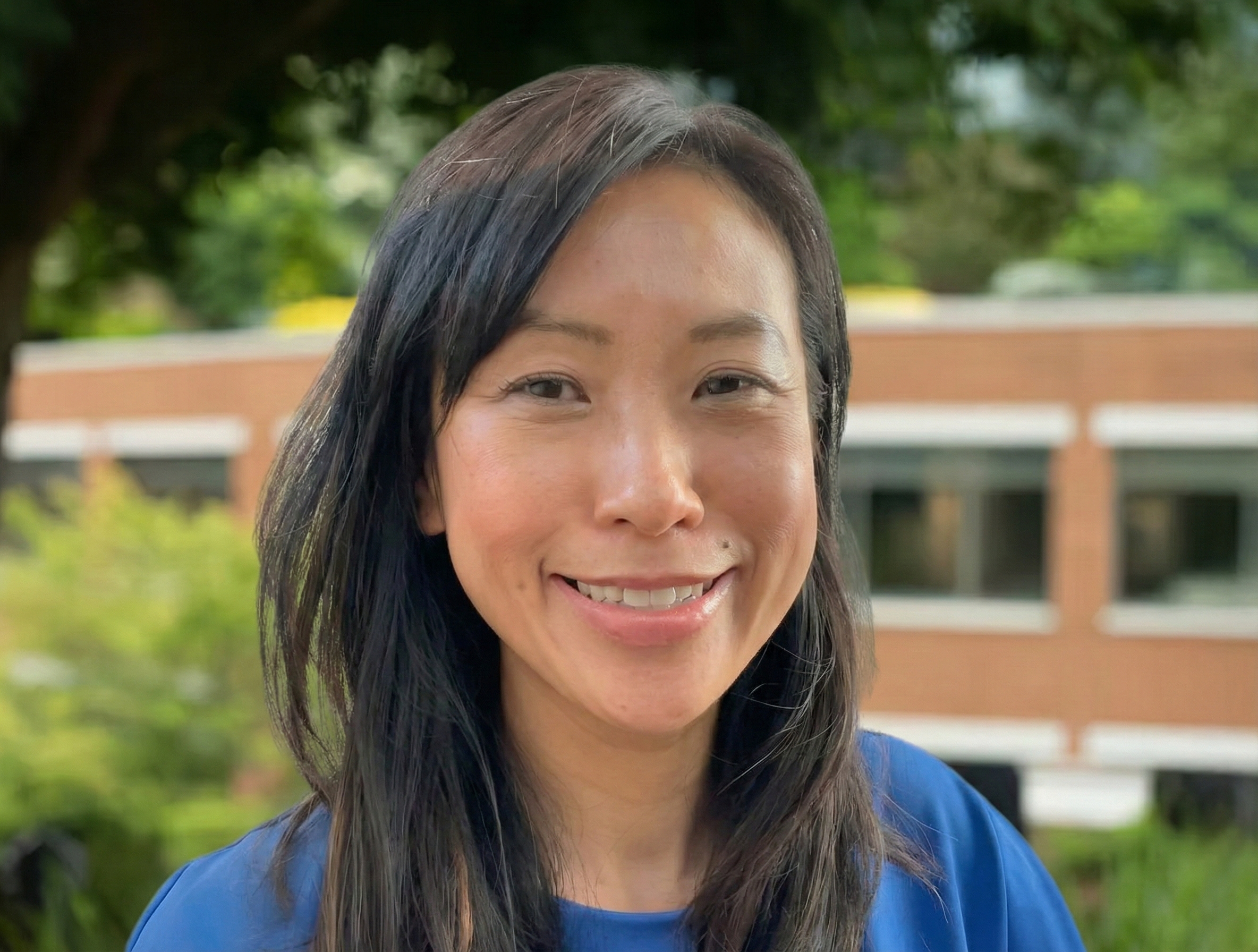
The Investor Who Saw the Next Wave Coming
In April 2019, Ethel Chen stood at a podium at the Bridge Forum in San Francisco - still the Senior Vice President of Venture Capital and Technology at GIC, Singapore's sovereign wealth fund. The portfolio she had helped build over the previous years already included names that would redefine enterprise technology: Zoom, before it became a verb. Databricks, before every Fortune 500 had a data lakehouse. Coinbase, before crypto was a dinner-table conversation. The question she kept returning to was not "which company is growing fastest?" It was the quieter one: "When does the enterprise actually change?"
That question has been the through-line of a career that now runs to more than two decades. Chen has moved through four of the most respected institutional investment platforms on earth - Norwest Venture Partners, GIC, CPP Investments, Sequoia Capital Global Equities - and in 2026 arrived at her own table: General Partner at Sentinel Global, a San Francisco-based multi-stage venture capital firm that closed its inaugural fund at $213.5 million in committed capital.
"Innovation stalls when builders and adopters don't meet. Our mission is to bridge that divide, connecting startup ambition with the real-world systems that drive enterprise markets."
- Jeremy Kranz, Managing Partner, Sentinel GlobalGIC - Where the Track Record Was Built
The most formative chapter of Chen's career was at GIC, where she spent roughly eight years inside the sovereign wealth fund's Technology Investment Group. The timing was fortuitous in the way that timing usually is when a good investor is paying attention: the late 2010s were the years when enterprise software, consumer platforms, and financial technology were converging in ways that traditional institutional allocators were only beginning to understand.
The GIC team's portfolio from that era reads like a curriculum for modern tech investing. Affirm, the buy-now-pay-later pioneer. DoorDash and Uber, logistics platforms that quietly became enterprise data businesses. Airbnb, a hospitality company built on top of distributed cloud infrastructure. Chainalysis, the blockchain analytics firm that made crypto legible to regulators and institutions. Databricks, the data lakehouse platform that became foundational infrastructure for AI. Snowflake, the cloud data warehouse. And Zoom - backed before anyone predicted the word "remote" would restructure the global economy.
The collective result of that work: 20 IPOs and 25 total exits. Tens of billions in returns. Not a single category where the thesis was "this might work." Every one of them was a bet on enterprise adoption - on the specific, often underestimated moment when a new technology crosses from "interesting" to "embedded."
Sequoia, CPP, and the Art of Pattern Recognition
After GIC, Chen spent time at CPP Investments as Managing Director in Growth Equity and Venture Capital, then moved to one of the most coveted perches in venture capital: Partner at Sequoia Capital Global Equities. At Sequoia, she led diligence and investment recommendations for high-growth private and public companies. The roster included Anthropic - the AI safety company that has since become one of the most important AI labs in the world - alongside continued work in the Databricks and Snowflake ecosystems.
The progression from sovereign wealth to pension fund to the world's most storied VC firm is not accidental. Each move added a dimension to how Chen reads markets. At GIC, she learned how global institutional capital flows toward technology risk. At CPP, she learned how pension-scale checks think about long-duration bets. At Sequoia, she refined what she already knew about picking category-defining companies at the moment they inflect.
The thread connecting all of it is enterprise: who is building the infrastructure, who is adopting it, and where the gap between those two groups creates durable investment opportunity.
Sentinel Global - The Reunion and the Platform
In February 2026, Chen joined Managing Partner Jeremy Kranz and fellow partner Karan Sharma at Sentinel Global - a reunion of colleagues from the GIC years. The firm's thesis is organized around three investment pillars that reflect exactly where Chen has spent her career looking.
The first is Enterprise and AI: distributed cloud infrastructure, SaaS applications, stream processing and analytics, and the emerging challenges of post-quantum encryption and AI-native security. The second is the "Finternet" - programmable money, stablecoins, DeFi, tokenized real-world assets, and blockchain infrastructure. The third is the Digitization of the Physical World: supply chain optimization, AI agents for logistics, bot-to-bot transactions, and last-mile delivery.
Sentinel Fund I closed at $213.5 million. But what makes Sentinel distinctive is not just the capital - it is the platform architecture. Sentinel Labs operates as the firm's intelligence engine: deep research, an advisory council, and an AI product called Sago designed for workflow automation. The pitch to portfolio companies is not just a check. It is the kind of research infrastructure that most startups cannot afford to build internally.
Stanford Engineer, Harvard Business - The Analytical Foundation
Before any of the funds and portfolios, there was the academic grounding that shapes how Chen approaches every company. A Computer Science degree from Stanford gave her the technical vocabulary to evaluate enterprise software at a level most investors cannot. An MS in Management Science and Engineering from Stanford added the systems-thinking dimension - how technology interacts with organizations at scale. An MBA from Harvard Business School completed the toolkit with the capital markets and strategy frameworks that institutional investors live by.
It is a combination that shows up in the specificity of Sentinel's investment theses. "Post-quantum encryption" is not a buzzword in a presentation slide - it is a category where the underlying mathematics, the enterprise adoption curve, and the regulatory pressure all converge in a way that is legible to someone who has read the computer science literature and watched institutions move capital for twenty years.
What She Is Watching Now
The categories Sentinel is tracking in 2026 are exactly the ones that require the kind of compound pattern recognition Chen has been building since the early 2000s. AI agents for supply chains. Stablecoin settlement rails. Tokenized real-world assets. Interoperable commerce infrastructure. Open computing architectures that let enterprises run workloads across providers without vendor lock-in.
Each of these categories is at roughly the same inflection point that Zoom was in 2019 - technically proven, institutionally underestimated, and sitting at exactly the gap between builder and adopter where Chen has spent a career finding value.
The $213.5 million in Sentinel Fund I is the capital. The real asset is twenty years of knowing which gap to stand in.