A loyalty coupon seems an unlikely place to begin a discussion of financial infrastructure. It promises something modest: come back, buy again, receive a reward. For Blockwave Labs, that ordinary transaction became one route into a much larger question. How do you persuade people to use blockchain without making the machinery their problem?
- Builds Web3 products and financial infrastructure for businesses and protocol ecosystems.
- Its history includes wallets, NFT loyalty tools, staking products and arbitrage vaults.
- Danal invested in November 2025 to support stablecoin payment development.
The Seoul company’s path has wandered. Its historical company profile describes a property technology business founded in 2020, followed by a blockchain pivot in 2021. Today, its public presentation emphasizes institutions, payment networks and a system called BWL. The revealing detail is the sequence of jobs its products attempted. Each involved taking scattered assets or operations and giving someone a more manageable way to use them.
A coupon is a surprisingly good test
In August 2023, Outlier Ventures introduced Yours, a Blockwave Labs product, as an enterprise NFT solution for customer loyalty. It covered points, membership rewards and coupons. Yours joined seven other companies in the Aptos x Outlier Ventures Move Accelerator, a twelve-week program offering technical support, mentors and introductions. By October, the cohort had graduated.
The customer here was a business with a rewards program, rather than someone hunting for the next collectible. That distinction matters. A merchant already understands why a coupon exists. The engineering question is whether a blockchain product can make issuing and managing that reward useful enough to justify the extra machinery. A token, however handsome, still needs a job.
Yours’ 2023 accelerator program
One of eight participating companies
Other experiments reached different users. TON published a July 2023 presentation featuring Invincible TON and Teleswap. Nexton’s public documentation describes TON-based asset management, while its GitHub repository contains contracts written in Tact and FunC, tests and deployment references. These are tangible pieces of engineering to inspect. The product names provide the theatre; the contracts provide something a developer can actually examine.
The trader disappears into the wrapper
Blockwave’s market work addressed another form of friction. In December 2024, Neutron identified the company as a builder on Duality, its trading venue combining orderbook and automated-market-maker features. Blockwave’s stated role was arbitrage vaults: a way for users to participate in price-gap trading without operating the strategy themselves.
Arbitrage sounds beautifully tidy. Buy where an asset costs less; sell where it costs more. The untidy part is execution. Prices change, transactions cost money, and a visible difference may disappear before a trade completes. Putting the process inside a vault changes the user’s workload. It does not make the underlying economics cease to matter.
Neutron also named Margined and Astroport among its builders. This places Blockwave inside a working ecosystem of trading and liquidity specialists. Its particular contribution was the strategy wrapper. For a protocol team, that is a different purchase from commissioning an ordinary website: the software must understand markets as well as screens.
“Make your own assets. Onboard to Web3”
Blockwave Labs’ LinkedIn tagline
The company’s Wave page groups its experience into automated cross-ecosystem arbitrage, liquidity provision with real-time monitoring, and directional trading using data-driven signals. Those are three different tasks. Exploiting a price discrepancy, supplying tradable inventory and taking a view on market direction call for different decisions, even when the same development team supplies the tools.
Then a payment company bought in
In November 2025, Danal announced a strategic investment through Danal Investment Partners, alongside technical cooperation with Blockwave Labs. Reporting described Danal becoming the company’s second-largest shareholder. The stated purpose was to strengthen a stablecoin platform covering issuance, distribution, payment and settlement, including improvements to security, Web3 compatibility and real-time onchain processing.
That relationship moves the story closer to the payment counter. A company buying engineering capability needs more than a clever trading idea. It needs transactions to connect with the systems that businesses already use. The change in emphasis is consequential: the buyer’s concern becomes what happens to money throughout an operational process.
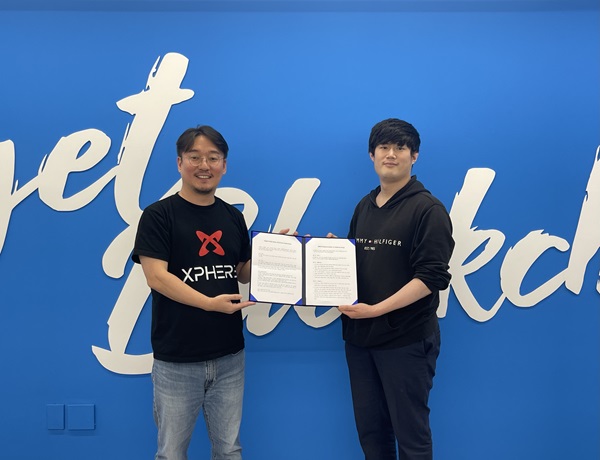
There was already a habit of working across organizational boundaries. The Seoul Labs agreement covered Xphere ecosystem expansion, technical and business support, and Web3 education. Blockwave’s own site now describes PayChain as a Danal Fintech settlement collaboration. Its public demo outline follows a payment event through a receipt, a batch and a cryptographic anchor to a proof or report. The receipt gets a longer career than most shoppers imagine.
An operating system with a family tree
The current organization requires a little translation. Blockwave Labs describes itself as carrying institutional relationships and its product heritage. BWL is the broader system, with SoftBlock for financial operations, Wave Research for market intelligence, and Minimum Labs for AI and automation. Portfolio, Wave and Labs on the original website serve as product and collaboration archives.
Blockwave Labs connects institutional relationships and collaboration heritage to this company-described structure.
Its business direction is infrastructure-as-a-service: reusable components for financial work. The proposed customer can be a payment provider, institution or enterprise. The attraction is coordination across payment, settlement, treasury and reporting. Read that as the company’s intended architecture. An operating-system label explains how the parts belong together; buyers still need to evaluate the particular workflow they intend to run.
A builder’s habit worth borrowing
My reading of the history offers a practical lesson. Start with an identifiable nuisance and a person who needs it removed. A merchant’s coupon, a trader’s execution task and a payment operator’s settlement record are concrete enough to build around. Partners can evaluate those jobs more readily than a promise to reinvent finance.
For a prospective customer, the same principle supplies a useful test. Choose one process, inspect the relevant contracts or demo, and ask how it connects to existing operations. Trading strategies need opportunities that survive costs. Institutional payments need appropriate permissions, reliable processing and accountable reconciliation. Blockwave’s evolving product map is interesting precisely where it meets those ordinary requirements. The money has somewhere to go; the software must get it there.