b2b-marketplace
(44)
Avito sold Russia on secondhand. Now it wants the whole business.
The Russian classifieds platform grew by helping strangers trade. Its next bet is to make the same marketplace useful for buying equipment, hiring staff and keeping a small company running.
Alibaba Wants to Sell You the Shop - and the AI Behind It
The company that connected small factories to the world is putting billions into the computing behind commerce. Its next act hinges on whether the machinery can become as valuable as the marketplace.

Justdial turned “Who do I call?” into a business
A telephone directory born in a Mumbai garage became a nationwide market for customer enquiries. Thirty years later, Justdial’s business still depends on the hard part: helping a small firm get the next call.

Auto Avaliar built a business on the car you trade in
The Brazilian platform connects vehicle appraisals with dealers ready to buy. Stellantis paid €54 million to increase its stake to 95% - and the company is taking its model from used cars to heavy machinery.
ShipServ and the paperwork behind $7 billion in ship supplies
An early dream of an eBay for ship supplies ran into customers who liked their own software. Connecting those systems became ShipServ’s business - and the foundation of a maritime trading network.

Fairmarkit Found Billions Hiding in the Purchases Nobody Wanted to Touch
Fairmarkit started with the corporate purchases too small and tedious for anyone to love. Now its AI agents run sourcing work from intake to award - and customers say the bigger prize is not merely savings, but time.

The hospital repair problem PartsSource solved by admitting its first idea was wrong
A dot-com directory failed because biomedical technicians had their hands inside broken machines, not on a mouse. Twenty-five years later, PartsSource has turned that lesson into a clinical-technology operating system used across 15,000 sites.
Keychain Put 50,000 Factories in a Search Box - Now It Wants to Run Them
The New York startup made contract manufacturing searchable, raised at least $78 million in publicly announced funding, and turned buyer demand into a software wedge. The useful lesson is less about AI than about starting with the ugliest spreadsheet in a valuable industry.

Apex Trading Bet Cannabis Wholesalers Wanted Their Customers Back - Then the Market Came Around
Born from the wreckage of an early cannabis marketplace, Apex Trading rebuilt the model around flat-rate software, direct buyer relationships and the gloriously unsexy work of keeping inventory, orders and compliance in sync.
The Cars Aren't Moving. Broom Found Money Hiding Under the Hoods.
Indonesia's small used-car dealers do not lack cars. They lack liquid inventory. Broom built a business around the difference - and turned the showroom floor into a financial network.

The Company Private Equity Calls When the Clock Is Ticking
BluWave built an invite-only network of vetted specialists and matches buyout firms with the exact consultant, interim CFO, or diligence team they need - usually inside a day, usually for free.

RIA.com Built a Marketplace Around the Part Everyone Else Skips: Verification
Ukraine’s RIA.com turned the messiest part of classifieds - deciding what to trust - into a product. Across cars, homes, goods and farm machinery, verification is the connective tissue.

Safi
Safi is a climate-tech company building software for the recycling industry. It launched in 2021 as TrueCircle and first operated the recycling sector's first digital B2B marketplace, matching international buyers and sellers of recyclable plastics, paper and metals with quality verification, logistics and embedded financing. The company reached more than $40M in annualized GMV within its first year. It has since sharpened its focus on AI-powered quality control - a computer-vision product that turns a phone photo of a bale into instant composition data for PET, HDPE and aluminium cans, helping recyclers price and plan material more accurately. Led by CEO Rishi Stocker, Safi raised a $19.5M Series A in 2023 and works with recyclers across dozens of countries.

The 102-Year-Old Furniture Company Is Learning to Carry Less
Hooker Furnishings began with a steam whistle and a community-funded factory. A century later, its next act depends on a smaller portfolio, faster logistics and turning a vacation state of mind into a whole-home business.
BeMyGuest - Tours & Activities
The Singapore company quietly wiring up Asia's tours and attractions - one booking system, one distribution network, and a decade spent digitising an industry that still ran on paper tickets.

Aruna
Aruna is Indonesia's largest integrated fisheries commerce platform, connecting small-scale coastal fishermen directly to domestic and global seafood buyers through a digital supply chain. Founded in 2016 by three Telkom University students, it removes layers of middlemen, uses local agents and mobile tools to onboard fishers, and pairs commerce with traceability, cold chain, and sustainability programs. The company operates across most of Indonesia's coastline and exports to dozens of countries under a 'People, Profit, Planet' mission.
Alephee
Alephee is an Argentine cloud platform that helps automotive aftermarket brands, wholesalers and distributors sell parts online across Latin America. It standardizes fragmented product catalogs, adds vehicle-fitment data, keeps prices and inventory in sync, and connects the entire distribution chain to marketplaces like Mercado Libre and Amazon so an offline reseller network can be replicated online.
Vendra
Vendra is a San Francisco-based, YC-backed (S24) manufacturing platform that connects hardware teams with US manufacturers for custom parts. Customers submit a single RFQ; Vendra reads the CAD and drawings, matches the job to domestic suppliers with the right equipment and open capacity, gathers competitive quotes, and manages production through delivery. It is ITAR-registered and focused on aerospace, defense, and hard-tech companies, positioning itself against legacy quoting platforms like Xometry and Protolabs with real-time capacity matching.
FoodByUs
FoodByUs is an Australian B2B food procurement platform that lets restaurants, cafes, pubs, caterers and aged-care venues order wholesale supplies, manage invoices, track prices and handle payments in one place. Founded in 2016 by the team behind Menulog, it connects thousands of hospitality venues with wholesale food and alcohol suppliers, layering software - digital ordering, an AI-powered Invoice Hub, menu costing and finance tools - over the traditionally phone-and-paper world of restaurant supply.

Glife Technologies Pte Ltd
Glife Technologies is a Singapore-based B2B food and agri-tech company that digitizes the food supply chain across Southeast Asia. It connects farmers and suppliers directly with restaurants, hotels, caterers and retailers through an app-based sourcing marketplace, its own cold-chain distribution network, and an in-house ERP platform called GlifeWare. By cutting out layers of middlemen and aggregating demand, Glife aims to lower costs for buyers, give farmers reliable access to end-buyers, and improve food safety and food security in the region.
Gokomodo
Gokomodo is Indonesia's leading agribusiness supply chain company, blending a digital B2B procurement and e-commerce platform with a physical distribution network to connect large agribusiness corporates, cooperatives, farm stores, and smallholder farmers. Founded in 2019, it sources and delivers agricultural inputs - fertilizers, agrochemicals, equipment and more - at competitive prices, handling roughly 2% of national fertilizer distribution and serving an ecosystem of over 3,000 companies across Indonesia.

GudangAda
GudangAda is an Indonesian B2B e-commerce marketplace founded in 2019 that connects manufacturers, distributors, wholesalers and retail stores across the country's fragmented fast-moving-consumer-goods supply chain. Alongside its marketplace it offers logistics, merchant tools and financing so small retailers can source, order, pay and receive goods in one app. After scaling to roughly half a million SMEs and about $6 billion in transaction value on more than $135 million of venture funding, the company retrenched from its capital-intensive FMCG model and pivoted toward beauty and personal-care retail under its Kaka Beauty brand.

HXE (Huixiaoer)
HXE (Huixiaoer) is a Beijing-based MICE technology platform that lets companies search, compare and book hotel conference rooms, meeting venues and event services online. Marketed globally as Eventbest, it aggregates 150,000+ hotels and event venues, has served more than 400,000 corporate clients, and partners with major hotel groups including Marriott, Hilton, IHG, Shangri-La, Wyndham and Langham. HXE turns a traditionally offline, quote-by-phone procurement process - meetings, conferences, incentive trips and group business travel - into a one-stop digital marketplace covering venue data, price comparison, catering, accommodation and logistics.

Open Mineral
Open Mineral is a Swiss-based, AI-driven metals trading firm and digital marketplace that connects miners, smelters, and traders to buy and sell physical metal raw materials - such as copper, zinc, lead, gold and silver concentrates - directly and transparently. Founded in 2017 by former Glencore traders, the company pairs a physical trading desk with proprietary data and pricing algorithms to digitize a historically opaque, relationship-driven industry, and has onboarded hundreds of mining and metals companies across dozens of countries.
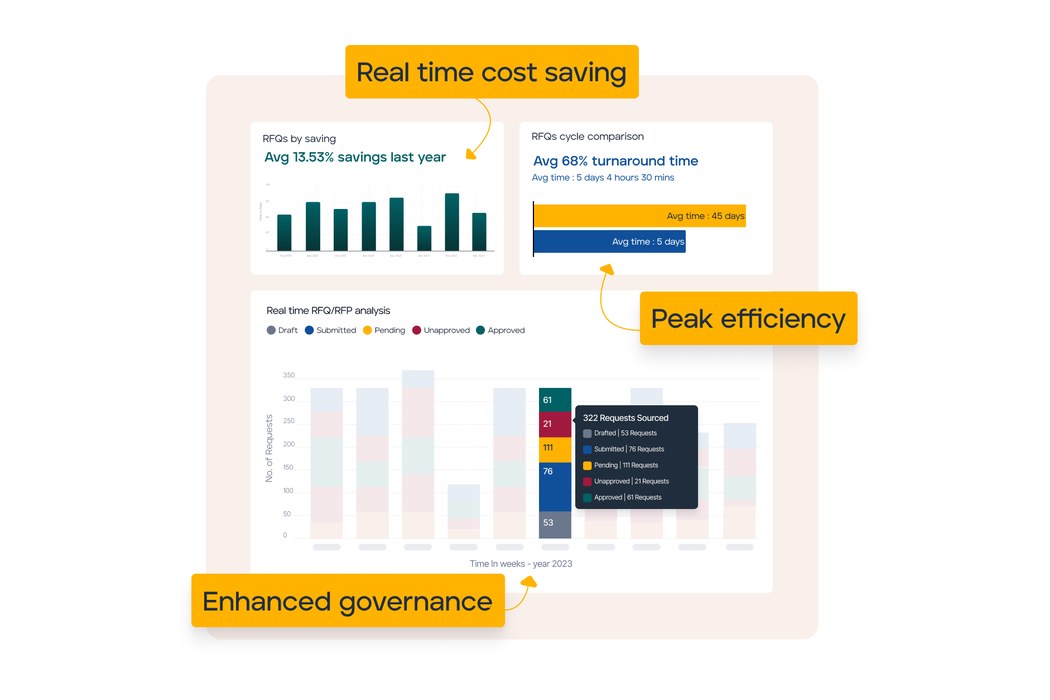
penny.
penny. is a Saudi-based B2B SaaS company that digitizes the full source-to-pay procurement cycle on one cloud platform. It combines e-sourcing, RFQs, purchase orders, supplier management, spend analytics and AI-driven automation so enterprises can cut costs, tighten governance and speed up buying. The modular, customizable system is used by companies across 75+ countries and is layered with AI tools like the Bidly.ai sourcing assistant to make procurement faster and more transparent.

Ralali.com - B2B Marketplace
Ralali.com is Indonesia's pioneering online B2B marketplace, founded in 2013 by Joseph Aditya to help micro, small and medium enterprises (MSMEs) source products and grow. What began as a marketplace for industrial and MRO supplies has expanded into the Ralali Group B2B ecosystem - connecting more than 1.5 million users to suppliers across multiple industries and layering on financing, agent sales, go-to-market, calibration and waste-management services. The company has raised roughly $35-37M across six rounds through Series D and reports over US$850 million in cumulative transaction value.

Watermelon Ecosystem
Watermelon Ecosystem is a Dubai-based B2B platform for the food and beverage industry that connects restaurants, hotels, cafes and caterers with local and global suppliers. Founded in 2020 by former restaurateur Omar AlShamsi, it bundles a supplier marketplace, cloud POS, analytics and embedded financing into one system so F&B operators can consolidate ordering, cut purchasing time and paperwork, manage inventory and access working capital. The company raised a $4 million Series A in 2024 at a $29 million post-money valuation.
Agro.Club
Agro.Club is a New York-based agri-tech company that runs a full-stack B2B grain marketplace connecting farmers, crop buyers, food companies and input suppliers on a single digital platform. Founded in 2018 by Egor Kirin, it pairs crop marketing, logistics and market data with embedded fintech tools such as invoice financing and factoring, aiming to make grain trade more efficient, transparent and secure across North America, Europe and South America.

Axial
Axial is a private deal network for the North American lower middle market, connecting business owners, M&A advisors, private equity firms, lenders and corporate acquirers to source, market and close transactions confidentially. Founded in 2010 by Peter Lehrman, the platform uses matching algorithms and CRM-style tools to privately introduce sell-side deals to relevant buyers, and its 20,000+ members have transacted more than $25 billion across 2,000+ closed deals.

INTURN
INTURN is a New York-based enterprise SaaS company that helps brands and retailers manage, price and sell their excess and end-of-season inventory. Founded in 2013, it built one of the first digital platforms to replace spreadsheets and email in the roughly $250 billion off-price apparel trade, connecting sellers with a global network of buyers in private, controlled online showrooms. The platform centralizes inventory data, automates offers and negotiations, and provides analytics to recover margin on stock that would otherwise be liquidated at a loss. INTURN raised $36 million in venture funding, including a $22.5 million Series B in 2017 led by B Capital Group, and was acquired by AI retail company Mad Street Den in November 2022.