A shared spreadsheet has no subscription fee. This is its most seductive quality and, in wholesale cannabis, often its most expensive joke. A rep changes a quantity. A warehouse ships against yesterday's number. Metrc, the state compliance ledger, reports something else. The buyer sees an out-of-stock item after ordering it and quietly finds another vendor. Nobody sends an invoice for the confusion, but the bill arrives anyway.
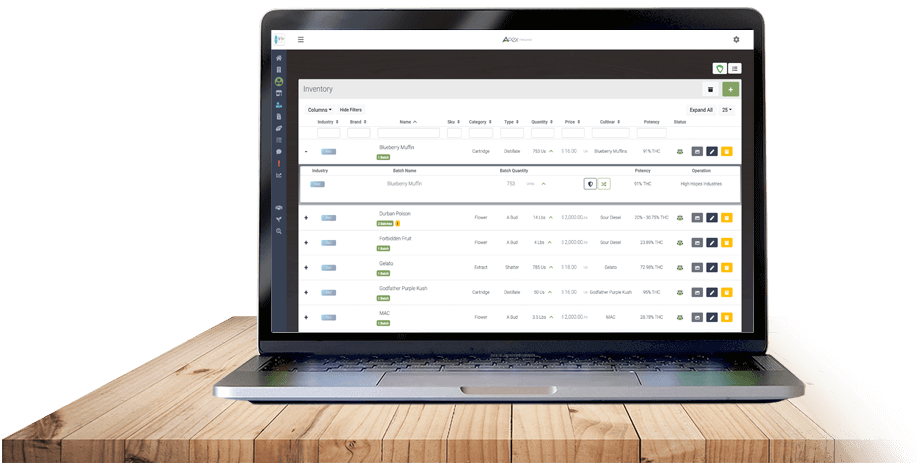
Apex Trading lives in that gap. The Portland company makes business software for licensed cannabis cultivators, extractors, manufacturers, distributors, brands and dispensary retailers. Its platform puts inventory, orders, customer records, branded wholesale storefronts, marketplace discovery, sales activity and reporting in one system. Integrations connect the system to Metrc, accounting tools such as QuickBooks and Sage, cannabis ERPs, payments, analytics and delivery services.
This is not consumer weed delivery, nor a point-of-sale terminal at the dispensary counter. It is the business-to-business machinery behind the shelf: the live menu a salesperson sends to a buyer, the available units attached to that menu, the order that becomes an invoice, the compliance record that has to agree and the follow-up task that should not depend on somebody remembering a text thread.

The first thing that failed was the original dream
Apex's founding story begins with another company. In 2014, John Manlove became the first employee at Tradiv, an early wholesale marketplace whose pitch was memorably huge: build the Amazon of cannabis. Future Apex co-founders Jenn Do and Rob Fess also worked there. Tradiv was early, ambitious and ultimately undone. Manlove has described its history as marred by poor executive decisions and problems inside and outside the company.
The useful part of the failure was specificity. An open marketplace could help a buyer discover a seller, but it could also flatten a hard-won brand into another listing and put a third party between two people who needed to trust each other. Cannabis wholesale is unusually relational. Products vary by harvest and batch. Payment terms can change after a history of clean orders. State rules differ. A generic marketplace can create the introduction while missing the working relationship.
“We feel the relationships should be between wholesale Buyers and Sellers, not 3rd parties, brokers or marketplaces.”Apex Trading's statement of intent
When Apex launched in 2018, it kept marketplace discovery but built the product around the operator. Sellers could create their own branded storefronts, set buyer-specific products and prices, manage direct accounts and use the broader vendor marketplace for leads. That hybrid is the company's central product decision: discovery can be shared; the customer relationship should not be confiscated.
What the software actually does
For a seller, Apex maintains real-time inventory, imports or synchronizes regulated package data, processes orders, produces documents and sends order data toward accounting. The CRM records buyers, sales activity, tasks, samples and account status. A sales team can issue a private, shoppable menu instead of emailing a static PDF that becomes false the moment another order lands. Reports show product performance, stock, buyer behavior, rep activity and sample conversion.
For a retail buyer, the system provides vendor and product search, direct ordering, order history and shared documents. For a multi-store operator, one account can reduce the archeology expedition through emails, texts and attachments. Apex's marketplace can generate leads, while the private storefront gives the seller control over presentation and terms.
The integrations are part of the product, not a decorative partner page. QuickBooks mapping moves products, buyers and orders without retyping them. Metrc connections help supported operators align available inventory with state-tracked packages. Flourish, Canix, Distru, Dutchie and other ERP connections let production systems hand wholesale work to Apex. CannaHauler extends an order into compliant transportation. In June 2026, FundCanna announced plans to embed ReadyPaid, allowing approved buyers to receive terms while sellers are paid immediately.
The price is part of the argument
Apex sells its core software as a flat monthly subscription rather than taking a percentage of every sale. Current rates are quote-based, so the important published fact is the shape of the bill, not a universal dollar figure. Unlimited sales volume under a predictable fee matters in an industry where taxes, price compression, packaging, compliance and slow-paying buyers already lean on margins.
Illustrative economics - not a price quote
That positioning became sharper when operators objected to rising costs elsewhere in the category. LeafLink remains the obvious reference point and the best-known direct alternative. Leaf Trade, Distru, Canix, Flourish, Dutchie, Nabis, Marjin and specialist tools overlap with pieces of the workflow. But Apex's most durable competitor may still be the homemade stack: Google Sheets, Excel, email, text and a staff member who knows where everything lives.
In 2026, Manlove said Apex asked buyers outside its network how they preferred to order. Many said spreadsheets were faster, especially across multiple stores. The company did not try to win the argument. It shipped Google Sheets and Excel menu and order-import features, then expanded APIs so procurement and vendor-managed inventory systems could exchange data with Apex. That is a small product decision with a large lesson: adoption improves when software bends around proven behavior before asking behavior to change.
A small team with mud on its shoes
Apex describes itself as “Plant First,” a phrase that could have remained conference-booth wallpaper. Its more credible expression is operational. Manlove has said everyone on the team spends time in grows, extraction facilities and edible manufacturers so the product reflects the work. The company has hired people with cannabis backgrounds, supported industry groups and offered deferred or discounted payments to some clients hit by COVID-19 and Western wildfires.
It is also a fully remote company. LinkedIn places it in the 11-to-50 employee band. What is observable is a lean posture: in a 2025 interview, Manlove discussed expanding across 28 states plus Puerto Rico with a small team, listening closely to clients and avoiding the founder's habit of keeping every decision trapped at the top.

The company has raised outside capital, but not on the scale of the category's loudest venture stories. A $1.67 million seed round in 2019 was led by 7thirty Capital and WelCan Capital, with SilverLeaf Venture Partners and Panther Opportunity Fund participating. A reported $110,000 convertible note followed in 2021. Apex remains privately held.
The part worth stealing
The copyable idea is not “build cannabis software.” Regulated markets punish tourists, every state carries its own exceptions and the operators have already heard enough generic SaaS pitches. The useful pattern is how Apex converted scar tissue into constraints.
A five-line product brief anyone can borrow
- Start with the failed workflow, not the fashionable category.
- Protect the relationship your customer uses to make money.
- Charge in a way that does not punish successful usage.
- Integrate with the trusted tools already on the desk.
- Visit the work, find the duplicate entry and automate that handoff first.
Apex also demonstrates the value of staying in one layer. It can connect to seed-to-sale systems without becoming one, connect to accounting without rebuilding a ledger and connect to logistics without buying trucks. That leaves room for partners while making the wholesale record more useful. The market intelligence business follows naturally: anonymized orders produce actual pricing and demand signals across product categories and states.
Where the model breaks
Software does not rescue bad operations by itself. Inventory synchronization depends on accurate source records and supported integrations. A company that refuses to maintain product, customer or compliance data will simply create a more expensive mess. A business that needs cultivation planning, manufacturing recipes, point-of-sale and general accounting in one database may need a full ERP around Apex or instead of it.
Apex requires licensed wholesale commerce. It is not designed for illicit sales or a jurisdiction without a functioning regulated supply chain.
Automation is only as reliable as package, inventory, buyer and order records. Dirty inputs travel faster too.
State rules and Metrc implementations vary. An unsupported market or specialized process can narrow the benefit.
Teams still need to use the shared workflow. Imports help, but software cannot force sales, warehouse and finance teams to agree.
Nor does a marketplace guarantee demand. Discovery tools can introduce vendors, but the seller still needs a competitive product, credible service, sensible pricing and disciplined collections. Manlove has been blunt about accounts receivable: Apex will not solve the industry's credit crisis. The platform can add holds, payment tools, workflow controls and transparency; it cannot manufacture a buyer's cash.
The next act is access
By mid-2026, Apex was leaning further into the information created by its operating network. Its Q2 snapshots covered Alaska, Maine's medical and adult-use markets, Massachusetts, Missouri, Montana, New Jersey, Oregon and Vermont, using anonymized transactions rather than surveys. Expanded APIs aimed to let clients pull data into procurement and inventory systems in real time. ReadyPaid addressed the other stubborn gap: a seller's need for cash today and a buyer's need for terms.
The company now occupies a useful middle position. It is more structured than email and spreadsheets, less totalizing than a giant ERP and less extractive than a marketplace that grows its fee with every order. Its history explains the shape. The founders already watched the “Amazon of cannabis” dream go wrong. Apex Trading is the second draft - narrower, more relational and far more interested in whether the invoice matches the inventory.