Alibaba once wanted to send its cloud business out into the world on its own. Now it wants to build much of its future around it. That reversal is a useful place to start with a company whose name can mean a factory directory, a shopping app or the computing that makes an AI assistant answer back.
In November 2023, Alibaba abandoned a planned full spin-off of its cloud division, citing uncertainty created by American restrictions on advanced chip exports. In February 2025, it announced at least RMB380 billion, then about $53 billion, for cloud and AI infrastructure over three years. The business marked for separation had become a destination for capital.
The wager reaches beyond chatbots. Alibaba wants to supply the computing and intelligence that other businesses use, while applying those capabilities across its own commerce operations. For a company built around helping strangers trade, the next transaction may involve renting processing power instead of ordering a container of merchandise.
An apartment, eighteen founders, one awkward problem
Alibaba began in Hangzhou in 1999 with 18 founders led by Jack Ma, a former English teacher. The original opportunity was easier to grasp than today’s corporate chart: small businesses needed a way to find buyers beyond the people they already knew. A manufacturer could be capable of making a product and still be practically invisible to an overseas customer.
Alibaba.com put suppliers and potential buyers into the same digital room. Its founding proposition remains useful because international sourcing is full of friction. Discovering a factory is one job. Describing the product, negotiating an order and deciding whether to trust the other party are several more. A directory opens a door; completing a transaction requires considerably more furniture.
That distinction explains much of Alibaba’s expansion. The company kept adding services around buying and selling. Taobao brought it into Chinese consumer commerce in 2003. Tmall, introduced as Taobao Mall in 2008, gave brands a distinct retail platform. Alibaba Cloud followed in 2009; Cainiao arrived in 2013 to address logistics. Each addition widened the company’s role in getting business done.
Pick the right Alibaba
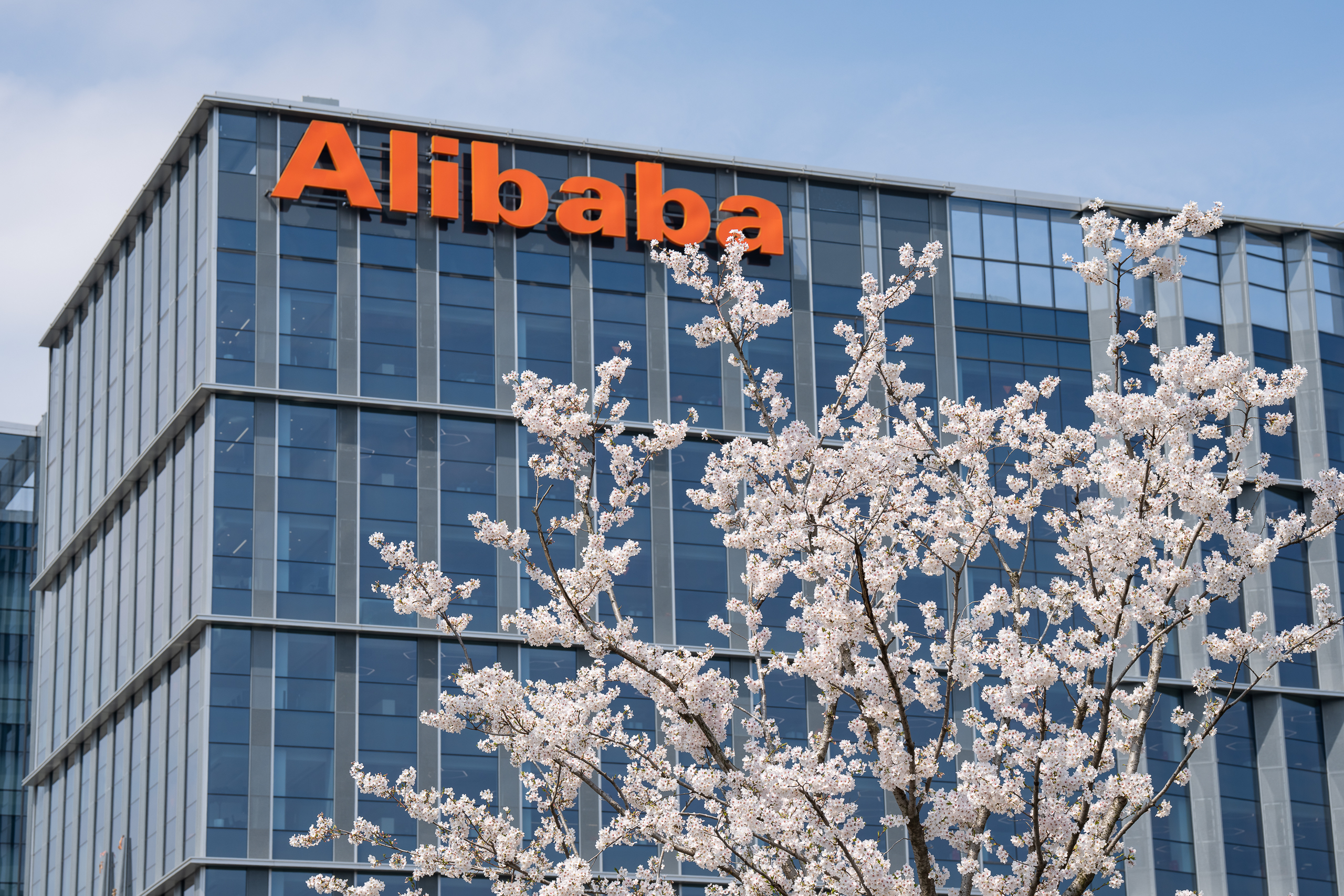
The first practical instruction for a new user is to choose the right entrance. Alibaba Group is the parent company. Alibaba.com is its international business-to-business marketplace. AliExpress is aimed at consumer shopping. Similar names, different shopping lists.
A small business developing a product might use Alibaba.com to find manufacturers, compare capabilities and request samples. A Chinese retailer might source inventory through 1688. A brand seeking Chinese shoppers might look at Tmall. Consumers browse Taobao; international shoppers encounter AliExpress and, in Southeast Asia, Lazada. These platforms serve related needs without being interchangeable.
The distinction matters to the budget. Wholesale sourcing can involve minimum order quantities, customization, sampling, freight and import costs. The price beside a listing is therefore a starting point for a conversation, not necessarily the cost of a finished product sitting on your shelf. Consumer shopping generally asks a different question: can this seller deliver this item at an acceptable total price?
For an importer, Alibaba.com’s own sourcing guidance offers a sensible sequence: shortlist suppliers, describe the order precisely, request a sample and consider inspection. Keep the agreement and communications on the platform when using its protection services. None of this is glamorous. Neither is discovering that your definition of “heavy-duty” differed from the factory’s.
1688
Tmall · AliExpress
Logistics
Qwen
The trust business hiding inside the marketplace
Trade Assurance makes the trust problem visible. Eligible purchases made through Alibaba.com can receive help with disputes involving shipment or product terms. The platform’s published guidance ties protection to the order agreement and the payment process. It is a mechanism for handling a documented transaction, with conditions attached.
That makes the purchase order an unusually consequential piece of writing. Dimensions, materials, quantity, quality requirements and shipment timing should be explicit. Buyers should review the current terms and claim deadlines for their orders. The service cannot turn an undefined expectation into a measurable specification after a disagreement has begun.
Alibaba says Trade Assurance carries no additional protection fee for buyers, although particular payment methods can incur processing charges. The wider procurement bill remains yours. Samples cost money. Inspections cost money. Shipping a bulky product costs money. A marketplace improves access to suppliers; it does not abolish the arithmetic of manufacturing.
There is a lesson here for smaller companies building marketplaces: identify the moment a willing customer hesitates. Search may get someone interested, but uncertainty about payment or delivery can stop the sale. A useful service removes that specific obstacle. Adding another thousand listings may do much less.
How Alibaba gets paid
Alibaba earns money in several ways because it performs several jobs. Merchants pay for advertising and other customer-management services. Marketplace businesses collect commissions and supplier membership revenue. Cloud customers buy computing services. Logistics generates service revenue, while some retail operations sell merchandise directly.
This mixture makes casual comparisons hazardous. The total value of goods sold across a marketplace is not the marketplace operator’s revenue. Direct retail sales and service fees also enter accounts differently. Alibaba reported RMB1.024 trillion in revenue for the fiscal year ended March 2026, approximately $148.4 billion at its reporting exchange rate. That is a group revenue figure, not the value of everything shoppers bought.
The competitive field depends on the task. Chinese shoppers can turn to JD.com, Pinduoduo and Douyin’s commerce offerings. Overseas, Alibaba’s platforms meet Amazon, Temu, Shopee and local alternatives. Cloud buyers have another shortlist, including Huawei Cloud, Tencent Cloud and the international providers. Alibaba’s distinguishing feature is the breadth of those connected activities. Breadth alone does not establish that each service is the best fit.
The cloud came back with a bill
The canceled spin-off is the clearest documented change of mind in Alibaba’s recent strategy. The 2023 separation plan promised a different corporate shape. Chip-export restrictions changed the circumstances, and management explicitly cited them when abandoning the full cloud split. It would be a stretch to read every subsequent AI decision into that announcement, but the direction since then is unmistakable.
The 2025 infrastructure commitment exceeded what Alibaba said it had spent on cloud and AI over the preceding decade. A commitment is a plan, however, not a receipt. Its eventual return depends on customers finding enough valuable work for the capacity being built.
By the June 2026 quarter, AI Cloud and Compute Services revenue was up 45% year over year. Group capital expenditure reached RMB67.7 billion, compared with RMB38.7 billion a year earlier. Those numbers describe different things: sales growth in a segment and spending across the group. Together they convey the pace of the investment, without proving its ultimate payoff.
One quarter. A much bigger outlay.
Group capital expenditure for the three months ended June 30. Rounded; bar lengths start at zero.
In August 2026, Alibaba announced completion of a HK$80 billion share placement, earmarking net proceeds for AI capabilities and infrastructure. The capital question is no longer theoretical. Investors are financing a buildout whose economic life must extend beyond the excitement surrounding the latest model release.
Qwen gives the developer another entrance
Qwen is Alibaba’s family of language and multimodal models. Its significance lies partly in how people can use it. Downloadable releases let developers adapt and run models themselves, while hosted offerings provide another route through cloud services. The Qwen3 release in April 2025 included open-weight models under Apache 2.0, giving developers concrete software to inspect and deploy.
For a business, the choice is operational. Running a model yourself means taking responsibility for hardware, deployment and maintenance. Using a hosted model replaces some of that work with a service bill and a dependency on the provider. Licenses, capabilities and pricing vary by release; “Qwen” is a family name, not a single uniform product.
Alibaba’s open-source presence extends beyond models, with public repositories for developer infrastructure and software. The commercial logic is plausible: tools can attract developers who later need paid services. That is an interpretation of the model, not evidence that every download becomes a paying customer. Adoption and revenue deserve separate scoreboards.
Even a marketplace has boundaries
Before the cloud reversal came a more painful correction. In 2021, Chinese authorities imposed an approximately RMB18.2 billion antitrust fine after finding Alibaba had abused its dominant position, including through merchant exclusivity practices. The penalty exposed a conflict between making a marketplace attractive and using its power to constrain participants.
Alibaba’s stated mission is succinct:
“To make it easy to do business anywhere”
Alibaba Group’s mission
Its published values put customers before employees and shareholders. Those statements are useful standards against which to judge conduct; they are not an independent audit of the workplace or every merchant’s experience. The antitrust episode belongs in the story precisely because the company’s promises are so closely tied to expanding opportunity.
Nor does the broader strategy work equally well everywhere. A sourcing platform is less attractive when quantities, lead times or freight costs overwhelm the savings. A cloud service must suit the customer’s location, software and operating requirements. AI infrastructure earns its keep only when demand and pricing justify the resources committed to it.
A very specific ambition: 102 years
Alibaba says it wants to last 102 years. Founded in 1999, that would take it into 2101 and across three centuries. It is an eccentric way to make a corporate horizon feel concrete. The more immediate test is whether the next investment solves a problem customers will pay to remove.
The Olympic partnership offers a tangible example. For Milano Cortina 2026, Alibaba Cloud described work with Olympic Broadcasting Services on cloud-based content distribution and with the IOC on an AI assistant. Here, computing has an identifiable job: helping move video and making official event information easier to access.
From factory discovery to broadcast distribution, Alibaba’s recurring idea is to turn a difficult commercial task into a service. Readers can copy that habit without copying its scale: find the bottleneck, make the result measurable and charge for something useful. Alibaba’s own challenge is to apply the same discipline to a new generation of exceptionally expensive machinery.
Explore the businesses
Alibaba Group · Alibaba.com · Alibaba Cloud · Qwen blog · GitHub · Alizila news
LinkedIn · X · Instagram · Facebook