b2b-fintech
(40)
Curql puts the customers on the cap table
More than 160 credit unions are pooling capital to back the fintech they want to use. Curql’s wager: a startup’s investors can also help it find its market.

HIFI and the surprisingly expensive wrong name
A Nigerian importer can have the money, the supplier and the car - and still fail to pay. HIFI’s wager is that fixing the plumbing of money matters more than making it travel faster.
LoanStreet makes the loan sale the beginning of the story
A loan can change hands in days and demand attention for years. LoanStreet connects the marketplace to the machinery that keeps lenders, investors, and borrowers on the same page.

Altruist found the expensive part of advice: getting it done
Independent advisors do not lack things to say. They lack hours to act. Altruist built a custodian around that problem - and now Vanguard has agreed to buy it.

Tesorio and the art of getting paid
A sale can look splendid on paper and remain stubbornly absent from the bank. Tesorio builds software for the awkward journey between the two.
BVNK and the price of a Saturday
Money can cross a blockchain in seconds. Getting it into somebody’s usable balance is the harder trick - and the business Mastercard bought BVNK to help solve.
Jeeves and the curious cost of crossing a border
A corporate card is a small piece of plastic. Jeeves has spent years turning it into a way around the expensive geography of business finance.

Airbase and the Cost of Asking Too Late
A company can approve a purchase in minutes and spend weeks explaining it. Airbase built a business around closing that gap - and gave Paylocity a route from payroll into the rest of the company’s spending.
The Invoice Was Sent. Then the Real Work Began.
Quadient Accounts Receivable Automation grew from YayPay's bet that collecting money should be a system, not a scavenger hunt through inboxes. Its best evidence is in the days finance teams got back.
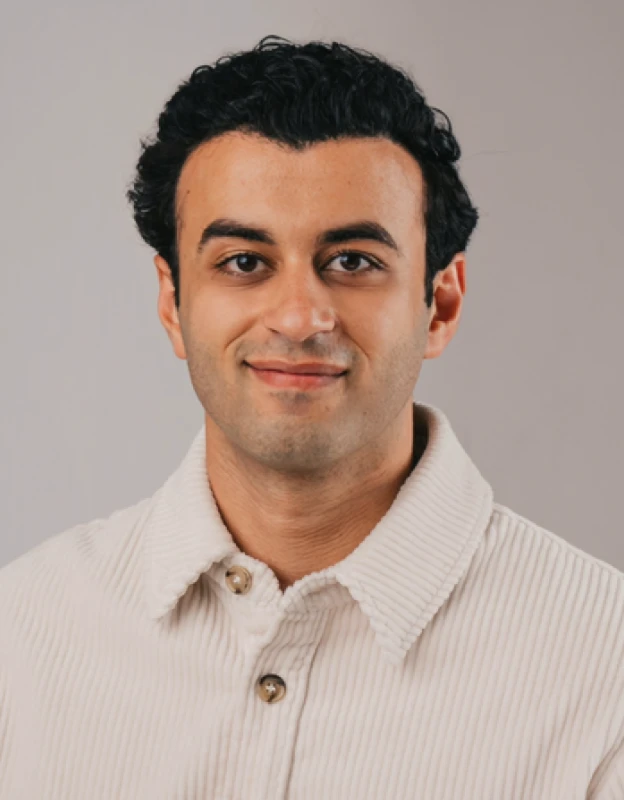
Jonathan Awad Is Teaching Finance to Trust Strangers Again
His parents arrived in America without a file that could vouch for them. Decades later, the Baselayer co-founder is building the machinery that decides which businesses - and now which AI agents - deserve to be believed.

Kendall Warson Learned to Sell the Invisible
She trained in fashion, filled rooms with immersive art, and cold-pitched hundreds of investors. Now Kendall Warson is applying a curator's eye to one of business's least glamorous problems: getting invoices paid.

Compass Plus Technologies sells banks the freedom to change
Behind Klarna accounts, Mongolian payment infrastructure and a Cambodian debit-and-credit card sits a less familiar name. Compass Plus Technologies builds the software that lets financial institutions decide what comes next.
Vitesse Wants to Get Insurance Money Out of the Waiting Room
An approved claim can still leave a policyholder waiting for cash. Vitesse is rebuilding the funding and payment machinery behind insurance, one crowded chain of accounts at a time.
United Fintech wants banks to share the machinery
Five global banks have bought into Christian Frahm’s fintech group. His wager: rival institutions can share the software behind finance while competing for the business in front of it.

Dustin Sedgwick Keeps Making Invisible Businesses Feel Like the Main Event
He helped turn Surface into a sports story, made corporate payments fill arenas, and now wants professional firms to hear the music in their own data. Dustin Sedgwick's specialty is giving backstage machinery a front-row seat.

The $160 Billion Spreadsheet Problem Handle Wants to Pour Into Concrete
Construction payments come wrapped in waivers, deadlines and state-by-state rules. Handle turned that paperwork trap into a software platform now touching more than $160 billion in invoices and financial workflows.

Dom Okiemute Is Selling African Fintech Something Priceless: Less Anxiety
After a decade inside banking and fintech, the Miden CEO has reduced his product philosophy to one Nigerian business truth: reliable money movement is peace of mind.
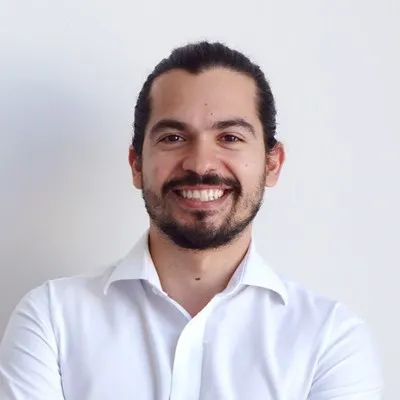
Carlos Medellin Is Making Money Keep Trucking After the Banks Clock Out
The former CFO behind Coba is turning the US-Mexico border from a banking obstacle into an operating detail - starting with the freight companies that cannot wait for Monday morning.

Mark Schacknies Keeps Building the Same Machine - Only Faster
Across property booms, platform pivots and two exits, the NFTYDoor co-founder has kept returning to one stubborn question: why does moving money through real estate still require so much friction? His answer is equal parts software, distribution and knowing exactly whom the product must serve.

PlanScout Bought a 13-Year-Old Planning Engine - Then Turned 15 Hours of Advisor Work Into 3
Financial advisors have plenty of software and too little time. PlanScout's answer is a hybrid: buy the planning engine, add a human service layer, and return a client-ready plan in days.

The Ex-Coinbase Custody Boss Wants Your Business Bank Account to Run on Stablecoins
Dakota looks like a normal business bank account. Underneath, your dollars are stablecoins backed by Treasuries you actually control - and that quiet swap is the whole pitch.
RapidFunds Turned the Awkward Wait After a Settlement Into a $336 Million Niche
Plaintiffs' lawyers can win a settlement and still wait months to get paid. RapidFunds built a business around that strange gap - buying earned-but-delayed legal fees so law firms can make payroll, fund the next case and keep moving.
The VC Fund Whose Limited Partners Are Also Its Portfolio's First Customers
Most venture funds hand founders a check and a Rolodex. Canapi Ventures hands them roughly 70 banks that write the check and then become customers.

Monkey’s R$200 Billion Trick: Make Banks Bid Against Each Other
The Brazilian fintech found a simple way to loosen a stubborn credit market: put approved invoices in front of many funders and let the lowest rate win. Now its infrastructure is moving from supply chains into cards, white-label banking and Brazil’s new digital-duplicata system.

1Token
1Token builds institutional back-to-front office software for crypto funds and financial institutions. Founded in 2018 and led by Damon Xu, the company runs a portfolio management system (PMS), risk management system (RMS), trade reconciliation, and T+0 shadow NAV accounting that stitch together fragmented CeFi exchanges, DeFi protocols and TradFi accounts into one book. Today it connects 80+ CeFi venues and thousands of DeFi protocols, serving 100+ institutional clients that monitor more than $20B in assets across APAC, North America and Europe.

Spark Systems Pte Ltd
Spark Systems is a Singapore-based financial technology company building next-generation electronic foreign exchange (eFX) trading platforms. Its ultra-low latency aggregator and eFX solution platform give banks, hedge funds, central banks, sovereign wealth funds and corporate treasuries fast, resilient and cost-efficient access to FX liquidity, price construction, auto-hedging, risk control and white-label distribution. Founded in 2016 by veteran FX trader Wong Joo Seng, the company is backed by global institutions including HSBC, Citi and Goldman Sachs, and counts OCBC and ATFX among its partners.

Exponent
Exponent is a New York-based fintech building a financial operating system for America's franchise operators. It combines expansion and acquisition lending, a franchise-focused corporate charge card, and an AI-powered accounting suite so multi-unit operators - the people running dozens of Burger Kings, Dunkins, or Wendy's - can get capital faster and see real-time financials without waiting for month-end reports. Founded in 2023 and led by former Visa and Stripe executive Sohel Roopani, Exponent serves 100+ operators representing over 10,000 locations and raised $40M in equity and credit in 2026.

Ron Gaver
Ron Gaver is the co-founder and CEO of Tapcheck, a Plano, Texas fintech that lets hourly workers pull earned wages before payday. He runs the company with his wife Kayling Gaver, having spent 14 years operating a real estate development firm before pivoting to payroll technology in 2019. Under his leadership Tapcheck has moved more than $1 billion in early wages across roughly 12,000 employer locations and raised $225 million in equity and debt in April 2025.

Blooms
Blooms is an AI-driven trade finance platform that gives Latin American fresh-produce exporters faster access to working capital, cross-border factoring, and multi-currency payments as they ship fruits and vegetables into the US and Canada. Founded by fintech veteran Francisco Mere, the company purchases exporters' US receivables, absorbs the credit risk stateside, and advances up to 80% of an invoice within 24 hours - smoothing the cash-flow gap that has long strangled growers who sell perishable goods across borders. It raised a $2.6M seed round in May 2025 led by agritech VC SP Ventures.

Coral
Coral is a New York-based climate fintech that lets HVAC and electrical contractors turn complex government and utility rebates into instant, upfront discounts at the point of sale. Its AI-powered platform verifies rebate eligibility on the spot, files the paperwork directly with programs, and advances the rebate funds - typically within one business day - so homeowners can knock thousands off a heat pump install at the kitchen table. Coral raised a $7.5M seed round in March 2026 and works with 100+ installers across the Northeast.