Every invoice has a second life. In its first, it is a tidy document: number, date, amount, terms. In its second, it becomes a conversation. Did the customer receive it? Is the purchase order wrong? Has someone promised to pay? Which part is disputed? At many businesses, the answers live in separate inboxes, spreadsheets and memories. YayPay built a company around that untidy second life. Today the product is called Quadient Accounts Receivable Automation, or Quadient AR.
- Quadient AR is cloud software for B2B teams that manage credit, collections, disputes, payments and cash application.
- Its ancestry is YayPay, founded in 2015 and acquired by Quadient in 2020.
- The most useful customer evidence is specific: Jumio reports a 24-day fall in days sales outstanding after adoption.
- The economic idea is simple: make the buyer's next step clear, and make the collector's next task obvious.
The old ritual had a hidden bill
At Jumio, staff accountant Rachel Mariano said she spent an entire day each week contacting customers with overdue balances and used Google Docs to track the work. Her role had expanded from accounts payable into accounts receivable, so every manual reminder took time from other accounting duties. She wanted one view of the customer account that finance, sales and management could share. This is a small detail with a large consequence: if one team knows a bill is disputed and another sends a generic late notice, the software has automated an embarrassment.
Quadient AR connects to accounting and ERP systems, then organizes invoice status, collection communication, payment options, disputes and cash application around those records. Teams can set reminder sequences and escalation rules; a buyer can use a portal to view invoices and pay. Analytics show aging balances and predict payment behavior, so collectors can spend more attention on accounts that look likely to slip. The product does not make a reluctant customer solvent. It helps a team tell a solvable delay from a genuinely difficult one.
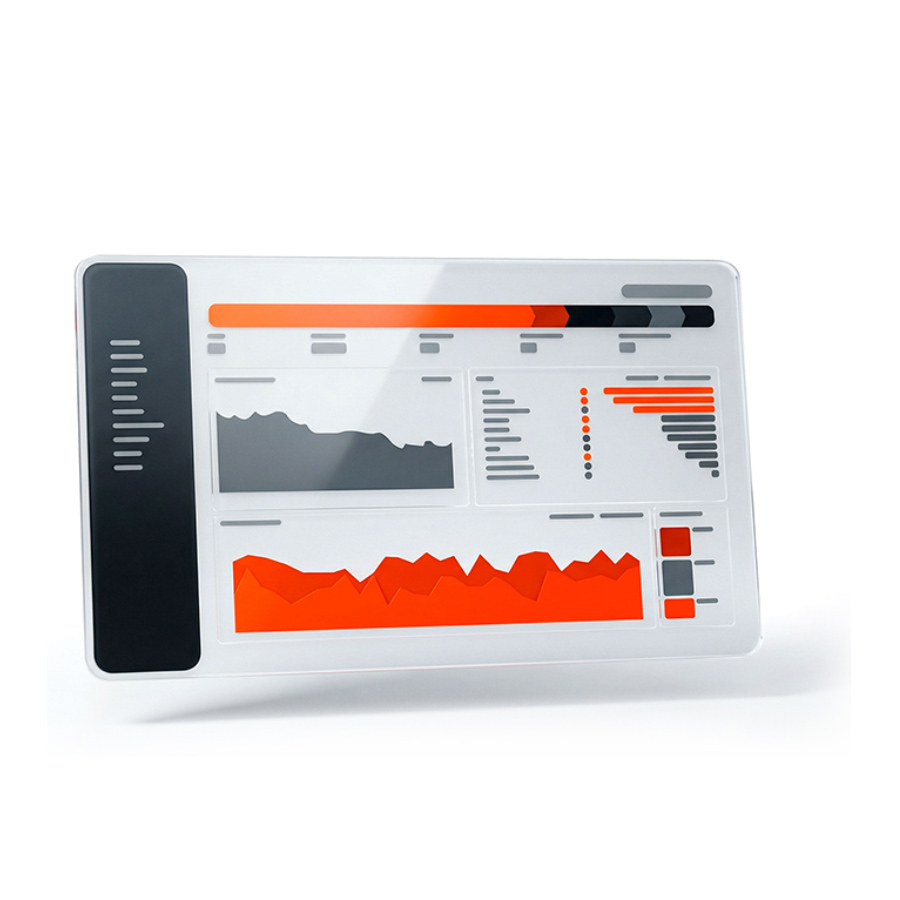
Jumio's account shows the difference. Dynamic statement links let customers inspect and settle their accounts themselves. Mariano still personally contacted customers at risk of missing payments, while the routine messages and shared communication history moved into the platform. Quadient's case study reports that days sales outstanding, or DSO, fell by 24 days, a 29% reduction. That is one customer's result, under its own conditions. The interesting mechanism is the pairing of a clear customer view with a finance team that can see the same history.
“We realized we needed to automate our efforts to save time and improve collection speed.”Rachel Mariano, Jumio
A startup found the gap after the invoice
YayPay appeared at TechCrunch Disrupt London in 2015. Co-founder and CEO Anthony Venus described the ambition as giving small businesses capabilities usually reserved for large ones. Co-founder and president Saul Frank explained an early idea: bundle a customer's invoices into a statement, so the reminder is one intelligible request instead of a spray of separate nudges. It sounds almost comically modest. But B2B payments often break on modest things: an attachment the buyer cannot find, a balance that does not match, a reply no one logs.
By 2018, the pitch had moved upmarket. YayPay's US$8.4 million Series A, led by Information Venture Partners, was meant to support data science, product development and sales. The product had become a tool for finance departments at mid-sized enterprises, using invoice history to predict when a customer might pay and helping teams coordinate the follow-up. The company was selling software as a service; today's Quadient AR site still sends prospects through a demo-led sales process. A public subscription price is not listed.
The acquisition in July 2020 gave the product a different kind of distribution. Quadient paid more than €17 million in cash for roughly 87% of YayPay. The logic was visible in the paperwork: Quadient said about half the documents handled through its customers' mailing equipment were invoices or invoice-related, and roughly a third of YayPay customers already used Quadient mail equipment. Quadient was close to the beginning of the invoice journey. YayPay handled what came after.
YayPay became Quadient Accounts Receivable by YayPay in November 2022. Venus's announcement called it a rebrand rather than an immediate product change. The broader Quadient Suite now places AR beside accounts payable, invoice delivery, customer communications and a cash dashboard. That breadth is a distinction from a standalone reminder tool: the seller can connect delivery, the ensuing conversation, payment and reconciliation. It is also a wider buying decision, involving system integration and the habits of several teams.
These figures describe separate events and customer accounts. They are not a forecast for a new buyer.
What broke first was visibility
The customer stories make an unexpectedly consistent point. GoTo's previous partner had a static product and weak support, according to Quadient's case study. It chose Quadient AR partly for its NetSuite integration, customer portal and willingness to take product feedback. When monthly invoice volume rose 26% from 2019 to 2020, GoTo reported handling it without additional headcount and reducing DSO by half a day. A global hearing-aid manufacturer had a different problem: after a merger, two credit teams worked in different ERPs. With Quadient AR, it reported a 27% reduction in DSO and customers paying 18 days faster on average. In each case, the first failure was fragmented information and follow-up, rather than the absence of another payment reminder.
Quadient AR sits among specialist alternatives such as HighRadius, Versapay, Esker and Invoiced, and the less glamorous alternative of working from an ERP, email and spreadsheets. Its offer is to coordinate the whole credit-to-cash stretch: credit decisions, collection sequences, disputes, payment and cash matching. It lists integrations including NetSuite, SAP, Microsoft, Sage, Acumatica, Salesforce and Workday. In 2025, Quadient announced a Nuvei integration for payment processing across North America, the UK and Europe. In 2026 it introduced AR Express, a narrower offering for growing small and midsize businesses.
AI has joined the sales vocabulary, but the useful question remains operational. Quadient says its tools can predict payment behavior and rank accounts for collectors. A late payer score is useful if the underlying invoice and payment records are current, and if people can override a poor recommendation. Quadient's own guidance says collectors still handle disputes and relationships. That is a sensible boundary. No model can repair a missing purchase order by sending the fifth cheerful email.
The best automation may be the reminder that never goes out, because the team already knows why the bill is late.
The part a reader can steal
There is a practical playbook here even for a team that never buys Quadient AR. First, put every open invoice, promise to pay and dispute in one shared place. Second, sort accounts by size, age and the reason for delay, not simply by who shouts loudest. Third, give customers a statement they can understand and a direct route to settle or dispute it. Fourth, automate only the routine messages, and reserve human time for exceptions. Finally, measure DSO and the hours spent on follow-up together. Faster cash bought with a ruined customer relationship is an expensive bargain.
The conditions matter. A business with very few invoices may not need a specialized platform. A company whose customer and invoice records are inaccurate will merely automate confusion until it cleans them. And buyers who cannot or will not pay require credit policy, negotiation or judgment, not another workflow. The software works best where there is enough recurring B2B volume, enough clean data and enough cooperation between finance, sales and customer teams to make a shared view real.
That returns us to the invoice's second life. The document itself is easy to admire: precise, numbered, final. The money arrives through a much less tidy process of questions, corrections and timing. YayPay's enduring insight was to treat that process as part of the product. Quadient AR is what that insight looks like after acquisition, integration and a decade of trying to shorten the distance between “sent” and “paid.”