In June 2025, Curql did something unusually literal for an investment firm. It placed capital through GreenState and Veridian credit unions using a deposit platform developed by ModernFi CUSO, the first company backed by its second fund. The investor became a user. The credit unions became the route through which the money moved. For once, the diagram in the pitch deck had a bank balance.
- 160+ credit unions pool capital and help fintech companies reach buyers.
- Fund I closed at about $252 million; Fund II followed at $360 million.
- The accelerator puts founders inside credit unions; subscriptions open another route to the network.
That transaction offers a better introduction to Curql than the usual venture-capital vocabulary. Plenty of investors promise connections. Curql starts with a particular connection: the institutions supplying investment capital are also prospective customers for the technology being financed. It gives a familiar cooperative habit a new assignment.
The cheque comes with a customer list
Curql is a credit union-led investment collective. Credit unions commit capital to funds that back fintech businesses; the wider ecosystem supplies introductions, shared expertise and product feedback. Next Level Ventures handles professional fund management. Curql Collective connects the investment work with the credit union community.
The problem is practical. A credit union wants better lending, safer payments and digital services its members will actually use. Evaluating young technology companies takes time and specialist knowledge. A founder, meanwhile, may have useful software and no sensible way to reach the people authorised to buy it.
Curql brings those jobs closer together. It says its diligence assesses whether companies are “credit union ready,” and its collective holds portfolio board seats to influence development. Investors gain early access and negotiated pricing. Founders gain potential buyers who can explain what needs fixing before a product becomes an expensive misunderstanding.
“Our mission is very simple; we bring fintech to credit unions.”
Nick Evens · President & CEO · September 2023
A bigger circle than planned
The name is pronounced “circle,” with C and U doing conspicuous service for credit unions. Curql launched in 2020; early reporting described the collaboration between Members Development Company’s credit union partners and Next Level Ventures. The origin matters because the distribution network preceded the glossy investment story.
Fund I began investing in April 2021. Its original $150 million ceiling proved too small for investor demand, and the cap was raised above $250 million. It closed that October with 69 limited partners; Curql subsequently reported the total as $252 million. The revision was a response to institutions wanting in.
Fund II was announced in September 2023 and its $360 million final close in August 2025. Curql now reports more than 160 credit union participants and over $600 million in assets under management. These numbers describe the capacity to invest. The harder question is what gets used.
Twelve weeks to learn how buyers think
Curql Accelerate, powered by gener8tor, makes customer access part of the curriculum. The format selects five fintech companies per cohort for twelve weeks, including three weeklong visits to credit union headquarters. Founders meet executives and operational teams, demonstrate products and receive feedback from people living with the problems.
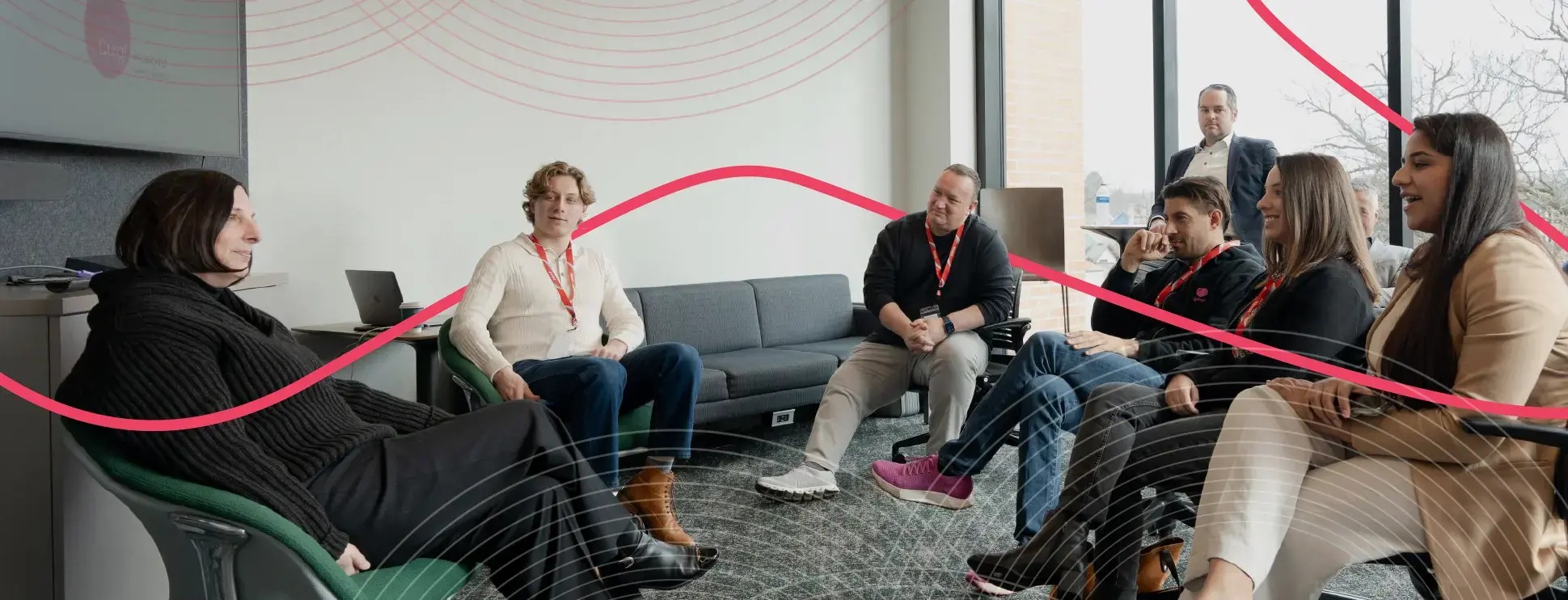
The first cohort visited MSUFCU in East Lansing, VyStar in Jacksonville and WSECU in Olympia. Its companies included Casap, Peacefully, Privacy Lock, Ranqx and Spiral. The geography is revealing: this is a market reached through institutions, each with its own priorities and purchasing habits.
per cohort
programming
credit unions
Coaching → Demos & feedback → Showcase
The offer has changed. A 2024 account described a $100,000 investment for each startup. The current program describes a non-dilutive travel grant and no equity surrendered to participate. Curql’s live accelerator page reports 57 post-program credit union customer relationships and 31 pilots across its cohorts. Those are company-reported outcomes, not a promise to the next applicant.
What the money buys
There are distinct ways into the ecosystem. Fund investors commit capital and participate in investment economics. Credit unions can also pay an annual subscription for resources, working groups, fintech showcases and negotiated discounts without investing in a fund. Access to useful software and ownership of its producer are different purchases.
The investment route has meaningful costs. Envisant’s Fund II aggregation FAQ described a $2 million minimum for direct investment. Its alternative pooled smaller commitments through special Envisant shares, with a 25-basis-point annual administration charge: $250 on $100,000. That example is the aggregation fee, not an all-in fund expense quotation.
The same document describes an approximately ten-year fund life and explains how losses can reduce distributions and the eventual share repurchase value. Participating indirectly also changes governance rights. A credit union looking for a near-term return of cash has a different problem from the one this arrangement addresses.
When Curql uses its own portfolio
ModernFi provides the concrete example: Curql backed the platform and then used it through participating credit unions. Other portfolio companies tackle different chores. Eltropy supplies member communications; DefenseStorm addresses cyber risk; Zest AI works on lending decisions. Curql’s role is to finance and connect these businesses, rather than build one banking application itself.

The remit keeps widening. Curql announced a Stablecore investment in February 2026, adding digital asset infrastructure. A Wagmo announcement published in August brought pet healthcare benefits into the picture. September’s leadership expansion added Blake Woods and Amber Harsin and promoted Loriann Mancuso. The network has work beyond raising the next fund.
Copy the proximity
Curql has alternatives. TruStage Ventures also finances fintech and connects companies with credit unions. Institutions can invest directly or buy technology through ordinary vendor relationships. Curql’s particular proposition is collective capital coupled with an organised community of prospective users.
The transferable idea is modest: involve buyers early, pool specialist evaluation and give feedback somewhere to land. It depends on a shared market, patient capital and products that survive institutional scrutiny. Introductions cannot make an unsuitable product useful. Curql’s experiment makes the distance between building and buying shorter; the companies still have to cross it.