Banks compete ferociously over customers. United Fintech is betting they can be more neighbourly about the machinery. Barclays, BNP Paribas, Citi, Danske Bank and Standard Chartered have all invested in the company, which acquires specialist financial technology businesses and brings their products under a common commercial roof. Picture rival restaurants jointly buying the kitchen equipment. The menus can still be different.
The proposition has a distinctly unglamorous attraction: less procurement. A bank choosing a small software supplier must assess the technology, the security, the business and the people expected to answer the phone when something goes wrong. United Fintech wants to turn a collection of those relationships into one manageable counterparty. Its website now promises a single commercial agreement spanning multiple specialist solutions.
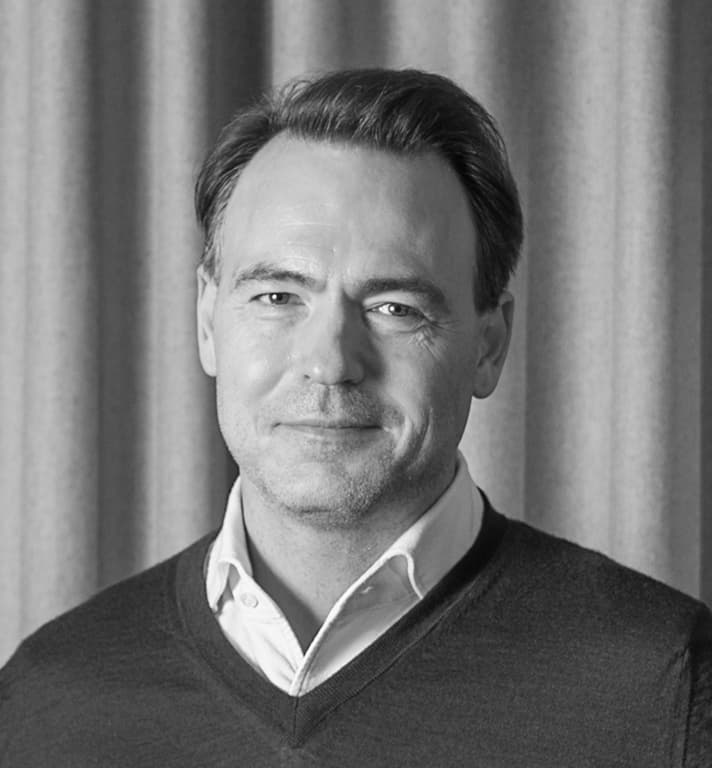
Founded in 2020 by Danish entrepreneur Christian Frahm, the London-headquartered group has expanded from capital-markets software into commercial banking and investment management. It reported seven fintech businesses at the end of 2025. Its current website says more than 250 institutions use its technology. Those figures describe a substantial institutional footprint, although they do not mean every customer buys every product.
The ownership arrangement is the interesting part. The banks supply capital and a route into the concerns of actual buyers. United Fintech says no single bank controls the platform. That matters when the next prospective customer may be a shareholder’s competitor. Neutrality is central to the sales proposition; the practical test is whether institutions with different priorities can keep finding useful common ground.
INVESTORS
BUSINESSES
USERS
02A buyer with a salesman’s memory
Frahm arrived with experience at Bloomberg and Saxo Bank and a previous business, CFH Group, behind him. His new company launched in November 2020 with a majority stake in NetDania already acquired. NetDania supplied market data, charting, APIs and trading interfaces. The strategy began with working technology and established users, giving the group something concrete to sell from its first day.
Frahm’s launch statement put his preference plainly: “We believe banks serve as a core part of our society”. United Fintech would help those institutions adopt technology. Alongside him was Tom Robinson, a former Goldman Sachs managing director and head of electronic FX sales, appointed partner and head of sales. Distribution was part of the product from the beginning.
In a 2023 interview, Frahm described seeking specialist businesses with positive cash flow and room to grow. That is an important distinction within fintech: the group’s acquisition thesis starts after a product has demonstrated commercial usefulness. A founder gets access to a larger sales organisation and operational support. United Fintech gets expertise that would take time to assemble organically.
Launching a business selling to global banks during the pandemic made relationship-building awkward. Frahm later told Argella that video calls reduced the need to travel. The observation is modest but revealing. In this business, getting the right people into the same conversation can be as consequential as another feature on a development roadmap.
03Seven businesses, very different jobs
The portfolio is easiest to understand by following the work. A trading desk needs prices, a way to trade, credit permission and an account of how well the trade went. An investment manager needs positions, risk and accounting to agree. A commercial bank needs lending, payments and trade-finance processes to move without endless manual intervention. United Fintech owns businesses serving each of those needs.
Netdania handles data distribution, charts and trading technology. A financial institution can use its APIs to bring market information into existing systems or offer trading interfaces under its own brand. In August 2026, Netdania announced a Fenics Market Data partnership adding FX-options pricing and volatility data across more than 400 currency pairs to its API offering. The useful detail is the delivery route: more data through infrastructure clients already use.
CobaltFX tackles credit allocation across foreign-exchange trading venues. A bank can manage availability from a central limit rather than maintain isolated allocations in several places. In July 2024, BNP Paribas said its use of Dynamic Credit covered more than 100 counterparty banks across 12 electronic communication networks. That is a specific operational deployment, and a better explanation of the product than another promise to transform finance.
FairXchange’s Horizon supplies execution and liquidity analytics. Its job is to help trading firms understand their relationships with liquidity providers and consumers using shared measurements. In January 2026, FairXchange announced that CME Group had selected Horizon for EBS Direct. For a desk trying to understand execution performance, the value lies in making the discussion measurable.
TTMzero brings pricing and automation for financial instruments. Its Financial Instruments Automation Platform connects issuance, lifecycle events and regulatory-document workflows for structured products and derivatives. Athena Spark addresses investment operations: orders, portfolios, compliance, risk, accounting and reporting. These products sit at different desks, but both address the expensive habit of moving the same information between systems and checking it again.
CBA’s IBAS supports commercial-banking operations, including trade finance and payments. Trade Ledger brings software for commercial lending, from origination and underwriting workflows to portfolio management. The customer names attached to these businesses are useful clues: CBA’s acquisition announcement named ABN AMRO, while Trade Ledger’s named Barclays and Bank of Queensland. This is software sold into institutions with existing operations to change.
04The purchase price includes a future
United Fintech’s acquisition structures show how it tries to keep sellers interested after a deal. In January 2022, it announced an initial 25% investment in Athena, with plans to acquire another 26% two years later and the remaining 49% after three years. The announced schedule made ownership a staged process. That design tied the buyer and the original owners together over several years, making continued participation part of the deal.
The February 2025 CBA acquisition used both equity and debt from existing investors. Fifteen per cent of the total consideration was reinvested into United Fintech shares, keeping participating employees economically connected to the wider group. Trade Ledger’s November 2025 acquisition took a different form: an all-share transaction in which its founders exchanged their holdings for equity in United Fintech.
These are useful answers to what the deals cost in ownership terms. A share exchange gives sellers a claim on the combined company and dilutes existing ownership; debt adds repayment obligations. Neither mechanism makes an acquisition free. The economic wager is that a smaller interest in a broader business can become more valuable than the original standalone holding.
The operating proposition is enterprise software, data and infrastructure supplied through specialist businesses, with shared sales and support around them. Buyers enter a commercial conversation about their requirements. For a bank assessing the economics, the meaningful comparison includes implementation, data migration, internal effort and ongoing operation. A shorter vendor list has value only if the resulting service does the required work.
of the acquisition consideration reinvested in United Fintech shares.
A disclosed deal term, not a return on investment.05The constraint was people, too
Buying technology does not automatically produce more people to build it. In August 2022, United Fintech opened a Madrid development office in the same building as Athena Systems. It began with four developers and plans to recruit more. Frahm described a difficult hiring market and clients reconsidering Eastern Europe as a development location after Russia’s invasion of Ukraine. Athena’s existing Madrid network offered another route to talent.
That episode exposes a practical limit in the acquisition model. A shared salesforce can increase demand faster than engineering teams can deliver. United Fintech’s response was to create development capacity that could also support portfolio companies struggling to recruit in their own cities. Buying a company’s relationships proved useful beyond the customer list.
The group also changed a product boundary. After acquiring Cobalt in December 2022, it relaunched the business as CobaltFX in March 2023 and announced plans for a separate digital-assets venture. Management’s explanation was that FX and digital assets were at different stages of maturity and needed different approaches. The documented lesson is about focus: related technology does not guarantee identical customers, timing or sales requirements.
06From acquisitions to shared infrastructure
The investor sequence sharpened the group’s identity. Citi led the strategic round announced with BNP Paribas in February 2024. Danske Bank followed in May and Standard Chartered in August. Barclays joined in December 2025, followed that month by Danish Growth Capital as the sixth institutional investor overall. Banks were becoming participants in the supplier’s development as well as prospective purchasers of its technology.
In August 2026, United Fintech formalised a six-person partnership and a senior leadership team. Guy Hopkins, Rasmus Bagger and Darren Coote joined Frahm, Robinson and Marc Levin in the partner group. The announcement connected longer-term ownership with the ambition to build shared infrastructure for wholesale finance. Frahm’s concise explanation was: “Infrastructure is a long-term business.”
The shift builds on the original acquisition strategy. United Fintech now talks about developing products alongside customers and letting institutions share the cost of solving common problems. Its careers material emphasises ownership, transparency and learning across teams. Those are stated cultural priorities; the concrete organisational choices are shared central functions, specialist product teams and a leadership partnership intended to stay invested.
“Infrastructure is a long-term business.”CHRISTIAN FRAHM / AUGUST 2026
07The part another business can borrow
The transferable idea is to identify the obstacle between a useful product and a willing buyer. United Fintech’s answer includes vendor onboarding, distribution, operational support and specialist credibility. Another enterprise-software business could study those obstacles before assuming that its next growth investment must be another feature. The buyer may already like the software and still struggle to buy it.
For a financial institution, the practical starting point is one defined workflow: credit allocation across venues, investment accounting, or lending origination, for example. Compare the relevant product with a standalone specialist, an established software suite and internal development. Judge the integration work and measurable operating result. United Fintech’s breadth is an advantage when the institution actually needs several of its capabilities.
The fit is weaker when a buyer needs only one narrow tool, already has an effective supplier arrangement, or requires a highly distinctive system that would lose its advantage if shared. Common ownership also cannot remove every technical difference between acquired products. Commercial simplicity and technical integration are separate things to evaluate.
That leaves United Fintech with a demanding, tangible proposition. It must make buying and using specialist technology easier while keeping the specialists worth buying. Five banks have decided that proposition deserves their capital. The next judgement will come from the people operating the software: whether the trade clears its checks, the portfolio reconciles and the lending file moves.
Follow the machinery
Explore the products, people and ongoing company news.