At eleven at night, Siva Rajamani was still checking the commission calculations. Salespeople needed to be paid. The system needed someone to review and approve its broken arithmetic. That someone was the revenue operations leader, who presumably had other ambitions for his evening. Years later, recalling the scene, Rajamani described it as a recurring appointment with the same problem.
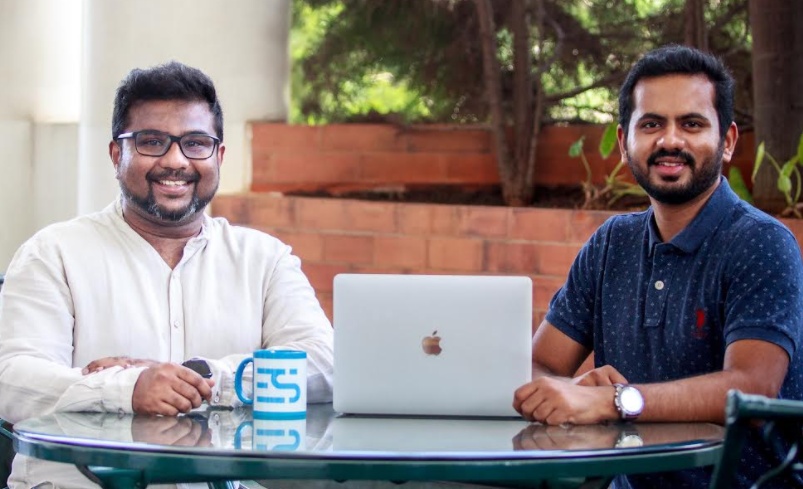
There is a particular indignity in buying software and then becoming its unpaid assistant. Rajamani had encountered enough of it to consider a change of profession: from the person responsible for making the tools work to the person responsible for making better tools. In 2020, he and Vivek Suriyamoorthy founded Everstage.
The subject was sales commissions. It sounds like a narrow patch of corporate ground until you consider what a commission does. It tells a person which work is worth doing. A company can announce its priorities all morning; the compensation plan has the afternoon to explain which ones actually pay.
A career spent behind the revenue number
Rajamani came to that problem through consulting and operations. His career included EY and PwC before Freshworks, where he became director and head of revenue operations. He attended the Indian School of Business in 2013-14 and received its Torch Bearer Award for distinguished all-round performance. The sequence put business analysis before entrepreneurship.
At Freshworks, he built the revenue operations organization from one person to 25. He has described working through the company’s growth from roughly $30 million to $200 million in revenue. Those figures give some scale to the job. A system that works for an early sales team must survive new markets, more managers, different territories and a widening assortment of exceptions.
Revenue operations sits among those moving parts. The sales target, the hiring plan and the technology budget eventually have to agree with one another. At a 2022 SaaSBOOMi session, Rajamani explained the function as broader than analytics: it also involves processes and technology across the revenue organization. The attraction is the chance to influence decisions before the results arrive.
His later company makes more sense against that background. He had been close enough to the machinery to notice where it demanded unnecessary human attention. Commissions were a repeated interruption, and they touched something unusually personal inside an enterprise system: somebody’s earnings.
The departure came in smaller steps
Rajamani’s account of starting Everstage contains a useful pause. Leaving Freshworks did not immediately mean starting a company. He spent time in the United States speaking with other revenue operations professionals, testing whether the problem he had experienced was shared widely enough to build a business around.
He had spent months considering the move. He also retained the possibility of returning to employment if the research failed to persuade him. His description of the transition is refreshingly free of theatrical certainty: “the leap of faith happened in phases.” A career change could be investigated before it became an identity.
The distinction matters. Knowing a problem intimately can make a founder convincing, but it can also make one private annoyance look like a market. Rajamani went looking for other people’s versions of the annoyance. Suriyamoorthy, previously at D. E. Shaw, became his technical co-founder. Their respective experience gave the venture an operations perspective and an engineering counterpart.
When the buyer becomes the seller
By August 2021, Everstage had raised $1.7 million in seed funding led by 3one4 Capital. Early customers included Chargebee, Postman and LambdaTest. Angels in the round included leaders from businesses such as Chargebee and Freshworks. The company was selling into the software ecosystem its founders understood, with much of its customer base in North America.
Rajamani also had to learn a different side of the transaction. Evaluating software as an operator had made him familiar with the problem; selling it required understanding the separate interests of the people approving a purchase. In early customer conversations, he could speak from experience. Closing an enterprise deal still meant learning how several stakeholders reached a decision.
He sold directly to early customers and continued joining calls to hear feedback. There is something revealing in that choice of classroom. The former operations executive was learning sales by doing it, while building a product concerned with how salespeople behave. A compensation plan can look tidy in a model. A buyer has every right to make the conversation untidy.
The paycheck is an instruction
Everstage’s early proposition combined commission automation with control for administrators and visibility for sellers. Operations teams could configure rules themselves. Salespeople could inspect what they had earned and explore what a possible deal would pay. The commission statement acquired a future tense.
That last detail is central to Rajamani’s thinking. If a company wants a seller to pursue a longer contract, showing the financial consequence while the deal is still being negotiated gives the incentive a chance to work. A number delivered after the decision has considerably less influence over it.
In an October 2024 interview, he emphasized that incentives need to be understood as well as designed. He described sales compensation leaders who felt they lacked control over their own systems. Everstage’s answer paired configuration with implementation and support, addressing the practical work required to turn a written plan into something a team could use.
“the leap of faith happened in phases.”
Siva Rajamani, on leaving operations to start a company
His public explanations tend to return to observable behavior. What is the business asking for? What action does the pay structure encourage? Can the seller see the connection? Those questions are fairly plain. They become awkward when a company discovers that its enthusiastic sales meeting and its spreadsheet have issued different instructions.
The money bought a wider brief
A $13 million Series A followed in 2022. In October 2024, a $30 million Series B led by Eight Roads Ventures brought total funding to about $45 million, with Elevation Capital and 3one4 Capital participating. Everstage also announced a ₹5 crore employee share buyback. The round put capital behind product development and customer service, while giving early employees an opportunity to realize some value.
In his founder’s note, Rajamani dwelled on customer trust and the work of the team. He described a company built around transparency, teamwork and making customers’ working lives easier. Funding was a milestone in a longer project whose starting point remained familiar: operations professionals spending too much time compensating for their software.
Disclosed round sizes. Company financing, not personal wealth.
The expansion became concrete in 2025. Everstage launched Planning in June, adding territory, quota and capacity work. Rajamani posed a question that complicates the usual celebration of a star salesperson: how much of the result came from selling skill, and how much from a better territory or an easier quota?
That is an operator’s question, interested in the conditions behind the outcome. The product connected those planning choices with compensation. In August, Agent Core introduced assistants for preparing Salesforce data, explaining commission calculations, onboarding payees and routing administrative questions. The tasks were recognizable to anyone who had worked on the other side of the payout.
October brought CPQ, short for configure, price, quote. Everstage was moving earlier into the deal, connecting pricing and margin rules with the seller’s view of commissions. Rajamani’s ambition now extended from paying for the sale to shaping the terms on which it happened.
and capacity
commission work
and earnings
An executive willing to be out-earned
For someone who works with pay structures, Rajamani has a cheerful view of the CEO’s place in the earnings table. His consulting work included acquisition deals where, he recalls, a salesperson who had closed a substantial deal was the company’s highest earner. He thinks an exceptional account executive should be able to earn more than the chief executive.
His argument looks forward as well. He expects AI to increase the difference between highly productive sellers and their peers, allowing strong individual contributors to expand their earning potential. It is a prediction about how work may change, rather than a report that every sales team has already changed.
The same technology has made him impatient with complacency. In March 2025, he warned that software companies could understand AI’s arrival and still fail to act, invoking Nokia’s experience with the iPhone. He was describing the uncomfortable gap between recognizing a change and reorganizing a business around it. Experience, in this reading, offers no exemption from having to learn again.
What the evening’s arithmetic became
By July 2026, Everstage had announced its placement as a Challenger in Gartner’s Magic Quadrant for Sales Performance Management. Its product range spanned incentives, planning and quoting. Rajamani’s work had grown from fixing a recurring calculation problem into connecting several decisions that precede a salesperson’s paycheck.
The personal thread remains the most interesting one. His public story moves through consulting, a growing operations department, conversations with peers, early sales calls and a company with a broader product brief. At each stage, the work involves examining what sits behind a number. Revenue has assumptions. Performance has conditions. A payout has rules that someone must be able to explain.
Rajamani’s original evening chore was painfully specific: get the commission calculations into a state where people could be paid. The ambition that followed is larger, but still legible. Give the operator control. Give the seller an intelligible view of earnings. Then see whether the system produces the behavior everyone spent the morning requesting.