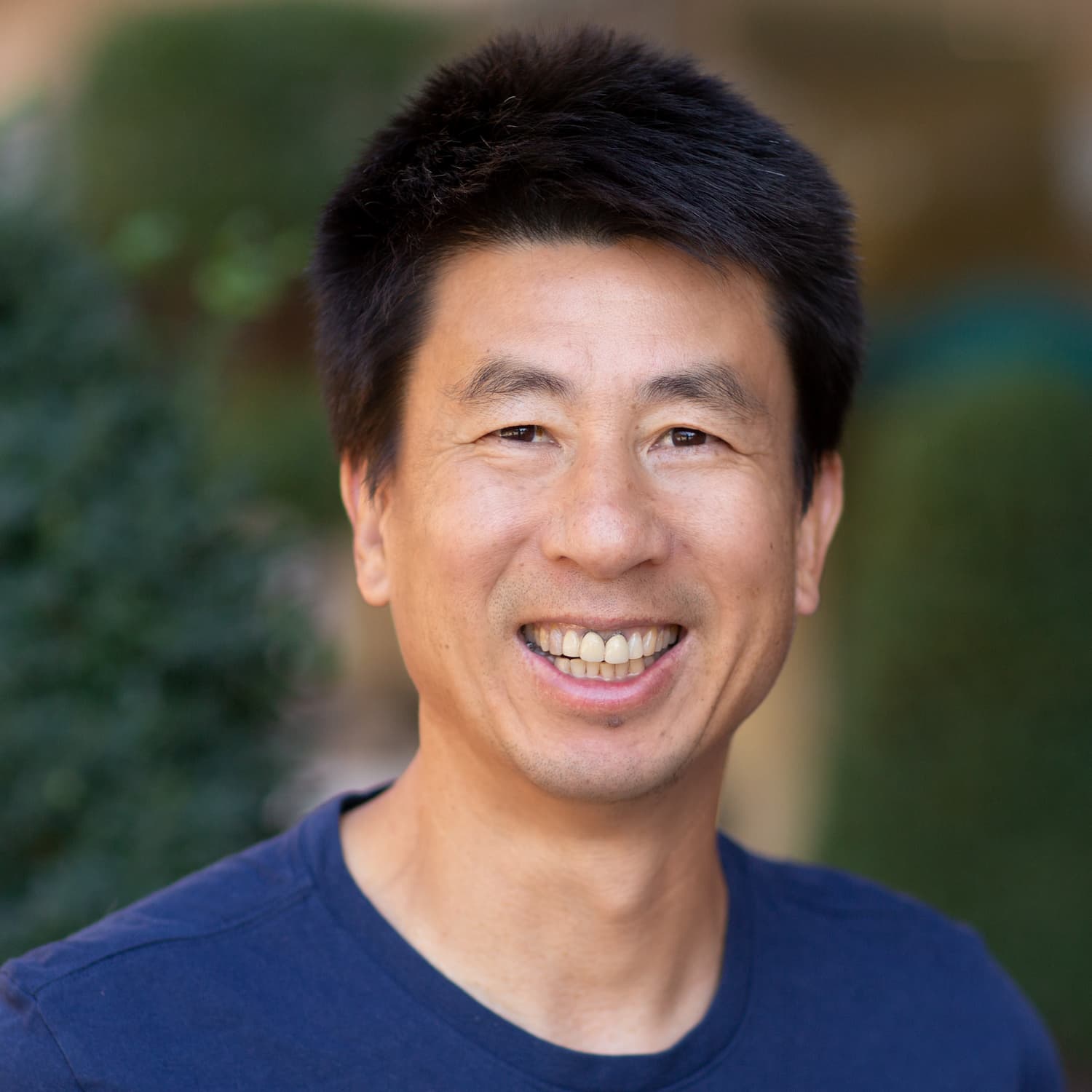
He didn't set out to build the memory layer for corporate America. He was just drowning in his own calendar.
Sam Liang runs 30 to 40 meetings a week. Has for years. And somewhere around the hundredth time he left a conference room with nothing written down and no idea what was decided, he stopped complaining and started coding. That's how Otter.ai was born - not from a slide deck or a market analysis, but from a very specific, very personal frustration shared by nearly everyone with a corporate calendar.
That origin story matters. Liang didn't arrive at enterprise AI via a funding thesis. He arrived via lived experience - the kind that produces product instincts you can't buy. He uses Otter in every meeting he runs. When something feels off, he notices immediately. That obsession has a compounding effect: Otter's 35 million users don't need to explain their frustrations because Liang already felt them first.
The path here was neither straight nor obvious. Liang grew up in China, earned a computer science degree at Peking University, crossed the Pacific for a master's at the University of Arizona, and eventually landed at Stanford for a PhD in Electrical Engineering. His mentor was David Cheriton - the professor who was Google's first outside investor - which means Liang was embedded in Silicon Valley's founding mythology before he'd built a company. That proximity is not nothing.
At Google, he helped invent the Blue Dot. That small pulsing circle showing your real-time location in Google Maps is now so ordinary it's invisible - but in 2006 it was a genuine paradigm shift in how humans relate to physical space. Billions of people use it daily without knowing his name, which is about as pure a form of impact as engineering allows.
Then came Alohar Mobile in 2010, a context-aware platform that sensed where users were and what they were doing - quietly, persistently, at the background layer. Alibaba acquired it in 2013. The investors who backed that bet included Tim Draper and his old Stanford mentor David Cheriton. He filed away the lessons and waited for the right problem.
You just have to move faster than all of them and be smarter on both the core technology and the product offering.
- Sam Liang, on competing with Google, Microsoft, and Zoom simultaneouslyOtter launched in 2016 as AISense, co-founded with Yun Fu, who had been head of infrastructure at Alohar Mobile. Two engineers who'd already built and sold a company together, attacking a problem both understood viscerally. The seed round was $3M. The Series B - $50M in 2021 - came during a period of 800% revenue growth, when the world discovered it suddenly needed to hold every conversation over video.
COVID didn't create Otter's market. It revealed it. Liang had spent four years building proprietary speech recognition that outperforms Google and Microsoft in meeting contexts - a deliberate choice to own the core technology rather than rent it. That bet on vertical integration paid off when scale arrived fast and the accuracy gap with generic APIs became a competitive moat. By 2023, Otter had transcribed a billion meetings. By 2024, 50 billion minutes of audio had passed through its systems.
In 2025, the evolution accelerated sharply. Liang unveiled the industry's first autonomous AI Meeting Agent suite: a voice-activated agent that answers questions in real time during meetings, a Sales Agent that coaches salespeople while they're on customer calls, and an SDR Agent that conducts live product demos autonomously. The shift from transcription tool to active participant represents a deliberate repositioning - from recording what was said to influencing what happens next.
"We are evolving from a meeting notetaker to a corporate meeting knowledge base," he told TechCrunch in October 2025. The language is precise. He's not building a productivity app. He's building infrastructure - the system of record for organizational conversations. Every word spoken inside a company is institutional knowledge. Most of it disappears. Liang is making the argument that this loss is expensive, measurable, and preventable.