A phone bill looks like a piece of telecom. It is also a remarkably durable customer relationship. The same name appears every month. The service travels everywhere. For a small internet provider, watching that relationship belong to somebody else presents an awkward question: if customers already trust you with their home connection, why should their mobile connection carry a different name?
- Reach supplies the software and operations behind branded connectivity.
- Customers include internet providers; the pitch also extends to retailers, fintechs and employers.
- Turnkey mobile starts at $0 upfront. Subscriber service costs still apply.
Reach has built a business around answering that question. It lets another company put its name on mobile service while Reach handles much of the machinery underneath. The customer sees a familiar brand. Behind it sit network relationships, activation systems, payment workflows and support tools. The company’s opportunity lives in the distance between being trusted to sell a service and knowing how to operate one.
The thing they tried to buy
Reach’s origin story begins with an attempt to launch a mobile service in 2020. The team expected to buy the infrastructure it needed. Instead, it encountered carrier negotiations, SIM logistics, billing systems and number-porting rules. Existing options failed the team’s requirements. It built the stack itself.
The useful discovery came afterward. Other businesses wanted mobile products, too, and faced the same assembly problem. Infrastructure developed for one brand could become infrastructure for many. Founder and CEO Harjot Saluja describes the shift as recognizing a bigger need while taking the consumer service to market. The customer changed from the person buying a plan to the business that wanted to sell one.
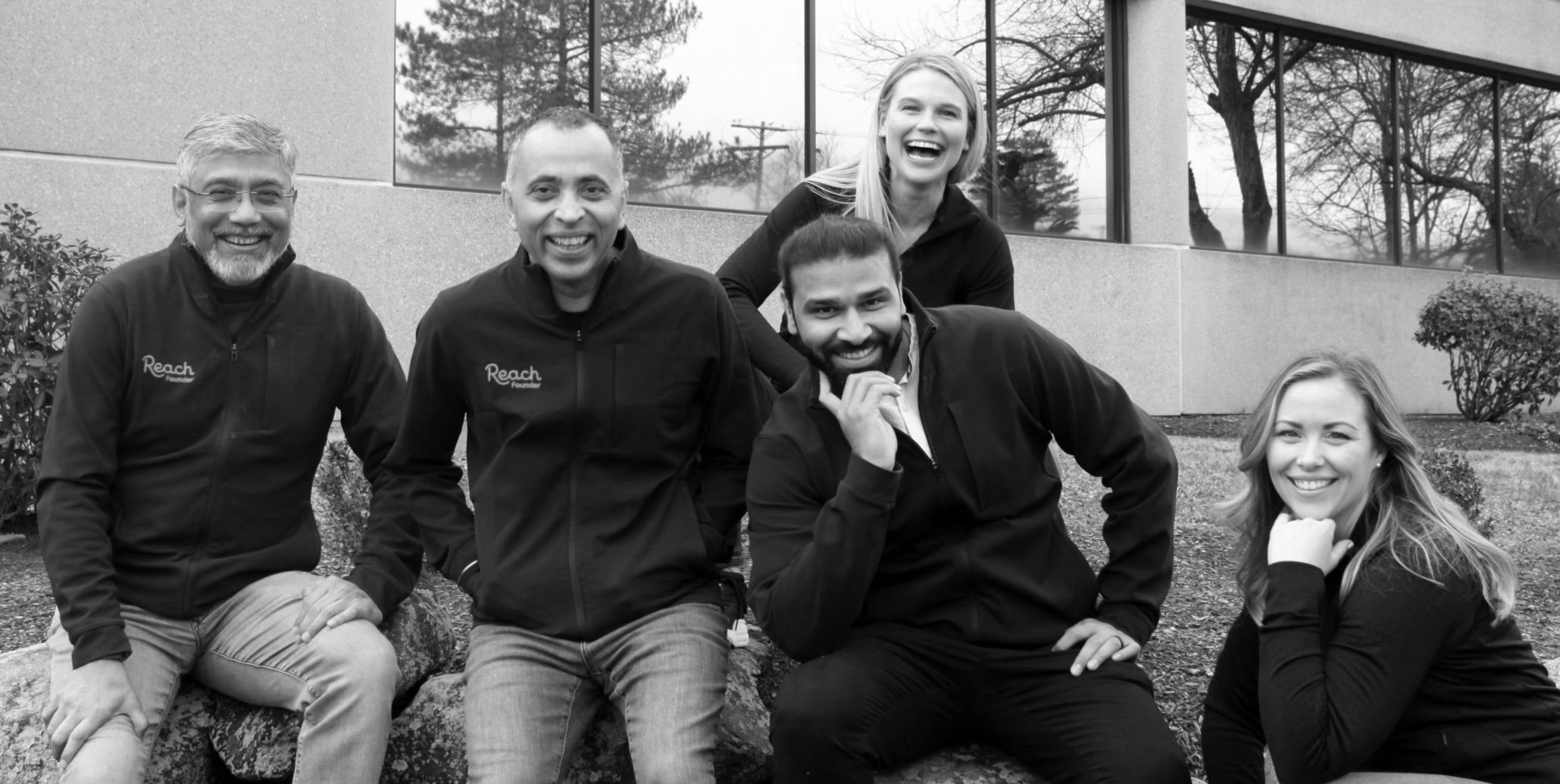
Building that capability required capital. A June 2022 announcement disclosed an additional $8 million, bringing Reach Mobile’s fundraising across two quarters to $16 million and its cumulative total then to $35.6 million. Graham Holdings was a lead investor in the latest $8 million round. The same announcement formally introduced ReachNEXT, the software platform behind the broader business.
The phone bill with a familiar name
To understand the product, follow a subscriber. Someone chooses a plan on a branded storefront, activates a physical SIM or eSIM, perhaps transfers an existing number, and starts receiving bills. Later come usage questions, payment failures, plan changes and support requests. Every small step needs a system. Reach connects those steps so its partner can concentrate on the offer and the audience.
This is the territory of the MVNE, a mobile virtual network enabler: a supplier helping businesses run mobile services on carrier networks. Reach packages that role with customer-facing software and managed operations. Its differentiation is the breadth of the assembled offer, with several ways to use it. A business can take a turnkey launch, build a custom experience through REST APIs, or extend a reference design.
The distribution breakthrough was a 2023 agreement with NCTC, the cooperative representing roughly 700 independent communications providers. Reach could reach businesses that already had broadband subscribers. Those providers could explore mobile without assembling the entire platform themselves. The membership figure describes a potential channel, rather than 700 completed launches.
Named deployments make the proposition tangible. Omni Fiber launched Omni Mobile in August 2025 using Reach for activation, billing and support. In July 2026, GVTC launched its own mobile service in the Texas Hill Country. Subscribers could keep their numbers and manage service through a GVTC-branded app. The local relationship gained a product that worked beyond the home.
Zero upfront. Real economics.
Reach’s turnkey mobile product, ECHO, advertises $0 upfront for deployment. Its pricing explanation says partners pay for the mobile services subscribers consume. The ECHO model lets partners set retail prices and keep the spread above Reach’s costs. That creates a practical calculation: subscriber revenue must cover service costs, acquisition and the partner’s remaining work.
Reach’s advertised turnkey mobile offer. Ongoing mobile services are charged.
Scope matters. Reach lists deeper identity, reporting, commerce and HR connections as bolt-ons. Its broader connectivity business also supports fiber, fixed wireless, failover and IoT. The current homepage distinguishes turnkey mobile from broadband and failover deployments built to specification, requiring carrier integration. A custom connectivity project should not inherit a turnkey mobile timetable by assumption.
Partnerships fill out the offer. A 2022 T-Mobile agreement connected ReachNEXT with the carrier’s wholesale business. In 2024, Asurion added device protection and trade-in capabilities to Reach’s marketplace. These are useful additions for an operator whose subscribers expect help with both the connection and the phone. They also show how much work sits outside a simple plan-selection screen.
Security is part of that operational burden. Reach’s security page describes tenant isolation, role-based access and payment safeguards, and states that its platform is SOC 2 Type II certified. Separate brands share a platform without sharing access to each other’s subscriber records. A sales agent, a support agent and a brand administrator need different permissions. Getting that distinction right matters when a product combines a phone number, payment details and account history.
The engineering challenge is therefore broader than connecting an app to a network. Reach must make the same underlying systems useful to businesses with different catalogs, customer journeys and operating models. Its multi-tenant architecture is a way to repeat infrastructure while varying the service customers see. A partner can launch another label without treating every new storefront as a separate telecom company.
The surprise was in the sales meeting
In June 2026, co-founder Jules Pearson reported that Reach had helped more than 30 independent ISPs launch mobile. The unexpected obstacle, she wrote, was getting teams comfortable offering it. Technology had attracted the anxiety; deciding to enter the business caused the delay. Her account also described receptive customers and easier support conversations, observations from Reach’s own launches rather than published comparative measurements.
“They still have to figure out selling and distribution, which is not easy”
Harjot Saluja · Beyond Reach, October 2026
That qualification is the lesson another business can copy. Start with an audience and a credible reason to serve it. Buy the repeatable infrastructure; spend attention on the offer, distribution and customer economics. A company without a trusted audience, workable margins or suitable network coverage still has hard problems. Reach can supply systems. Making someone want the phone plan remains the brand’s job.