The most useful number in Peter Isaacson's career may be 28,000. It was the size of Demandbase's target-account list when he arrived as chief marketing officer in 2014. Twenty-eight thousand is a respectable crowd, a vigorous mailing list and a small town. It is not much of a target. The company that would help popularize account-based marketing was, by Isaacson's later telling, barely practicing it on itself.
There was a pleasing awkwardness to the discovery. Demandbase wanted companies to choose their best accounts, coordinate sales and marketing around them, and measure progress against business outcomes. Inside its own walls, the definition of “best” had expanded until it covered nearly everybody. Isaacson responded with Project Alpha, an internal effort to make the marketing team a serious user of its own product and a feedback loop for the people building it.
The episode contains his operating method in miniature: make the vague thing specific, find the broken handoff, start with evidence and let a modest win recruit the next believer. The language changes as technology does. The gap does not. Four decades into a career that runs from New York ad agencies to Invoca's AI agents, Isaacson keeps turning up where marketing has misplaced the customer between two departments.
Before the dashboard, the brief
Isaacson graduated from the University of Colorado Boulder in 1987 and went to work at Saatchi & Saatchi. He began on the agency side with accounts that ranged from Procter & Gamble to Compaq, then continued at Ammirati Puris Lintas. The early apprenticeship matters because his later career is often described through software categories and acronyms. Underneath them sits an advertising education: define the audience, sharpen the promise, and make an idea memorable enough to travel.
In 1997 he joined Adobe. Across roughly thirteen years, he led brand marketing, worldwide field marketing and the worldwide education business. This was marketing before every department could acquire cloud software with a credit card. He remembers a more ceremonial arrangement: requests went through IT, funds moved between budgets, and marketing waited behind other corporate priorities.
The cloud broke that gate open. Teams could move quickly and assemble their own systems. The escape came with a comic sequel. Independent tools accumulated into what Isaacson calls “Frankenstacks” - useful parts sewn together without a shared nervous system. His rule for the resulting mess is plain: “Marketing technology should simplify the buyer journey, not complicate it.”
The seam Isaacson keeps working on
intent
conversation
outcome
After Adobe came senior leadership at MicroStrategy, then the CMO role at Castlight Health in 2012. He helped build the marketing operation as the enterprise software company scaled toward its public offering. By the time Demandbase hired him in 2014, he had worked both sides of the old marketing divide: brand and field, consumer and business, the campaign and the sales conversation that follows it.
A category needs company
Account-based marketing was not invented in a conference ballroom. Isaacson had practiced a version at Adobe under the less glamorous name “target account marketing.” Field teams and salespeople identified a few dozen companies and coordinated attention around them. Software made the habit scalable. The practice could reach hundreds or thousands of accounts, connect digital advertising with site personalization, and reveal whether the right companies were actually engaging.
Demandbase chose to call the larger idea ABM and doubled down on it. Isaacson's formal CMO work still covered demand generation, product marketing, corporate marketing and pipeline. The other half of the assignment was stranger: help a market agree that it was a market.
“The worst thing that will happen is if no other competition comes in the market.”Peter Isaacson on category creation, 2019
That line captures the category creator's paradox. Being alone feels comfortable, but a category with one vendor is just a company speaking loudly. Competitors validate the problem, teach the vocabulary and increase the number of people who care. They also make differentiation more difficult. Demandbase went from explaining what ABM was to explaining why its approach was distinct. The success of the first job created the second.
Isaacson preferred movement to ceremonial readiness. Companies could spend a year cleaning every field, negotiating perfect alignment and admiring a change-management plan. He argued for a baseline, a small account segment and a first campaign. “Starting small and building is better than delaying for an excessive amount of time,” he said.
His sales-alignment advice was equally practical. Do not wait for unanimous enthusiasm. Find the salesperson already leaning forward. Work with the territory manager or vertical leader who wants to try. Produce evidence. Colleagues notice who is winning. Isaacson called this group a “coalition of the willing,” a phrase with more life in it than yet another standing committee.
The operator's stealable playbook
- Name one handoff the customer currently has to repair.
- Measure the baseline before polishing the grand strategy.
- Run a small program with the people already inclined to help.
- Use the result to earn wider participation.
Demandbase said revenue grew more than ninefold during his tenure. Isaacson also co-wrote Account-Based Marketing with founder Chris Golec and executive Jessica Fewless. The timing was deliberate. A book written at the category's beginning would have explained a theory. Their later version could contain several years of operating lessons: selecting accounts, mapping buying journeys, coordinating channels and measuring results.
The call after the click
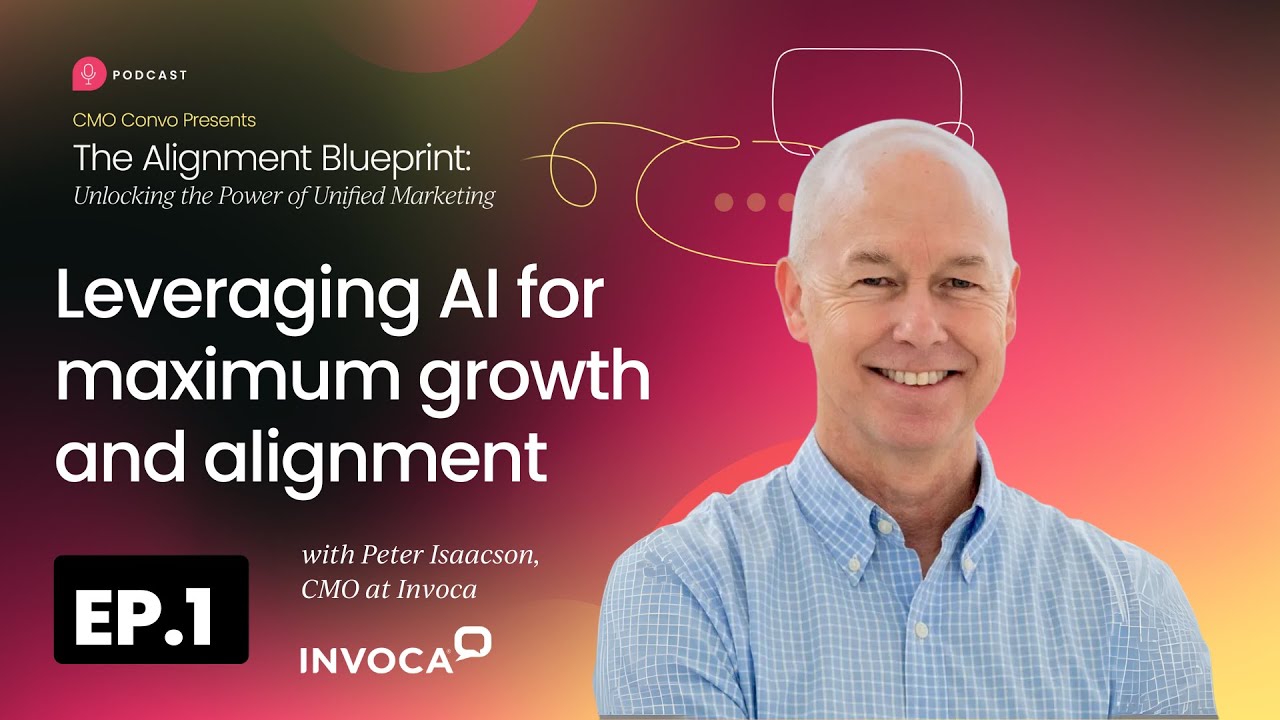
Isaacson left Demandbase in January 2021 after more than six years. When he considered his next role, he did what a marketer might: built an ideal-customer-profile checklist for prospective employers. After conversations with more than 25 companies, he revised the model. Passion for the company mattered more than the tidy specification. He joined Replicant, working in conversational AI and contact center automation.
Two years later, he described another list for his move to Invoca: passion for the market, chemistry with the CEO, a high-performing management team and growth potential. The fit joined two chapters of his career. Invoca sold to marketers, a world he had enjoyed at Demandbase, and connected digital marketing with contact centers, terrain he had learned at Replicant.
The underlying problem is easy to recognize. A consumer sees an ad, visits several pages and makes a phone call. Marketing knows the campaign. The contact center hears the questions. Sales records an outcome. In a poorly joined system, each group receives a clean fragment while the customer drags context across the gaps. The person has to explain what the software forgot.
Isaacson's work at Invoca gives that middle section a name and a set of measurements. Conversation intelligence connects calls to digital journeys, identifies intent and sends outcomes back to advertising and customer systems. Revenue execution broadens the claim: marketing, commerce and contact center teams should share enough information to manage one buyer journey instead of three departmental ones.
Machines, with adults in the room
In a 2019 interview, Isaacson joked that artificial intelligence might eventually destroy the world, though not before doing useful things for B2B marketing. The line is funny because it refuses both reverence and panic. His serious point was that people would still direct the technology toward a business need. He expected data and technical skills to keep gaining value. He also expected creativity, messaging and storytelling to return after years of neglect.
By 2025 his examples had changed but the balance had not. AI could connect online and offline journeys, make campaign data more useful and help teams share revenue goals. Governance, privacy and ethical use still required attention. The test remained operational: does the system create a better decision and a more coherent customer experience?
In 2026, Invoca's marketing team spent a protected week building AI workflows instead of merely discussing them. Their projects assembled display campaigns, prepared personalized sales material, watched dormant accounts for new activity and repaired off-brand decks. One campaign-building workflow reduced an eight-hour job to one. It is Project Alpha in a new costume: become the first serious user, discover what works, and make the lesson circulate.
Invoca's current push extends that logic to AI agents across voice and messaging. The ambition is to respond when intent is highest, preserve the buyer's digital context and connect the eventual outcome back to the campaign. The technology is new. The editorial question is vintage Isaacson: what happens after the handoff?
The useful discomfort of the middle
Category building can look like a talent for naming things. Isaacson's record suggests a less theatrical craft. He notices where organizations have accepted a contradiction: a target list with 28,000 targets, an ABM vendor not using enough ABM, a cloud stack that creates more friction, a successful campaign that loses sight of the call, an AI discussion with nothing shipped.
Then he turns the contradiction into work. Pick the accounts. Invite competition. Share the metric. Give the team five days. Connect the conversation to the click. There is wit in his public language, but little appetite for abstraction that cannot survive contact with a sales team or a spreadsheet.
That may be why his career keeps moving through supposedly different categories while retaining the same plot. Marketing makes a promise. Another team delivers the experience. A customer crosses the distance between them. Isaacson keeps asking the company to cross it too.