A restaurant queue is an unforgiving place to conduct a software experiment. The person at the register wants to finish the order. The person behind them wants the queue to move. A loyalty program arrives with a third ambition: remember this customer well enough to persuade them to return. All three ambitions have to fit into a few seconds.
PAR Punchh built its business around that crowded little interval. Today it sells loyalty and guest engagement software to restaurant and retail brands, with tools for rewards, campaigns, customer data, and digital experiences. Its history contains a useful warning for anyone designing a customer habit: a benefit can be attractive while the process of receiving it is intolerable.
- The job: connect purchases to people, then give those people a reason to return.
- The early obstacle: earning points required manual work at checkout.
- The business: enterprise software and services for multi-unit brands.
- The next chapter: wallet passes and recognition beyond enrolled members.
The lunch queue is the product test
In his founder retrospective, Jitendra Gupta dates Punchh’s beginning to 2010. By 2012, a restaurant executive was reporting weak repeat app engagement. Gupta watched customers in the restaurant and found the nuisance: guests entered purchases themselves, and clerks validated them. Without a connection to the point-of-sale system, the reward added work to paying.
The team spent about five months building the first POS integration, Gupta recalls. Testing sometimes brought down the customer’s register. He says the founders went without salaries for three years. This is the founder’s account, including its bruises, rather than a tidy legend about a launch that immediately worked.
The useful detail is where the diagnosis happened. A dashboard can show that customers have disappeared. A checkout line can show what made disappearing sensible. The product team needed to observe the moment when an abstract promise - earn rewards - became a small, irritating chore.
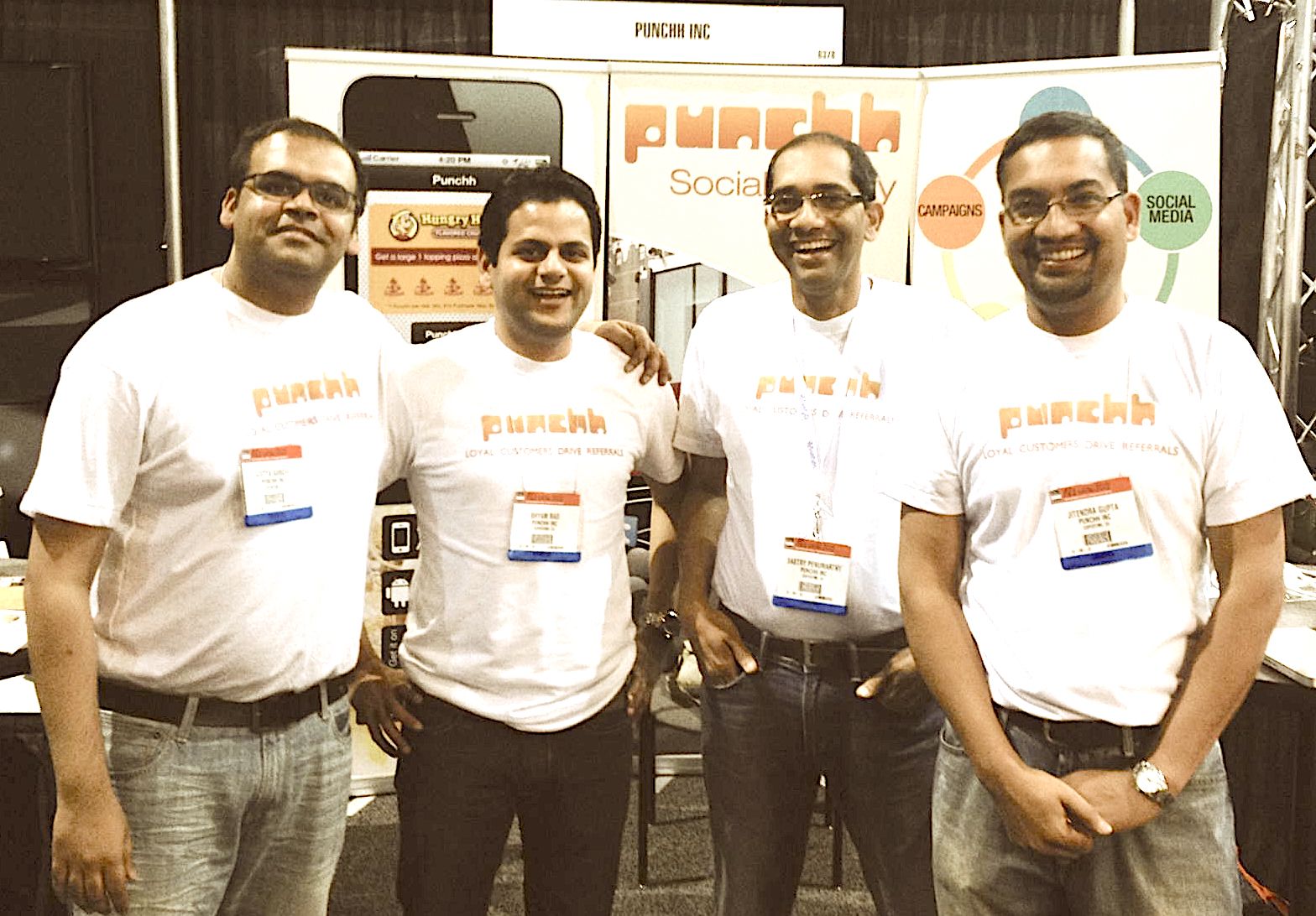
Five months behind the counter
Integration is an unglamorous advantage. It rarely makes the prettiest slide in a sales presentation. Yet it determines whether a reward can follow a purchase and whether the next marketing message has any relationship to what somebody actually bought.
Early investor Cervin describes a company that tried different business-to-business and consumer models before concentrating on enterprise customers. Its founding team brought CRM knowledge, and its India-based engineering team helped keep costs down. Cervin says Punchh reached its first $10 million in annual recurring revenue with less than $10 million in capital. ARR describes recurring revenue on an annualized basis; it is a different measure from profit.
That enterprise focus matters. A chain brings many locations, sometimes operated by franchisees, with systems that must agree about purchases, identities, and rewards. Solving that problem once can make the software useful across a network. It also makes onboarding and ongoing support part of the product’s practical value.
- 01PurchaseCapture the transaction
- 02RecognizeConnect it to a guest
- 03OfferChoose a relevant reason
- 04ReturnMeasure the next visit
A conceptual workflow, not a promise that every offer creates an extra sale.
Breadsticks, points, and a better bargain
Fazoli’s makes the mechanics concrete. The Italian restaurant chain launched its Punchh-powered rewards program in 2017. Its published case study identifies a remarkably basic problem: guests could not redeem rewards when ordering online or through the app. A reward that works only in one channel asks the customer to accommodate the company’s wiring.
In 2019, Fazoli’s restructured the program. Members could unlock a reward in half the time, with more redemption choices. Its setup connected Punchh to Brink POS and Olo ordering. The case study reports a 17% increase in loyalty sales over January 2019 through December 2020, alongside changes in digital ordering and participation.
“give customers more value and choices”
Will Hanrahan, Fazoli’s digital marketing manager, describing the rewards redesign
A separate Punchh account of the redesign says Fazoli’s moved roughly 700,000 members to a points-unlock structure, with reported spend lift shifting from -7% to +6%. Those are the vendor’s reported figures. They describe a combined program and operating change, not a controlled experiment isolating Punchh’s contribution.
The distinction is commercially useful. An operator can copy the questions: How long does a guest wait for the first reward? Where can it be redeemed? Does the reward encourage an additional visit, or subsidize one already planned? Software supplies the rules and measurement. Somebody still has to choose a bargain that makes sense.
A loyalty company joins the operating stack
Punchh’s customers are businesses buying a system for their own guests. The business model is enterprise SaaS, supported by implementation and services. PAR’s services offering includes loyalty design, campaign execution, technical consulting, guest support, and reporting. A small marketing team can hire help with the daily work as well as license the tools.
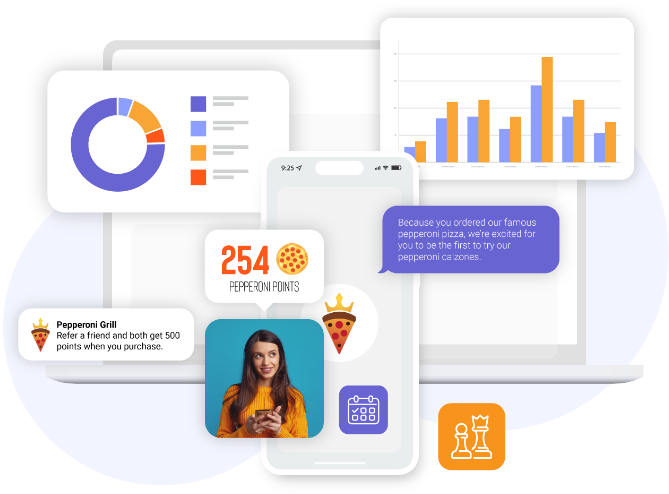
Its campaign software supports segmentation and behavior-triggered messaging through channels including email, SMS, and push notifications, with local marketing controls for franchises. The loyalty platform supports points, tiers, referrals, and integrations. These are instruments for shaping repeat behavior; a points balance alone is only a ledger.
Sapphire Ventures led a $20 million Series B in 2018. A $40 million Series C in 2019, led by Adams Street Partners and Sapphire, included AllianceBernstein and accompanied a partnership announcement with Casey’s. These were financing rounds. The approximately $500 million PAR acquisition in April 2021 was a purchase of the company in cash and stock, a separate category of money.
PAR already worked with Punchh through Brink POS. Ownership brought loyalty alongside point of sale, back-office tools, and payments. In June 2025, PAR introduced Engagement, a broader suite connecting ordering, marketing, loyalty, and guest data. Punchh remains the loyalty component. Treating every capability in that suite as something Punchh independently invented would blur the story.
The alternatives include Paytronix and Thanx, both of which offer restaurant loyalty and engagement tools. Personalization and app-free participation are shared territory. Punchh’s distinguishing position is its relationship to PAR’s operational stack, its integration work, and its supporting services. The sensible comparison begins with the buyer’s actual systems and workflows.
The guest who never joins
There is a curious limit to a loyalty database: it describes the people who agreed to enter it. A regular customer who never enrolls can still buy lunch every Tuesday. For the restaurant, that habit may be valuable even when no points are attached.
Smart Passes, launched in December 2025, addresses participation friction. It brings Punchh loyalty into Apple Wallet and Google Wallet, with enrollment and live points, perks, and offers, without requiring a separate brand app. It changes how the guest carries the relationship.
Guest360, announced September 1, 2026, tackles recognition beyond enrolled members. PAR describes a customer data platform integrated with Punchh that joins guest activity across channels and lets marketers act on the resulting audiences inside the same environment. It was live with selected customers at launch, with wider rollout planned through the end of 2026.
The September announcement says Punchh serves over 200 enterprise brands. The broader PAR Engagement website lists over 275 global brands. The two counts describe different scopes; neither is a count of restaurants or unique diners.
Copy the observation before the software
For a restaurant operator, the practical exercise starts with a real order. Try enrolling, earning, and redeeming through every channel you expect guests to use. Then examine the economics: reward costs, repeat visits, and whether campaigns create behavior that would otherwise be absent. That is an editorial lesson from these examples, rather than a guaranteed implementation recipe.
It depends on conditions. Fragmented transaction data can weaken recognition. A program with no owner can leave campaigns and guest problems unattended. Heavy discounts can buy participation while consuming margin. A single location with modest needs may find a simpler POS-native program easier to operate. Enterprise scope earns its keep when the complexity is real.
Punchh’s story is useful because its central problem fits in the palm of a hand. A guest wants the reward, a cashier wants to finish, and the software must make those wishes compatible. Every new channel is another place to test that agreement.
Keep the conversation going
Explore PAR Engagement, request a product walkthrough, or browse the company blog and newsroom.
Watch the PAR Vision 2026 presentation, explore customer interviews, or visit Punchh’s YouTube channel.