A burger leaves a restaurant in a paper bag. The restaurant supplied the kitchen, the cook, the ingredients and the little tub of sauce someone will forget to open. But if the order arrived through a marketplace, the next invitation to dinner may come from the marketplace. The restaurant has completed a sale. Someone else may have acquired a regular.
Lunchbox grew out of that awkward arrangement. Its co-founder Nabeel Alamgir had worked his way from busboy to chief marketing officer at Bareburger. From the marketing chair, he saw two problems sitting uncomfortably close together: third-party ordering fees and a fractured collection of restaurant technologies. Selling dinner was becoming an exercise in managing other people’s screens.
The story in four bites
- The customer: restaurant groups that want their own ordering experience and usable guest data.
- The machinery: branded apps, web ordering, catering, loyalty, marketing and orders routed into the POS.
- The turn: venture-funded expansion met a 2022 staffing reset; enterprise catering became a clearer focus.
- The useful lesson: follow an order through the kitchen and the invoice before admiring the app.
The busboy’s view of the bill
Founded in 2019 by Alamgir, Andrew Boryk and Hadi Rashid, Lunchbox paired restaurant experience with software engineering. Boryk had worked on applications at Johnson & Johnson. Alamgir described their partnership as “a perfect marriage between a foodie and a technologist.” The marriage had a fairly specific household expense: the money restaurants lost when digital ordering happened on someone else’s terms.
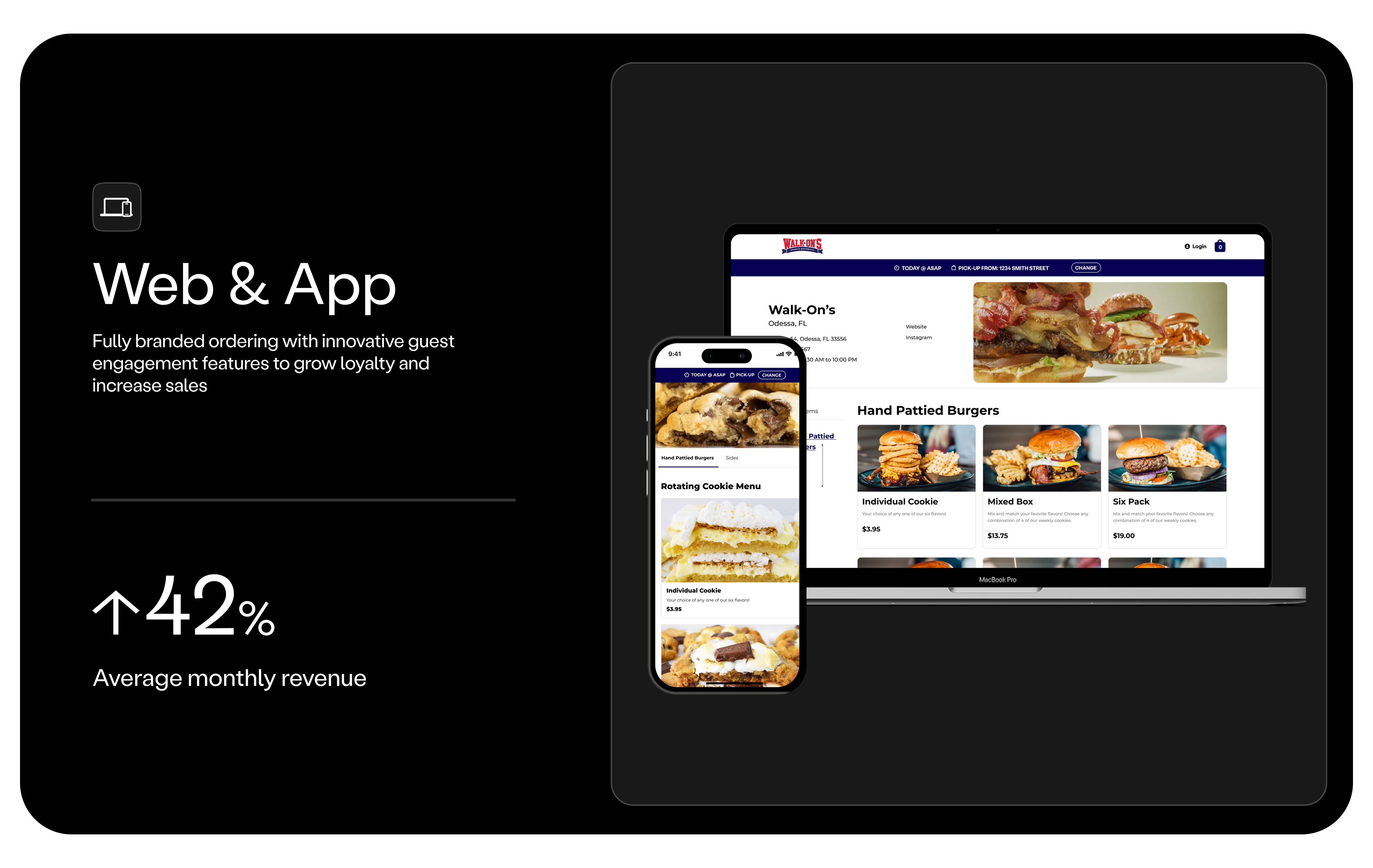
The resulting company sells the software behind a restaurant’s own digital storefront. A guest can order through a branded website or app; the restaurant can connect that purchase to loyalty and marketing. To the diner, it looks like ordering from the restaurant. Behind the counter, the task is to make menus, transactions and customer records agree.
That places Lunchbox in a busy part of restaurant technology. Olo competes for enterprise ordering business. Toast brings ordering and catering closer to its POS. Aggregation specialists handle marketplace traffic. Lunchbox’s proposition is the combination: direct ordering and B2B catering alongside the connectors and guest-engagement tools a chain needs to operate them.
A tablet is cheap. Re-entering its orders is expensive.
The unromantic problem is order flow. When several marketplaces send tickets through separate systems, employees can become the integration layer. Somebody checks a screen, copies an order and discovers that the sold-out item remains very much for sale somewhere else.
Lunchbox’s aggregation product sends third-party orders into the restaurant’s POS and supports menu updates across channels. Operators can configure different marketplace prices and control incoming demand through throttling. These are small decisions with large consequences: which menu is accurate, which kitchen receives the order, and whether the promised pickup time is remotely plausible.
How the order moves / schematic
Connections depend on the restaurant’s configured integrations.
Torchy’s Tacos supplies a concrete example. Lunchbox’s case study describes automatic marketplace order ingestion, delivery coordination and channel-specific menu pricing. It reports 18% year-over-year growth in gross merchandise value, more than 15% growth in orders per location and 11% growth in average ticket size. Those are vendor-reported results. They describe a customer’s experience; they do not isolate the software’s contribution from everything else happening in the business.
Torchy’s / vendor-reported year-over-year results
Bars share a 0-20% scale. Different metrics; no causal claim.
The operational mechanism is easier to judge than the growth attribution. Fewer copied tickets means fewer opportunities to mistype them. A synchronized menu gives staff fewer places to maintain. Throttling gives the kitchen a way to express its limits. An order button is a promise; a kitchen deserves a vote in making it.
Then lunch became an accounts-receivable problem
A catering customer changes the assignment. An office manager buying lunch for a meeting may need a quote, an invoice, an account and a repeatable order. The kitchen needs quantities and preparation instructions. A handsome cart is useful, but it cannot tell the accounts team who still owes money.
Lunchbox’s catering tools include house accounts, tax-exempt customer handling, back-office order editing and automated prep sheets. Its help documentation describes catering menus managed through the POS and customizable production sheets. Reporting covers outstanding orders and house-account activity. The expertise here is the translation between a guest’s purchase and the less photogenic work required to fulfill and collect it.
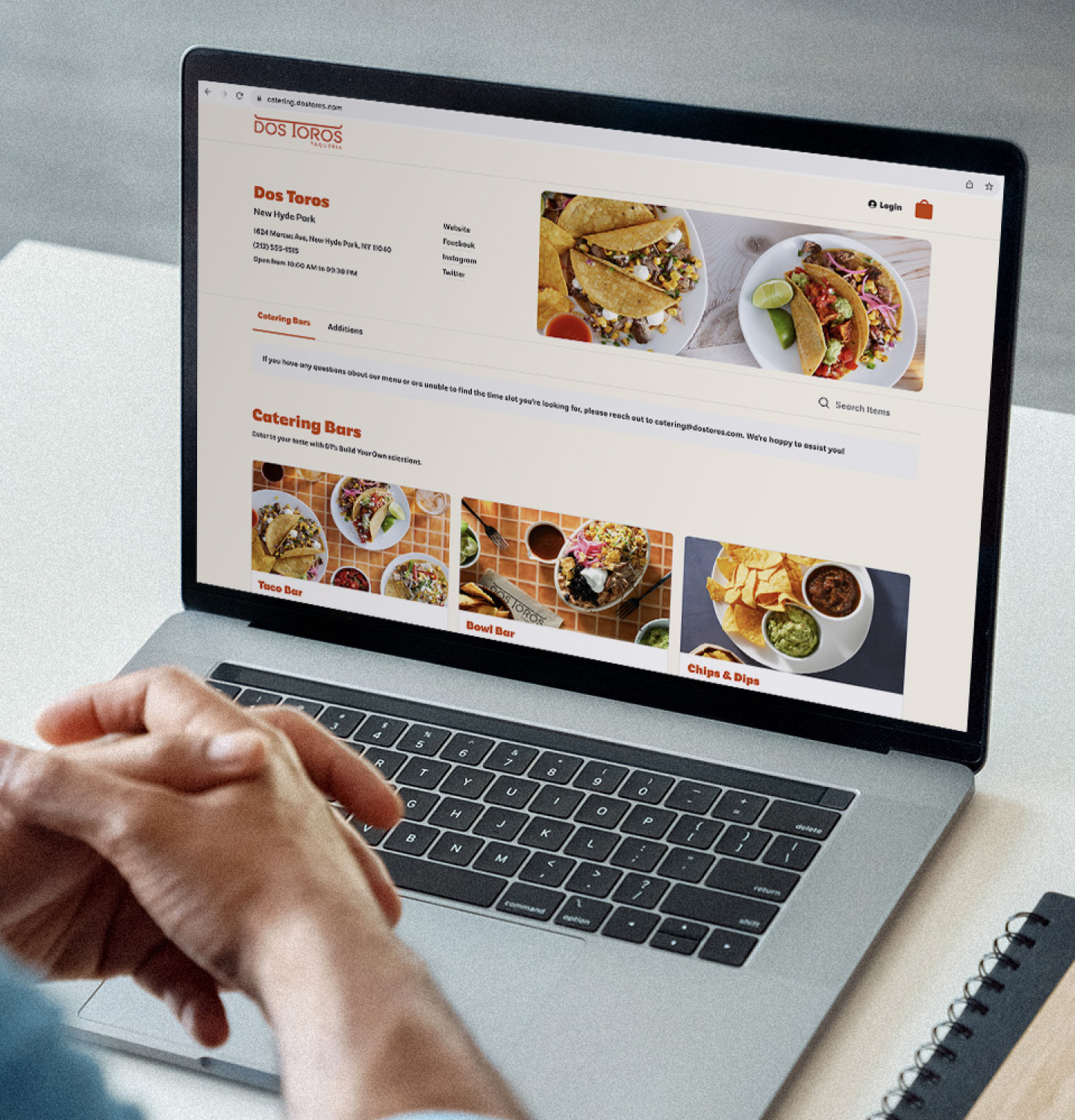
Its Tacombi case study advertises a $640 average check and more than 75% corporate catering clients. The headline sales figure is a projected $1 million annually. The projection matters: a forecast and a bank deposit are different species. Still, the check size helps explain why catering deserves dedicated software. One well-run account can represent a succession of group orders.
Lunchbox also sells marketing CRM and loyalty tools. Order history can inform guest segments and follow-up messages through email, SMS and push notifications. Restaurants can connect existing loyalty providers rather than automatically replacing them. The practical attraction is continuity: the person who bought lunch can remain recognizable when buying it again.
The company had its own capacity problem
Lunchbox’s expansion came with venture money: a $20 million Series A in October 2020 and a $50 million Series B announced in February 2022. In June 2022, it announced the NovaDine acquisition, bringing an enterprise ordering provider with customers including Firehouse Subs and Torchy’s into the business.
Then came the bill for growing too quickly. In July 2022, Restaurant Dive reported approximately 60 layoffs, about a third of the workforce. Alamgir told the publication’s underlying report that Lunchbox would focus on becoming cash positive and less dependent on investors. The staffing reset offers a useful complication to a company selling operational efficiency: it had to confront its own.
There was product friction, too. In a retrospective portfolio account, former design director Tom Cranstoun describes an unpopular 2.0 launch and his work on a replacement 2.1 experience. His account focuses on information architecture, checkout flows and customizable templates. It is a participant’s account, rather than an independent product audit, but it puts a specific repair beside the complaint: revisit the flows customers struggle through.
“It’s the Zapier for restaurants.”
Hadi Rashid, describing Lunchbox Open in its 2022 launch announcement
The integration network, launched in 2022 with more than 100 partners, expressed another practical choice. Restaurant groups already have systems. An open API gives their technology teams a route to connect data and build tailored experiences. The appeal depends on the connections working in the buyer’s actual configuration, rather than merely appearing in a partner directory.
Payments, procurement and a new marketplace
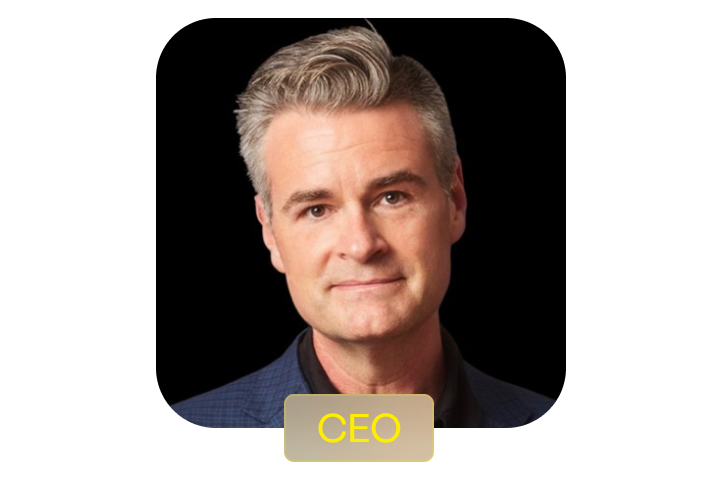
In March 2025, Lunchbox announced a strategic investment led by Shift4 and became an enterprise partner for SkyTab. It also appointed restaurant executive James Walker as CEO, with Alamgir moving to executive chairman. By May 2026, trade reporting placed Walker at WOWorks as chief growth officer. The 2025 appointment belongs to a dated chapter of the story.
Lunchbox announced SOC 2 compliance in October 2025 following an independent audit. For enterprise buyers, security reviews sit alongside menu demonstrations in the purchasing process. Selling to large chains involves satisfying the people responsible for guest data as well as the people responsible for dinner.
In January 2026, Lunchbox and OPA! announced a commission-free marketplace integration. Island Fin Poké was the first Lunchbox-powered brand live. Orders enter through Lunchbox’s API, with guest data returning to restaurants and loyalty synchronized. The partnership puts a new discovery channel beside the original concern about who keeps the relationship.
Ask for the invoice, then the demo
Lunchbox earns money through restaurant software contracts. Its 2025 client agreement sets fees in Service Orders and generally bills monthly in advance. The homepage advertises included free aggregation. Buyers still need to account for the software agreement, implementation, payment processing and fulfillment. “Commission-free” answers one cost question.
The idea is most persuasive for a restaurant group juggling locations, marketplaces and repeat catering accounts. A small operation with straightforward ordering may have less coordination work to solve. And retaining guest data only helps when someone uses it thoughtfully; a kitchen still needs capacity, accurate menus and competent service.
What can a reader copy? Pick one real order for the demo. Change an item, apply a loyalty reward, adjust the pickup time, generate the prep sheet and trace the payment. For catering, ask who edits the quote and who follows up on the invoice. This is how a restaurant finds out whether its software understands lunch.