The expensive part was hiding in the delivery instructions. In a published OneTouchPoint healthcare case study, reporting exposed orders being rushed unnecessarily. The fix was wonderfully unglamorous: require approval for two-day delivery. Shipping costs fell. No new slogan was involved. Someone had simply made a routine decision visible.
- OneTouchPoint connects brand software with production and delivery.
- Local teams can customize approved materials without rebuilding them.
- The payoff depends on fixing the ordering process, not merely storing the files.
The same healthcare organization had a more immediate problem when it changed suppliers. OneTouchPoint says it took over 47 programs and three call centers during one weekend, sending trucks to recover materials from the outgoing provider. The episode captures the company’s unusual position in marketing: sometimes the work requires an approval workflow; sometimes it requires an actual truck.
01 / The trouble starts after approval
Consider what a national campaign asks of a local office. It needs the right artwork, current language, a local address, permission to spend, enough printed copies and a delivery date. Each requirement is ordinary. Together, repeated across a distributed organization, they become a coordination problem. A beautiful file cannot tell you whether the box reached the right building.
OneTouchPoint works in that space. Its customers include manufacturers, healthcare organizations, financial businesses, retailers, franchise systems and beverage brands. They have central teams responsible for consistency and local teams responsible for getting things done. Those responsibilities can collide in an inbox full of requests that look small until somebody has to answer all of them.
The company combines OTP One, its enterprise platform, with sourcing, printing, marketing services, warehousing, kitting and distribution. A customer can connect approved content to the people and facilities that produce and deliver it. That combination makes the company easier to understand as a marketing operations partner than as either an advertising agency or a software vendor alone.
02 / Give the branch a smaller blank canvas
OTP One divides the job into modules. One Brand holds approved assets and controls access. One Create provides templates and customization. One Engage supports campaign activation. One Extend connects operational systems. One Intelligence brings reporting together. Buyers can add capabilities around the brand foundation rather than treating every requirement as a separate tool.
The interesting detail is the boundary inside the template. One Create permits editable regions while protecting other content. A local team can make a message useful to its audience while required brand or legal elements stay locked. Review and approval rules sit around that process. The creative department no longer has to personally perform every permissible change.
For a regulated business, that distinction carries weight. Local relevance and corporate control need different permissions. The sensible question becomes: which decisions can safely move closer to the customer? OneTouchPoint’s product turns the answer into fields, access rights and workflows. The quality of those rules matters as much as the interface displaying them.
03 / Tuff Shed already knew where to click
At Tuff Shed, the relationship expanded from print and fulfillment into local digital campaigns. Salespeople could request Facebook campaigns through the platform, supplying event and location details. Existing familiarity and billing logic helped the expansion. The company’s marketing team had fewer requests to handle manually.
“This freed up many hours for the marketing team”
Phillip Worth, VP of Marketing, Tuff Shed
2025 results reported in OneTouchPoint’s Tuff Shed case study. Views and visits measure activity, not incremental sales.
There is a useful adoption lesson here. Introduce a new task inside a process people already understand, and there is less new behavior to learn. That is an inference from this customer’s experience, rather than a promise that every rollout will be easy. A neglected portal remains a neglected portal, however many modules it contains.
04 / A printer buys the missing pieces
The company’s expansion explains the combination. In 2014, ICV Partners acquired OneTouchPoint from Huron Capital Partners. The announcement already emphasized technology-enabled document services and linked production sites. The ambition to connect physical output with software predates today’s platform name.
Then came complementary acquisitions. Bluewater, purchased in 2020, added digital marketing services and experience with franchises and multi-location organizations. Insight Resource Group followed in 2021, adding in-store display and point-of-sale capabilities, particularly in beverage alcohol. Each purchase widened the range of work that could sit behind the same customer relationship.
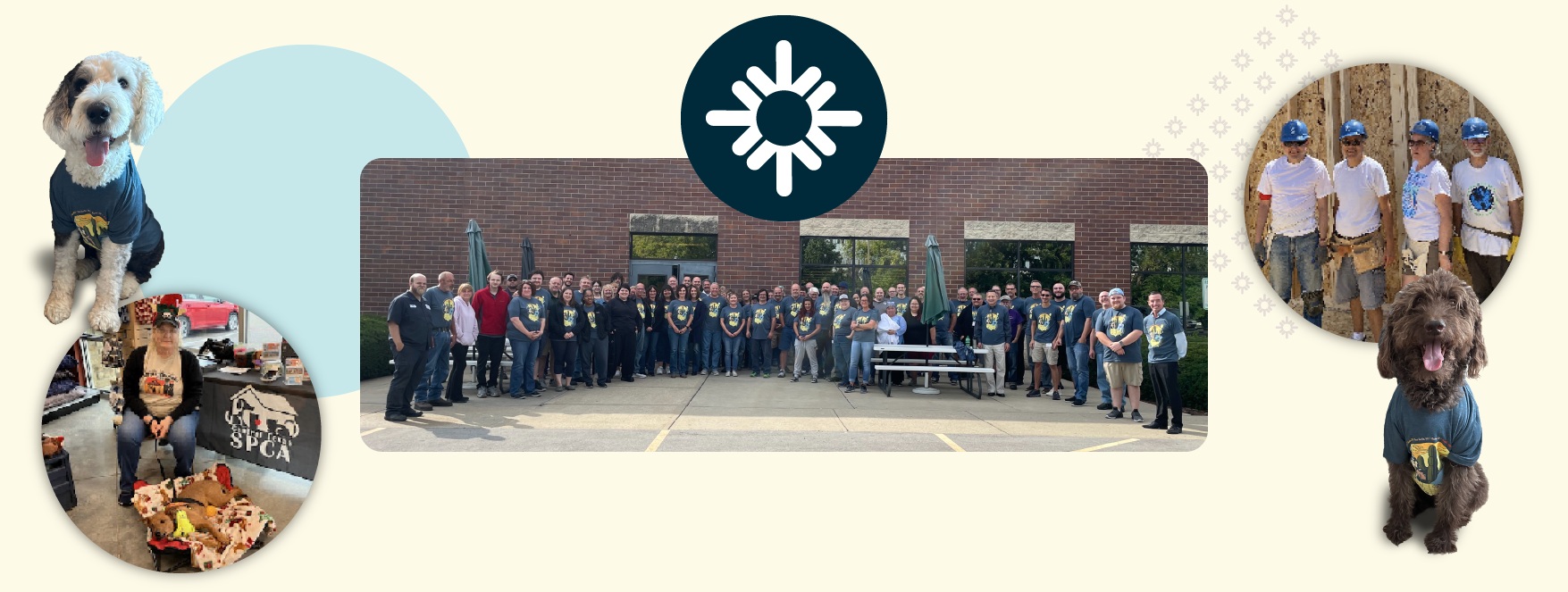
Its stated values spell DRIVEN, ending with Neighborly. That last word feels especially appropriate to a business whose responsibilities include the awkward physical details. Software can route an order; people still have to notice when something is wrong, solve the exception and keep the promised delivery moving.
05 / The bill is bigger than the brochure
The commercial offer combines configurable technology with services and production. Engagements are scoped through consultation and quotes. A useful buying comparison therefore includes implementation, integrations, creative support, production, inventory and shipping. Looking only at a platform fee would miss much of the work the customer is purchasing.
OneTouchPoint competes with other distributed marketing providers, including BrandMuscle, which also offers print and fulfillment. Its combination is a positioning choice, not an exclusive invention. The alternative can also be a collection of separate vendors. Buyers should compare how each arrangement handles exceptions, accountability and the cost of moving work between suppliers.
06 / Start with one order
In March 2026, OneTouchPoint announced its Connected Brand Experience strategy alongside an enhanced OTP One platform and investment in production and fulfillment. The announcement tied the software direction to expanded physical capabilities. The company is making the connection between them the center of its offer.
The practical lesson travels beyond its customers. Trace one recurring order from request to arrival. Count the approvals, corrections and separate systems. Decide which local changes are allowed. Then watch the costs attached to exceptions. This approach makes sense when repeatable work spreads across many teams. A single location ordering occasional flyers may need something much simpler. The revealing question is how much coordination the organization is buying every time it orders a box.