Consider the haircut. A customer is in the chair, scissors are moving, and the telephone rings. Answering interrupts the service someone has already bought. Ignoring it may lose the service someone else wants to buy. This is an ordinary predicament, almost beneath the dignity of a venture-capital presentation. It is also a rather good place to begin understanding Pie.
- Pie helps local merchants get discovered, attract customers and take bookings.
- Its three products cover advertising, AI search visibility and telephone answering.
- It sells directly and through industry software, including Tekmetric and MoeGo.
The company sits where marketing meets the working day. A beauty salon, repair shop or pet groomer needs customers, but its owner is often occupied serving the ones already there. Pie’s proposition is to handle more of the work between someone searching nearby and someone arriving for an appointment. The phone matters because attention has an expiry date.

Two colleagues, one recurring complaint
Syed Ali and Akhil Mantripragada met on Toast’s New Ventures team. Ali led business development; Mantripragada led engineering. Their shared work included Toast’s Benchmarking product, which helped restaurants compare performance with similar businesses. They came to Pie with experience of the commercial and technical sides of selling software to small operators.
They founded Pie in 2025 and launched its first AI-powered growth product late that year. The origin story has a pleasing lack of romance: owners kept asking for more customers. A fresh tool could easily become another obligation. The founders’ answer was to make customer acquisition the job the software performed.
“I need more customers, and I can’t afford an agency.”
Syed Ali, recalling the merchant request behind Pie
By its June 2026 public launch, Pie reported thousands of small-business customers acquired largely through referrals and platform partnerships. Its announced $19.5 million Series A, led by Lightspeed Venture Partners, brought disclosed funding to $23.7 million. Amex Ventures announced an additional investment in August. Those checks finance the attempt; they do not settle whether every shop will benefit.

Found, chosen, booked
Pie has split the customer journey into three products. AI Search works on being found in recommendations from services such as ChatGPT, Claude and Gemini. Its advertised methods include improving a Google Business Profile and creating web pages that AI systems can interpret. Merchants can track mentions against relevant search prompts.
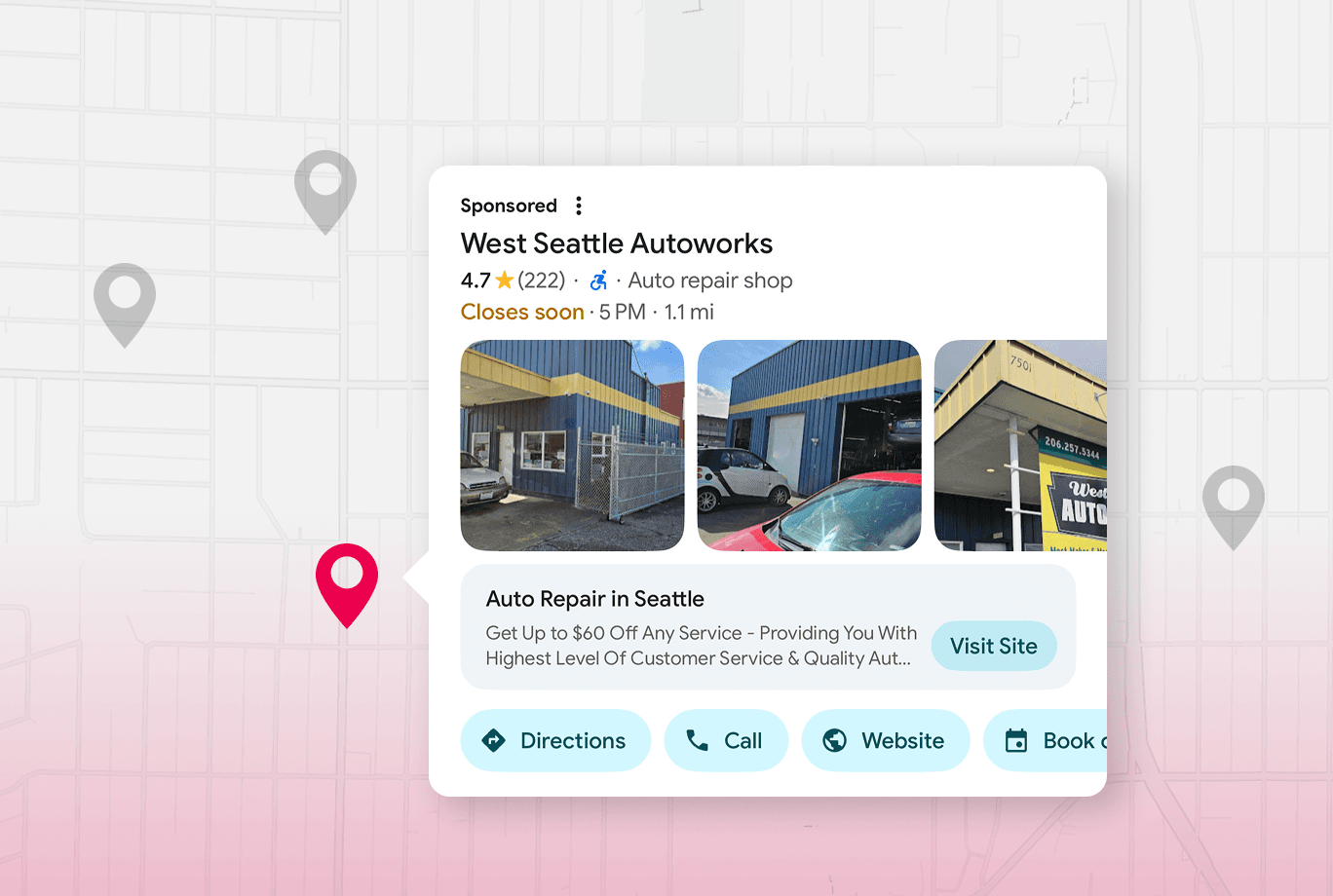
Growth handles local advertising. It builds campaigns, adjusts spending and brings performance into one place. Pie also offers profile management, review tools and local map-ranking information. The attraction is less the novelty of placing an ad than the prospect of having someone, or something, keep tending it after launch.
Front Desk addresses the ringing phone. Pie describes a voice agent that answers questions about services, availability and hours, takes bookings and updates a calendar. It is intended to work around the clock. Pie has reported deployments with Supercuts operators, making the product’s purpose particularly legible: keep the person holding scissors focused on the customer.
Read together, the products reveal Pie’s market position. Agencies can manage acquisition; individual tools can improve listings or answer calls; owners can run campaigns themselves. Pie bundles those functions and offers them through existing business software. Its distinction is that combination and route to market. A promise of appearing in AI recommendations should still be treated as an optimization effort, not ownership of the recommendation.
The price has two parts
Pie’s August 2026 Growth guide lists a $59 monthly subscription, a free first month and $360 in Google Ads credit for new customers. It advertises cancellation without a contract. The subscription buys the software service. Advertising is another expense, and the introductory credit is an offer rather than a permanent budget.
Software subscription + separate advertising spend.
Published August 2026; introductory offer terms apply.
That distinction is visible in Tekmetric’s published terms: advertising is optional, separate from its software subscription, and Pie may bill the merchant directly. A low entry price is useful. An owner still needs to decide how much money can sensibly be spent acquiring a customer, given the margin on the job and the likelihood of a repeat visit.
The software already behind the counter
Small businesses are dispersed, busy and expensive to reach one at a time. Pie’s partnership model offers a practical answer. Tekmetric already serves auto repair shops. MoeGo already serves pet-care businesses. By putting growth capabilities inside those products, Pie can arrive through a working relationship instead of asking an owner to begin another one.
The MoeGo announcement described access through software used by more than 10,000 pet-care businesses. That is partner reach, not a count of Pie customers. For the software partner, acquisition services can make its product more useful and create additional revenue. For the merchant, fewer separate systems may mean less administrative friction. The distribution idea is as interesting as the AI.
A booking is the useful unit
The lesson an owner can copy is straightforward: trace marketing beyond the click. Check whether inquiries become appointments, whether appointments become paid work, and whether the work leaves a margin. Accurate listings and reliable call handling belong in the same conversation as advertising.
These are also the conditions on Pie’s promise. A fully booked salon needs capacity before it needs more calls. A poorly targeted campaign cannot be repaired simply by answering promptly. A reservation entered incorrectly creates work of its own. This is an operational inference from the product’s design, rather than a documented account of Pie failures.
Pie’s wager becomes clear back at the barber’s chair. The next customer should be able to make a booking without taking the scissors out of the barber’s hands. The company’s appeal rests on getting that unglamorous sequence right. Local commerce has little use for applause. It has appointments to keep.
Follow the next call
Explore Pie, its Growth product and AI Search. Read its merchant guides and latest news, or watch Syed Ali’s FINTECH.TV interview.