The chatbot was still talking about the brands. It had simply become less inclined to show its homework. In research published in September 2026, Brandlight reported a sharp fall in citations across a panel of AI answers. Yet brand visibility inside ChatGPT rose. To a marketing team, those movements could suggest opposite stories about the same week.
This is the problem Brandlight has made a business of examining. When a machine supplies the recommendation, a company needs to know what it says, which sources support it and what might improve the next answer. Being mentioned is pleasant. Being understood correctly is rather more useful.
- The job: measure brand mentions, sentiment and sources across AI answers.
- The buyer: enterprise marketers and agencies managing complicated brand portfolios.
- The useful lesson: separate the metrics before deciding what to fix.
The answer kept talking. The footnotes vanished.
Brandlight’s research compared August 23 and August 30 snapshots across roughly 661,000 prompts in seven industries. It reported 47.3% fewer unique cited pages and an 81.4% drop in ChatGPT citations. ChatGPT brand visibility nevertheless increased from 72.0% to 74.3%. The study measured unbranded category questions in the United States and Canada.
These are findings from Brandlight’s own panel, with a one-week comparison that cannot establish permanence. They illustrate why counting citations alone can mislead. A brand may still appear even when an engine supplies fewer references. For marketers, the implication is practical: inspect each engine separately before declaring a campaign successful or a content strategy broken.
A marketing department for the answer
The software starts with questions. Brandlight says it asks major AI engines thousands of them from different viewpoints, then examines the answers for brand mentions, sentiment and sources. Its Visibility & Insights product adds competitive comparisons and query-intent analysis. The ambition is to give a marketing department a working picture of conversations it did not initiate.
Consider the difference between asking about a named brand and asking which product suits a particular need. The first tests recognition. The second tests whether the brand earns a place in the recommendation. Brandlight’s source analysis helps teams investigate the pages supporting those answers, rather than treating the response as an inexplicable verdict.
“AI engines are becoming companies’ frontline sales teams”Jessica DeVlieger, in a Brandlight website testimonial
That investigation feeds several kinds of work. The Content module evaluates existing material and guides new briefs. Partnerships examines publishers, formats and competitive placements. Technical Health looks at crawler access, coverage and server logs. A missing mention might call for better information, a better external placement or a repaired access problem. The proposed remedy depends on the diagnosis.
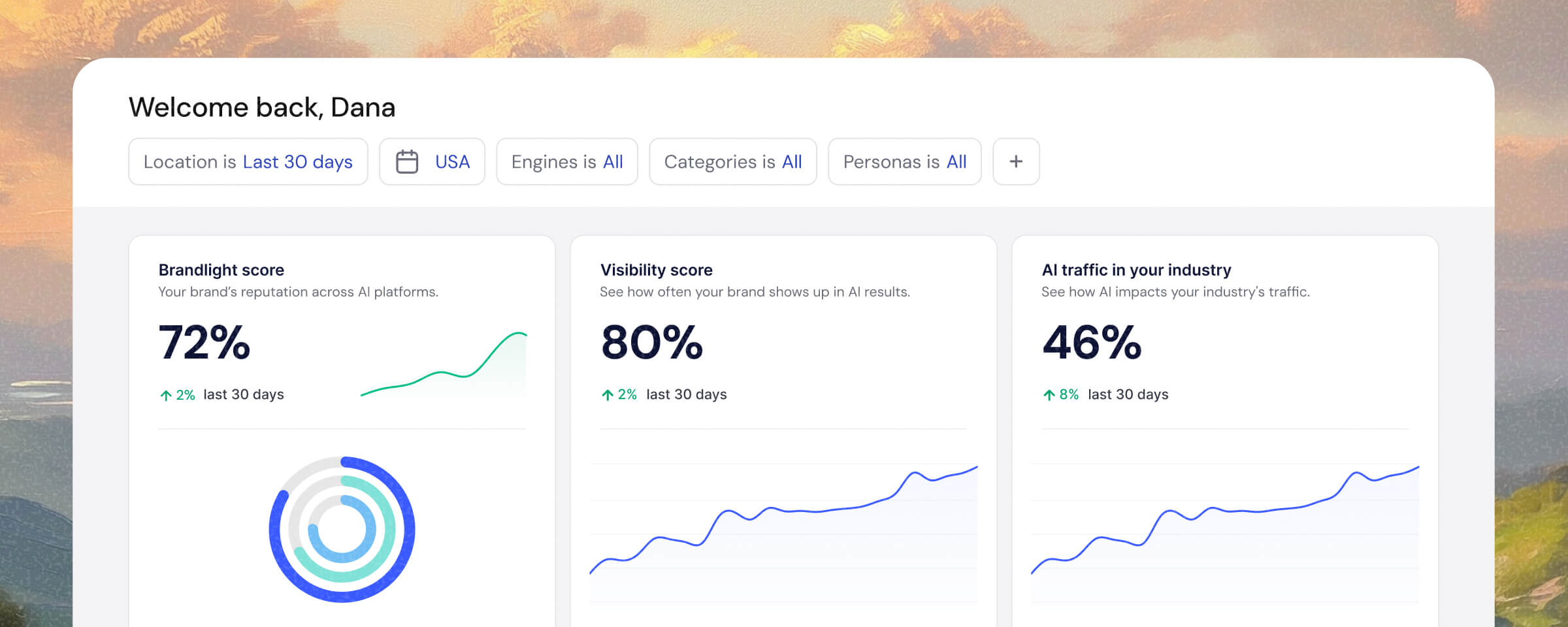
Big brands, complicated plumbing
Brandlight’s February 2026 funding announcement names Kimberly-Clark, LG, The Hartford and Estée Lauder as customers. It says the platform serves hundreds of large brands, including dozens of Fortune 500 companies. Those are company-reported figures, but the named customers clarify the intended buyer: organizations with several teams, markets and products to coordinate.
The enterprise offering includes multiple brands, regions and languages, optimization experts and dedicated account support. Brandlight also states SOC 2 Type 2 compliance. The commercial pitch extends beyond showing a score. It includes helping people decide which work belongs to content, technical, media or brand teams.
The approach sits in a competitive market. Profound offers answer-engine insights, shopping tools and agent analytics. Scrunch addresses AI visibility and customer experience; Peec AI sells AI search analytics. Brandlight’s emphasis is enterprise coordination and strategic support. Buyers should compare that bundle with their own capacity to implement findings, rather than assume a larger dashboard solves a larger problem.

The shopping shelf moves into the conversation
Commerce gives the measurement problem a more tangible object: the product. Brandlight’s Agentic Commerce module tracks shopping visibility, queries that trigger shopping experiences, competing retailers and review dynamics. A marketing team can examine which products appear and where the recommendation leads, then use those observations to prioritize listings and product information.
Advertising is another extension. The Ad Analysis page invites enterprises into a beta to examine AI ad performance and competitor activity. That status matters when evaluating the offering: a developing paid-media capability brings different expectations from an established monitoring workflow. The website also labels Attribution as coming soon, leaving a clear distinction between visibility measurement and the promised financial accounting.
Thirty million dollars buys the next act
Founded in October 2024 by Imri Marcus, Uri Gafni and Didi Dvash, Brandlight emerged from stealth in April 2025 with $5.75 million. Its February 2026 Series A added $30 million, led by Pelion Venture Partners with Cardumen Capital and G20 Ventures participating. Together, the disclosed rounds total $35.75 million.
The financing supports a broader brief. Marcus’s February announcement described visibility as the first stage and advertising and commerce as the next. Brandlight sells enterprise software through a sales conversation, accompanied by strategic support. A prospective customer therefore needs a scoped proposal, including implementation responsibilities, to judge the cost against the work.
Partners help supply that work. A December 2025 Demand Spring announcement pairs Brandlight’s analysis with marketing consultancy and coaching. Data Axle announced its own partnership in November. The underlying commercial logic is straightforward: identifying a content problem creates value only when somebody can change the content.
The retailer holds the keys
Brandlight’s May product-page guidance offers a useful starting assignment: choose three products and audit their pages at three major retailers. Compare those pages with what AI engines cite in the category. Look for missing use cases, thin product explanations, useful review themes and incomplete structured information. The exercise turns a grand marketing concern into nine inspectable pages.
It also reveals a constraint. The retailer controls the template, markup and publishing process. A brand can request improvements, but it may need a relationship with the retailer’s content team to secure them. Software can identify the gap; organizational cooperation determines whether it closes. Brandlight is most interesting at that junction, where an answer on a screen becomes an assignment for a person.