Ask most people what Nikon makes and they will say cameras. It is a fair answer - the Nikon F put a 35mm single-lens reflex in the hands of every photojournalist worth the name, and NASA has carried Nikon bodies into orbit since the early 1970s. But it is also the answer to a much smaller question than the one the company is actually trying to solve. Cameras are one of five Nikon businesses. Increasingly, they are the one that carries the brand rather than the growth.
The through-line is not photography. It is light. Nikon was founded in 1917, in Tokyo, as Nippon Kogaku - "Japan Optical" - to grind lenses and optical glass, first for the Imperial Japanese Navy. More than a century later the company still sells exactly one thing, dressed in different clothes: the ability to bend, focus, measure and record light more precisely than almost anyone else on the planet. That skill shows up in a mirrorless camera. It also shows up in a machine that prints the circuits inside a microchip, a microscope that watches a living cell divide, a scanner that maps the back of your eye, and a printer that grows a metal part out of powder.
Nikon does not sell cameras. It sells control over light - and cameras are just the version you can hold.
01 / What it actually doesFive businesses, one physics problem
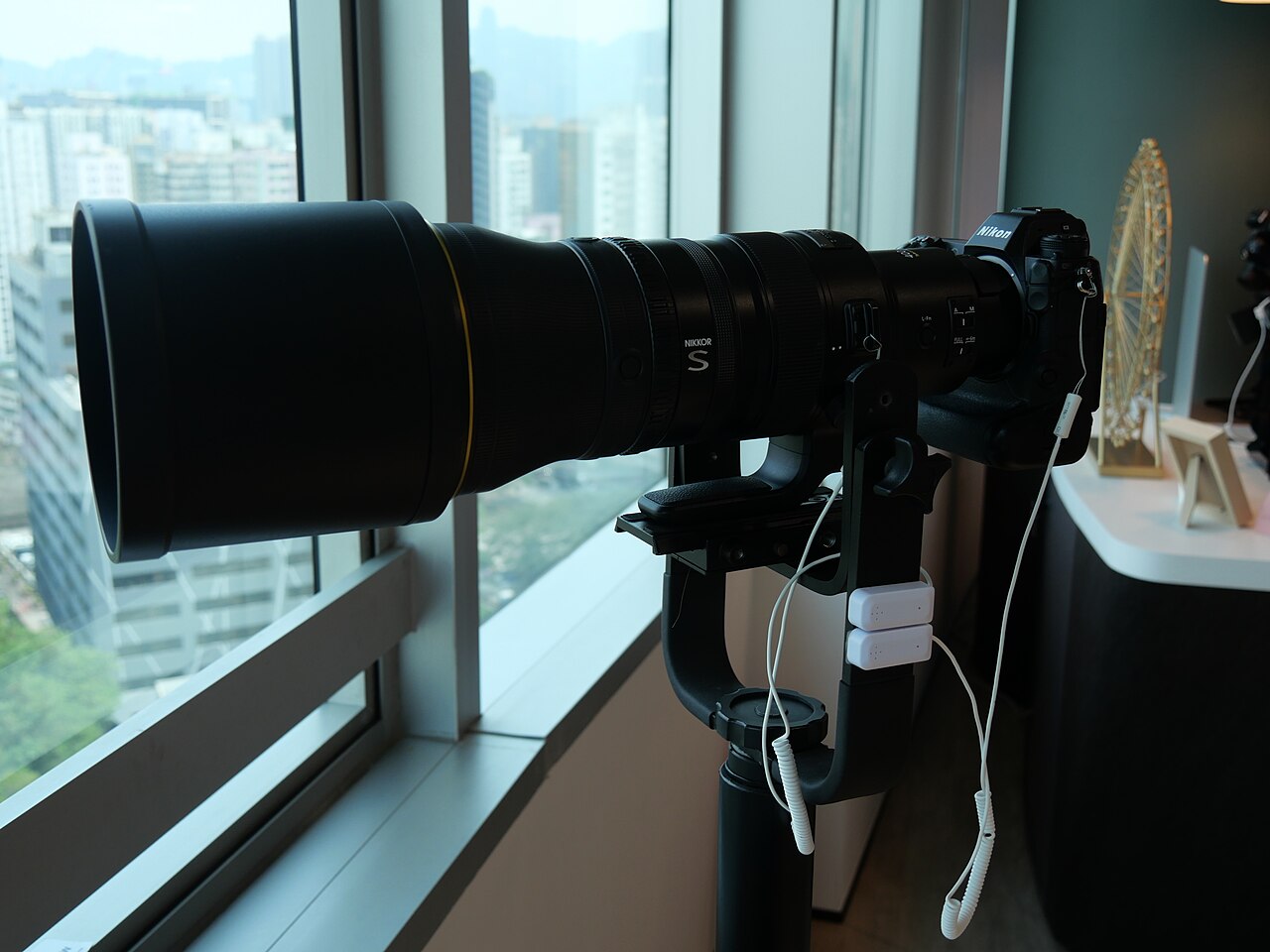
Nikon organizes itself around a handful of segments, and the tidy way to understand them is to notice they are all the same trick at different scales. Imaging Products is the famous one: Z-series mirrorless cameras like the Z9, Z8, Z6III and the enthusiast-friendly Z5II and Z50II, plus the retro Zf, all feeding a NIKKOR Z lens lineup that now runs past 50 optics. Precision Equipment is the invisible one: lithography systems - steppers and scanners - that project circuit patterns onto silicon wafers and flat-panel display glass. Same lenses, tighter tolerances, no viewfinder.
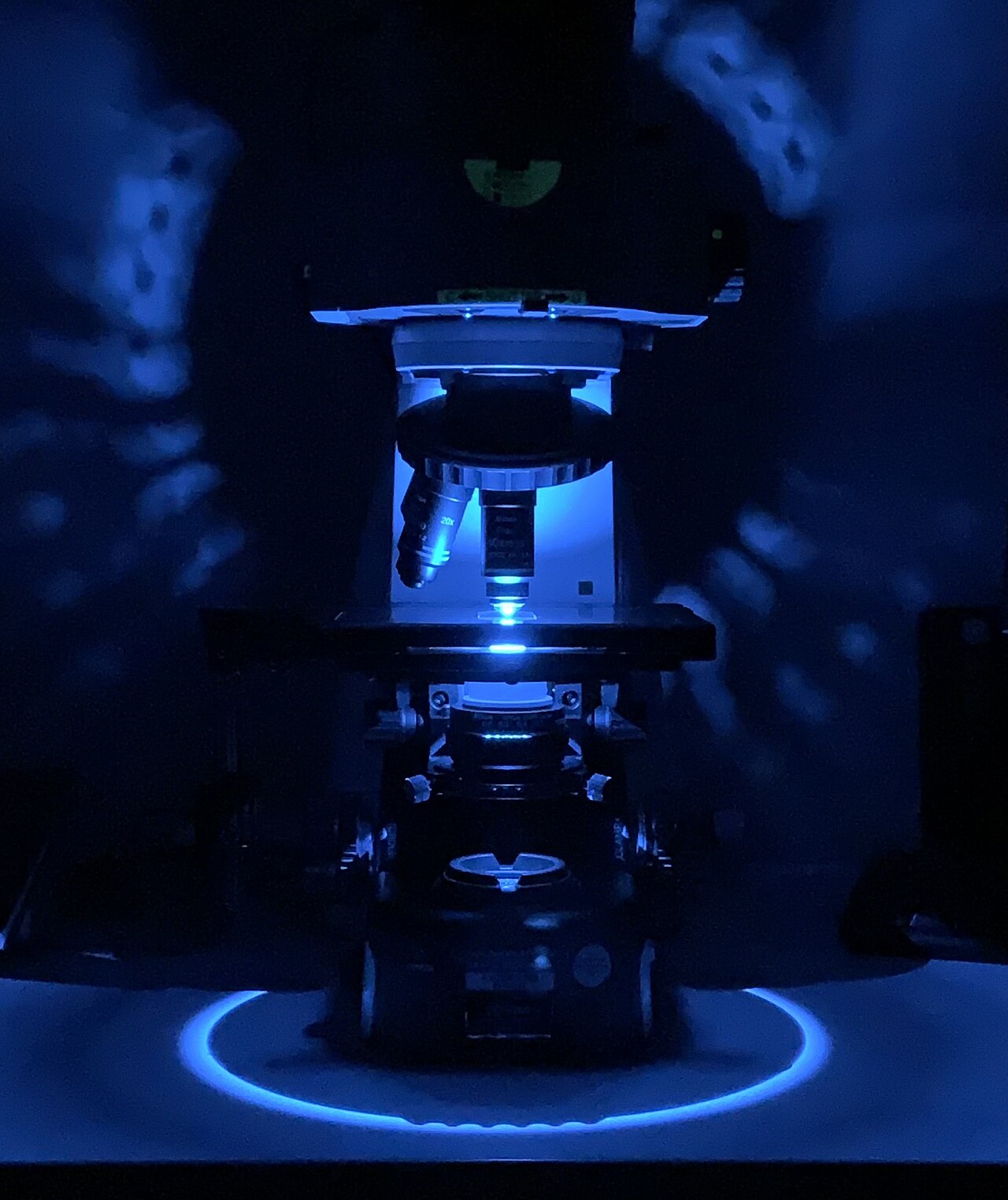
Healthcare covers microscopes and life-science imaging - the Eclipse microscope family, confocal laser-scanning systems and image-analysis software used in drug discovery - plus eye care, built out through the 2015 acquisition of retinal-imaging firm Optos. Digital Manufacturing is the newest and least camera-shaped: industrial metal 3D printers and laser processing, anchored by the German additive-manufacturing company SLM Solutions, bought in a deal worth roughly 622 million euros. And a components and precision business rounds it out with encoders, metrology and industrial inspection gear that keep other people's factories accurate.
02 / Who buys itFrom film sets to fabs to eye clinics
The customer list is the giveaway that this is not a camera company with hobbies. Photographers and filmmakers buy the Z bodies and NIKKOR glass. Semiconductor and display manufacturers buy the lithography systems. Universities, pharmaceutical companies and bioscience labs buy the microscopes and confocal rigs. Hospitals and ophthalmology clinics buy the Optos retinal scanners. Aerospace, automotive and industrial manufacturers buy the metal printers, encoders and inspection systems. Nikon sells into more than 150 countries, and the group employs around 20,000 people to do it.
03 / The problem it solvesWhen "good enough" is not an option
There is a common thread in who pays Nikon: they are all people for whom precision is not a luxury. A chipmaker cannot ship a processor whose circuits are printed slightly off. A researcher chasing a new drug cannot trust a blurry image of a cell. A surgeon reading a retinal scan is looking for the early edge of disease. A jet-engine supplier printing a metal bracket needs it to hold under load. Nikon's pitch, across every segment, is the same: when the tolerances are unforgiving and the stakes are high, its optics and precision engineering do the job a cheaper instrument cannot.
04 / How it is differentOwning a phenomenon, not a category
Nikon's competitors change depending on which room you walk into. In cameras it fights Canon, Sony and Fujifilm. In cinema it now lines up against ARRI, Blackmagic and Sony. In semiconductor and display lithography its rivals are ASML and Canon. In microscopy it goes up against Evident - the former Olympus microscope business - along with Carl Zeiss and Leica. In metal additive manufacturing it faces EOS, GE Additive and 3D Systems. Almost no single competitor meets Nikon in more than one or two of those markets. That is the strategic point: category leadership is temporary, but a deep physical capability compounds across markets that look unrelated on a shelf and identical under a microscope.
Canon and Sony fight Nikon over cameras. ASML, Zeiss and EOS fight it everywhere else. Almost no one fights it in more than one room.
05 / The 2024 moveBuying RED for its plumbing
The most talked-about recent decision was the 2024 acquisition of RED Digital Cinema, the U.S. company whose cameras sit on a large share of Hollywood sets. Photographers reacted as if Nikon had bought a trophy. The more useful reading is that Nikon bought a toolbox. RED's value was its image-compression technology and color science - exactly the kind of intellectual property that slots into Nikon's own image processing. In 2025 that logic showed up as a product: the Nikon ZR, a compact cinema camera built on RED technology, the first Nikon body to carry that DNA. As Nikon put it, its optics and image processing "combined with RED's knowledge in cinema cameras" is what makes distinctive professional products possible.
It fit a pattern. Optos in 2015 bought Nikon a healthcare business. SLM Solutions bought it a manufacturing one. RED bought it a foothold in professional cinema and a bundle of proven technology. Nikon tends to acquire capabilities it can fold into its existing optics stack, not logos to hang on a wall.
06 / The business modelConsumer brand up front, capital equipment behind
Financially, Nikon is a diversified optics conglomerate. Money comes in through consumer hardware - cameras, lenses, binoculars and rangefinders - and through much larger, lumpier sales of capital equipment: lithography systems, metrology, industrial inspection and metal printers that a factory buys rarely and expensively. Layered on top are the steadier healthcare and life-science instruments, with their software and consumables. The camera brand does the work of keeping "Nikon" a household name; the precision and healthcare businesses are where the company is steering future profit.
That steering is not free, and the numbers show the strain. For the fiscal year ended March 2026 Nikon posted revenue of roughly 677 billion yen - on the order of 4.2 to 4.5 billion U.S. dollars - and an operating loss. The striking part is what was working underneath: camera and lens unit sales actually rose, led by the Z5II and Z50II. The loss came from U.S. tariffs, unfavorable foreign-exchange movements, and continued spending on the newer segments. Selling more cameras and still losing money is not the failure it looks like from the outside; it is what a deliberate, expensive pivot looks like in a single year's accounts.
In 2025 Nikon sold more cameras and lenses than the year before - and still lost money. That was closer to the plan than the panic.
07 / The expertise108 years of grinding glass
The reason any of this holds together is history. Nikon has been refining optical glass and precision mechanics since 1917, through the birth of the NIKKOR lens brand in 1932, the first Nikon-branded camera in 1948, the era-defining Nikon F in 1959, the leap into semiconductor steppers around 1980, and the corporate renaming from Nippon Kogaku to Nikon Corporation in 1988. That is a very long runway of accumulated know-how in a field where know-how does not transfer easily. You cannot buy your way to a century of lens-grinding culture; ASML and Zeiss have their own versions, which is exactly why those markets have so few serious players.
08 / Where it fitsThe company you use and never see
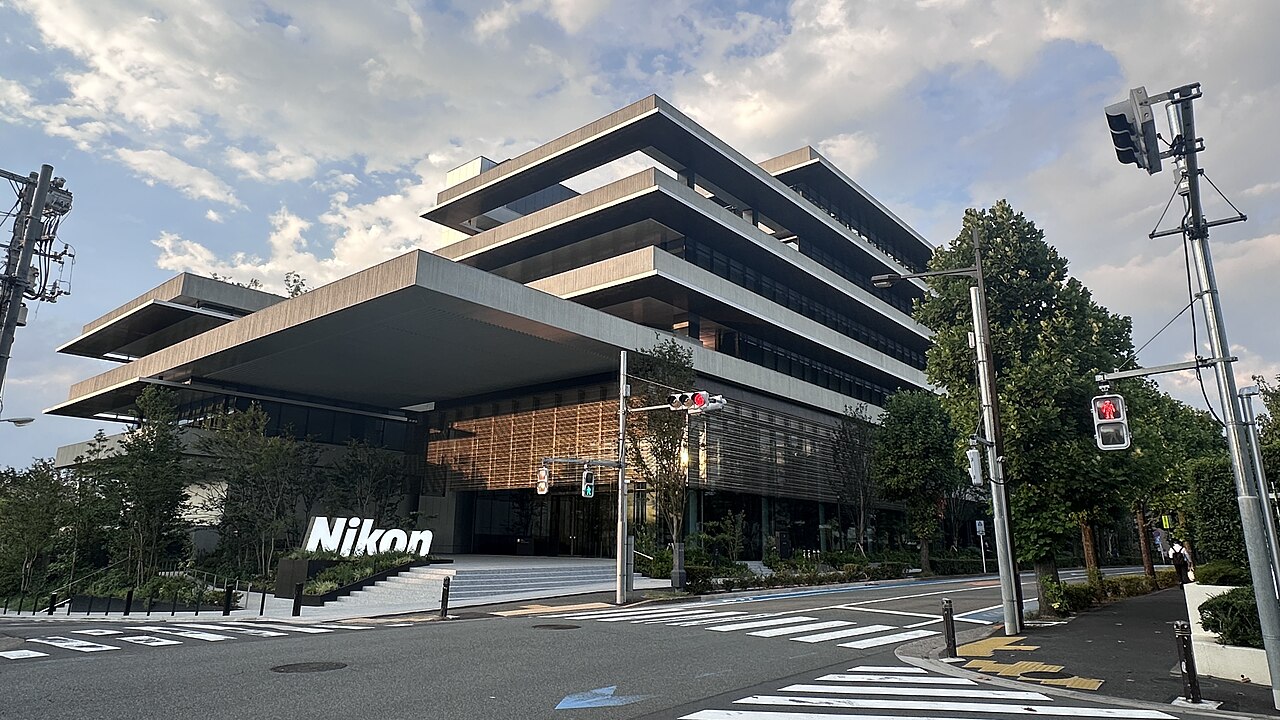
Put it together and Nikon occupies an unusual spot in the market. It is one of a very small number of firms with world-class lithography optics, and one of a very small number with world-class scientific microscopy, and a top-tier camera maker, and now a metal-printing company - all at once, all leaning on the same core competence. You interact with Nikon far more than the logo count suggests: the chip in your phone may have been printed on a Nikon system, the eye exam that flags your diabetes early may run on a Nikon scanner, the medicine you take may have been developed under a Nikon microscope, and yes, your vacation photos may have come off a Nikon sensor. The brand on the box is the smallest part of the story.
The open question is whether the pivot pays off before the accounts get tired of it. Tariffs and currency are outside Nikon's control; the discipline of managing a shrinking camera market into a premium core while funding growth elsewhere is not. For a 108-year-old company, running a planned loss to move its center of gravity is less a crisis than a habit - the same long, patient bet on light it has been placing since 1917.