A finished report can be a magnificent way to postpone a decision. The charts are tidy, the spreadsheet balances, and somebody has spent Friday making the slides presentable. Monday still arrives with the same question: what should we actually do? That gap between having information and acting on it is where ecoeats now places its business.
The Tokyo company calls its offering an “AI-powered brand optimization platform.” Behind the phrase is a proposition about work: help people interpret business data, reduce recurring analytical chores, and preserve knowledge that otherwise lives in individual heads. Its public pitch gives human judgment a continuing role. The machine gets a seat at the discussion; the brand team still has a business to run.
The name hints at an earlier, more specific ambition. In 2024, ecoeats was presenting software for food manufacturers. Its public identity has since widened, while its industry connections still point back to food. Read together, those two strands suggest a company trying to carry a sector-specific idea into a broader management problem: how to make accumulated information useful before the next decision is due.
A food-tech name with a longer reach
STARTUP DB records ecoeats’ incorporation on October 13, 2023, and describes its early product as a generative AI platform specialized for the food industry. Speeda’s company listing uses a more unusual description: food renewability management software. Both accounts place the business upstream of the dinner table, among the companies deciding what food to develop and sell.
A 2024 demo-day report describes a proposed simulation tool for evaluating food concepts and testing hypotheses. Manufacturers and retailers were the intended users. The report also says ecoeats was conducting proof-of-concept work with several companies and planning a release for early the following year. Those statements describe the project at that moment: an offering being tested, with a future release in view.
That early proposition gives the business an understandable commercial setting. Consider, as an illustration, a manufacturer comparing two product concepts. Each choice could imply different ingredients, positioning and production commitments. A useful simulation would help the team examine assumptions before committing resources. The value would lie in the quality of that comparison, and in whether it changes what the team chooses to investigate next.
Seen that way, the distance from food concepts to brand optimization is smaller than the language suggests. Both concern decisions made under uncertainty. A broader description can accommodate more kinds of customer questions. It also raises the burden of explanation: a prospective buyer needs to see exactly which part of their working week the software will improve.
The founder who put his lessons to work
CEO and co-founder Yuki Kaneko’s route into the business began with an intentional pause. In a Cyber University interview, he describes taking a year after high school to read and consider his direction. He went on to study language and business before transferring to the online university, and also attended the engineering school 42Tokyo.
His account includes hackathons, contract work for an Israeli company and participation in Antler’s startup program. At Antler, he recalls working with teammates from nine in the morning until late at night. He describes trying ideas from his courses in business situations, comparing the results with the theory, and adjusting. The university’s flexible schedule helped make those activities possible.
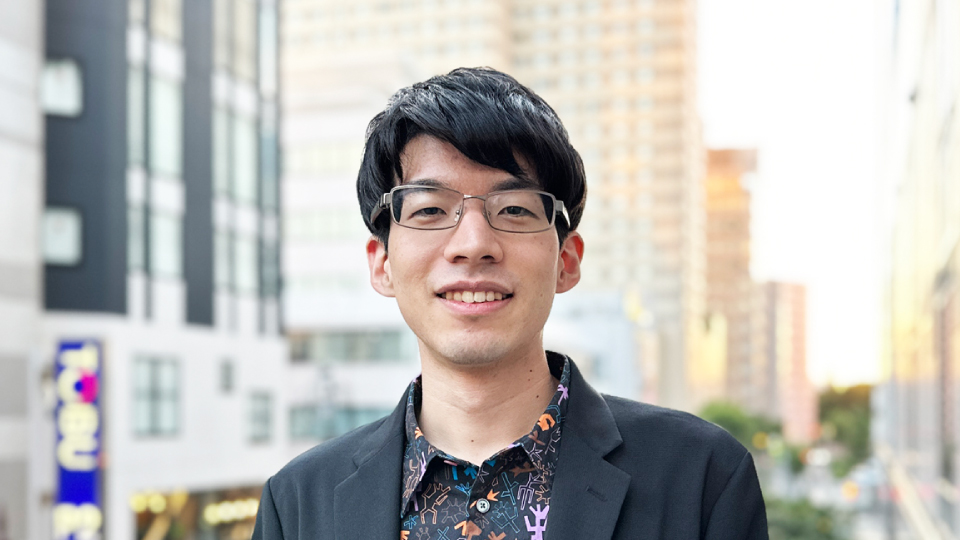
It is an origin built around accumulated practice. The sequence is useful for an aspiring founder because it offers actions within reach: learn something specific, put it to use, compare expectations with results. Kaneko says he achieved his ambition of starting a food-tech business while still a student. His advice to prospective students includes a compact Japanese phrase, translated here: “Give it a try.”
The company identifies Masaru Tagaya as CTO and co-founder. That division of roles puts business leadership and technical delivery alongside each other. For this particular proposition, the pairing has a practical purpose. A model can produce an answer; a company must establish what the answer means for someone’s work, how it can be checked, and whether acting on it is worthwhile.
Ten pitches, one place to test the argument
On July 31, 2024, Kaneko presented ecoeats at the first LEAPS demo day, organized by Quantum Leap Ventures, or QXLV. The event took place at Google for Startups Campus and featured ten entrepreneurs. The organizer’s announcement lists ecoeats among the presenters with its food-manufacturer software proposition.
The setting matters because it fixes the early pitch to a date and an audience. An accelerator presentation asks a founder to make several claims hang together: a buyer has a problem, a product can address it, and a company can charge for the solution. Food renewability management may be an awkward phrase, but it identifies a narrower business argument than a general promise to use AI.
ecoeats was one of the presenting companies on July 31, 2024.
There is a practical lesson in that specificity. A founder can test the same discipline without an accelerator: name the buyer, describe one decision that buyer repeatedly makes, and show the consequence of making it poorly. The exercise becomes harder, and more valuable, when the explanation must survive outside the vocabulary of the product team.
The price of useful work
The same 2024 reporting describes a three-part business model: free, custom and add-on. The proposed route was to offer an initial free version, then incorporate customization and additional functions according to a company’s needs. That is a historical commercial design, rather than a current shopping menu.
For a buyer considering such a model, the important question is where ordinary use ends and paid adaptation begins. A free starting point can lower the barrier to an experiment. Customization can make the experiment relevant to a real workflow. Each extra requirement also needs a business reason, especially when the people evaluating the software are the same people already short of time.
An evaluation should therefore count more than a software fee. Staff must prepare information, review outputs and decide whether the result deserves a place in ongoing work. This is an editorial way to assess the proposition, rather than an account of an ecoeats customer deployment. The test is straightforward: does the benefit exceed the full effort required to obtain it?
The report is finished. The decision is still waiting.
The management problem behind the proposition
A sensible small trial might begin with one recurring decision and a written record of how the team handles it today. Keep the comparison concrete: time spent preparing, time spent checking, and whether the output helped someone choose an action. Faster text production can be useful. The more consequential result is a better-informed choice that arrives while there is still time to act.
The colleague, the spreadsheet and the AI
ecoeats belongs, by its current positioning, in the market for business decision support. Its functional alternatives include an internal analyst, a spreadsheet process, a business-intelligence tool, a general AI assistant or a specialist consultancy. These are ways a buyer might accomplish the work, rather than a claim that ecoeats has competed against particular vendors.
Each alternative frames the purchasing decision differently. A team comfortable with its existing analysis may need only a clearer review process. Another may need specialist help defining the question. A third may have a recurring task that is sufficiently consistent to automate. The attraction of ecoeats’ proposition depends on which of those situations the buyer actually faces.
Its food-tech history offers a possible point of distinction: experience with a particular industry’s decisions can make a general technology more relevant. That is a reason to ask for a demonstration using a familiar problem. The buyer should recognize the constraints, understand the comparison and be able to challenge the result. Domain relevance earns its value in those details.
- 01Name the decisionWhat will someone choose?
- 02Check the evidenceCan the team verify the inputs and reasoning?
- 03Compare the effortInclude preparation and review time.
- 04Record the actionWhat changed because of the result?
The conditions matter. If a team cannot agree on the decision, faster analysis may simply move the disagreement into a new interface. If the underlying information is unsuitable, an attractive answer can be difficult to trust. If nobody has authority to act, a useful insight can wait indefinitely. A practical evaluation needs to address those organizational questions alongside the software.
Food stays on the agenda
The broader brand pitch has not removed food from ecoeats’ public activities. Japan’s Food-Tech Public-Private Council membership lists include the company in 2026. The official June roster places ecoeats among a wide range of businesses and organizations connected to the sector. That is a concrete sign of continued industry participation.
Membership has a useful but specific meaning. It puts a company within a forum where an industry’s problems, terminology and priorities can be discussed. For a startup whose offer depends on understanding business decisions, staying close to those conversations makes strategic sense. Participation becomes commercially valuable when the understanding gained can improve a product or sharpen a customer discussion.
For a potential user, the next step is modest: bring ecoeats a real recurring problem through its website’s consultation form. Choose something the team can explain and assess, with a person responsible for the outcome. An AI proposition becomes easier to judge once it has a deadline, a decision and a clear account of what useful work would look like.
That is what makes this small company worth examining. Its journey from food software to a broader brand proposition turns on a recognizable question: what should a business get back from all the information it collects? The answer has to show up somewhere beyond the report. Preferably before next Monday.