decision-support
(22)
Put the data to work.
Eigenatics built its pitch around EOS, a scoring platform with a practical ambition: make predictive analytics part of the decisions a business makes every day.

Empyrean wants benefits to leave the brochure.
An employer can buy a generous benefits package and still leave employees lost. Empyrean combines administration, guidance, and human support to help that investment reach the people it was meant for.
Strata Decision Technology makes the numbers agree
Before a hospital can cut waste, its people have to agree on what things cost. Strata turns that surprisingly difficult task into a business spanning hospitals, universities and banks.

Optym and the art of moving nothing
An empty truck still costs money. Optym turns that awkward fact into a mathematics problem - and gives freight planners a way to test the next move before making it.
The Oil Well Had a Memory. The Database Didn’t.
MAANA tried to make industrial software remember what engineers already knew. Its knowledge graph linked the records, relationships and human judgment that conventional search left apart.
The $25,000 Search Box That Taught the Pentagon to Buy Software
Vannevar Labs began with an Arabic OCR project nobody urgently needed. Then two engineers built one useful search box - and discovered that in defense technology, relevance beats polish every time.

ecoeats wants your data to earn its keep
The Tokyo startup began with food-industry software. Its broader pitch now puts AI beside brand teams, helping them move from a pile of numbers to a decision worth making.

Grant Demaree Turned a Three-Month Planning Lag Into Onebrief
In Liberia, the virus moved faster than the planning process. The former Army officer built Onebrief around a stubborn question: how much better could military decisions become if the software finally kept up?
The Nurse Staffing Spreadsheet That Told a Hospital It Needed 9.6 More Nurses
Heidi Morin was told to cut staff. Her own calculator found the unit was 9.6 nurses short. Parity grew from that argument into a system designed to make clinical reality legible to hospital finance teams.

The Startup Trying to Kill the Military's Most Dangerous Weapon: PowerPoint
A West Point officer watched treatment units get built where the virus had already left. He sketched the fix on a napkin. Six years later it is worth $2.15 billion.

The People Closest to Your Customers, Furthest From Your Investment
A Go2 Newsroom story on the 'frontline investment gap': the support and operations workers who have the most contact with customers routinely receive the least development, visibility, and decision support. Drawing on Go2's public purpose and product messaging, the piece lays out Go2's stated operating thesis — that giving frontline teams better tools and more agency produces better outcomes for both workers and the companies that employ them.
Intelmatix
Intelmatix is a deep-tech enterprise AI company founded by MIT-trained technologists that builds EDIX, an Enterprise Decision Intelligence Platform designed to act as a 'digital brain' for organizations. Using context-aware AI agents, knowledge graphs and generative AI, EDIX lets companies sense, learn, decide and act across functions like demand forecasting, inventory, workforce planning and site selection - without needing an in-house data science team. Headquartered in Riyadh with offices in London and Boston, Intelmatix focuses on the MENA region, training on local context data that global platforms overlook. It raised a $20M Series A in 2024 - the region's largest AI Series A of its kind - and in 2025 became the first Saudi and MENA AI company named a World Economic Forum Technology Pioneer.

Corti
Corti is a Copenhagen-based healthcare AI company that builds clinical-grade models and APIs helping developers and health systems automate medical conversations. Its Symphony model powers speech-to-text, medical coding, clinical note generation, and agentic workflows, serving roughly 100 million patient interactions a year across providers, insurers, EHR vendors, and public-safety dispatch centers - including the NHS. Corti positions itself as privacy-compliant, healthcare-specialized infrastructure that outperforms general-purpose models on medical tasks.
Pasito
Pasito is a New York-based AI company building an AI-native workspace for group health, life, and retirement benefits. Founded in 2021 by Pauline Roteta, Ignacio Ampuero, and Julie Scotland, and backed by Y Combinator, the platform ingests unstructured plan documents and employee census data into a unified data layer, then deploys engagement AI agents to automate benefits work across sales, quoting, marketing, enrollment, support, and claims. Pasito serves carriers, brokerages, and consultants including New York Life, Reliance Matrix, OneDigital, and Daybright Financial. In February 2026 it raised a $21 million Series A led by Insight Partners.

AIMHI Construction App (AI meets Human Intelligence)
AIMHI (Artificial Intelligence meets Human Intelligence) is a women-led, Mindanao-based construction technology startup building the Philippines' first AI-driven, profit-first project management platform. Its Builder Suite and offline-capable mobile app give contractors, engineers, and project managers real-time clarity on costs, risks, and progress - even on remote job sites where the internet drops - helping them predict target profit early and avoid budget overruns.
dMetrics
dMetrics is an AI company that builds Minsky, a natural-language-processing platform letting non-technical subject-matter experts create their own AI models to read, track, and analyze huge volumes of messy text - without writing code. Founded by two MIT machine-learning PhDs, the company started by decoding healthcare conversations across social media and now serves financial, pharmaceutical, and public-sector customers, including a five-year, $99.5M U.S. Department of Defense production contract for open-source threat analysis.
TwinKnowledge
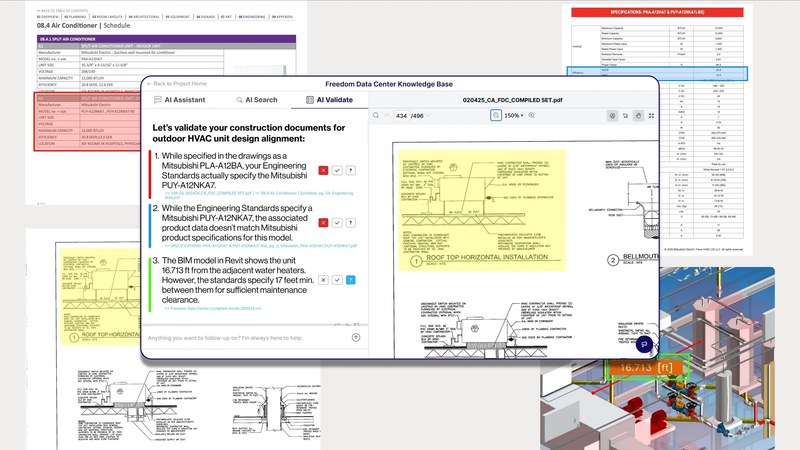
TwinKnowledge is a New York-based AI company building custom copilots for the architecture, engineering, construction and operations (AECO) industry. Its platform connects to a firm's structured and unstructured data across 30+ tools and document repositories, then trains project-specific or company-wide AI agents that analyze construction documents, drawings, submittals and RFIs. The goal: catch scope conflicts and non-compliant designs before they become expensive rework, answer RFIs in seconds instead of days, and stop the institutional knowledge that walks out the door with every retiring engineer.
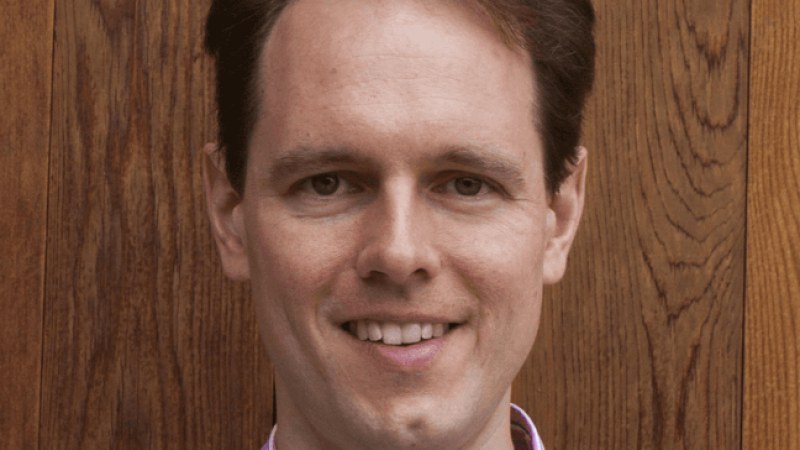
Thaddeus Fulford-Jones
Thaddeus Fulford-Jones is the London-born, MIT-trained engineer who co-founded and leads Radial (formerly Radial Analytics), a Concord, Massachusetts healthtech company that uses AI to guide clinicians through the high-stakes 'crossroads moments' of patient care - especially deciding where a patient should go after leaving the hospital. A serial founder, he earlier built and sold Locately, a pioneering GPS shopper-analytics firm acquired in 2012, before turning his fascination with behavioral 'nudge theory' and large-scale data toward value-based care. Radial's platform has analyzed data from 18 million patients and 82 million encounters to help more people recover safely at home.
BeyondAI
BeyondAI (formerly Beyond Limits) is an industrial and enterprise AI company born from technology developed at Caltech's NASA Jet Propulsion Laboratory. Founded in 2014, it builds hybrid, neuro-symbolic AI that pairs machine learning and generative AI with rule-based reasoning to deliver explainable, human-like decisions in high-stakes sectors such as energy, oil and gas, manufacturing, utilities and healthcare. Backed by investors including Group 42 and bp ventures, the company raised a $133M Series C in 2020 and rebranded to BeyondAI at LNG2026.
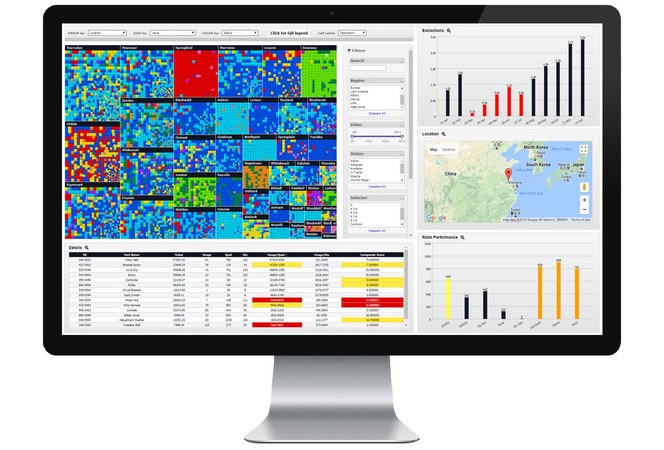
Visual Action Software
Visual Action Software builds operational visualization tools for organizations drowning in big data. Its patented Flaremap technology - a descendant of the treemap - powers the Visual Action Platform, turning dense, real-time data into visual interfaces that help analysts spot threats, monitor performance, and reduce risk. The company serves defense and national intelligence, financial services, healthcare, and core infrastructure customers from its base in Orchard Park, New York.
Terra AI
Terra AI is a Palo Alto geoscience company building generative AI that turns the messy, expensive guesswork of subsurface exploration into fast, probabilistic 3D models of what lies underground. By fusing geophysics, geochemistry, and drilling data, its platform generates millions of geological scenarios in minutes, helping mining and energy teams decide where to drill, how many wells they need, and whether a project is worth the capital - shrinking exploration timelines and pointing capital at the critical minerals the clean-energy transition depends on.

Zorro
Zorro is an AI-powered ICHRA platform that swaps rigid group health plans for a defined-contribution model - think 401(k), but for health insurance. Employers set a budget, employees get a personal allowance, and Zorro's decision-support engine helps each person pick an individual plan that actually fits their doctors, medications, and wallet. The platform serves employers, employees, and the brokers who sell to them, and clients have averaged over 20% premium savings versus traditional group coverage.