The engineer who decided the most important number in healthcare isn't a vital sign. It's the address a patient goes to next.
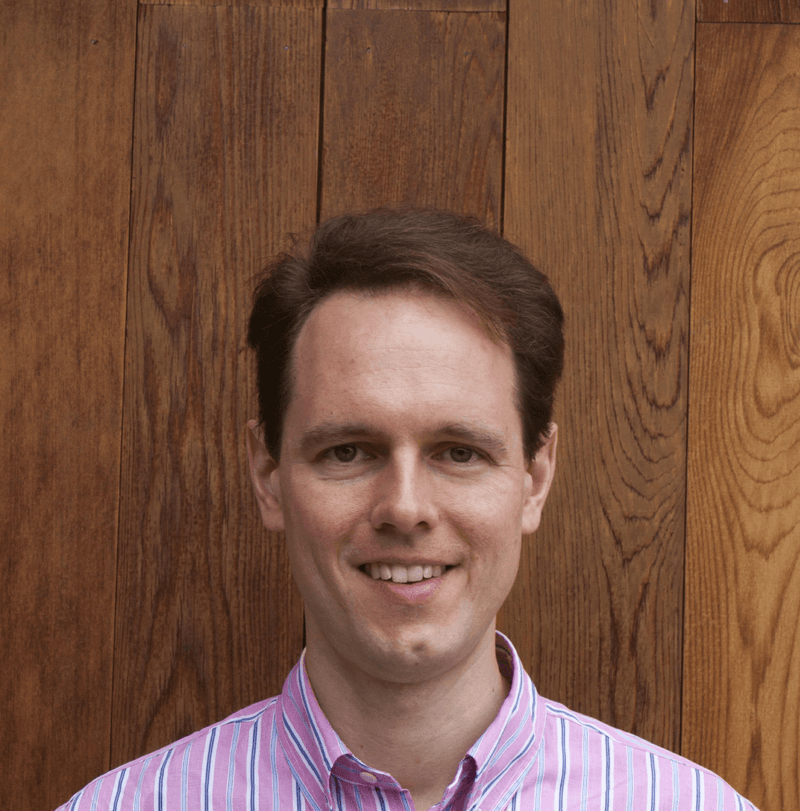
Thaddeus, holding still long enough for a camera. The data rarely sits this quietly.
That question - simple to ask, brutal to answer well - is the one Thaddeus Fulford-Jones has spent the last decade trying to solve. As co-founder and CEO of Radial, the Concord, Massachusetts healthtech company he built with two MIT collaborators, he has aimed artificial intelligence at the quiet emergencies of healthcare: the discharge decisions, the care transitions, the moments when a person leaves one set of caregivers and waits to be caught by the next.
Radial's platform doesn't write prescriptions or read scans. It does something less cinematic and, arguably, more consequential. It looks at a patient at the hospital exit and helps a clinical team answer where that person should recover - a skilled nursing facility, a rehab center, or, increasingly, their own living room with home-based services. Get it right and patients heal faster, cost less, and feel better. Get it wrong and the whole system pays.
He calls these decision points "crossroads moments." Most of healthcare's spending and suffering, he argues, hides inside them.
Long before patients, there were parking lots. Fulford-Jones's first company, Locately, was a Boston firm that turned smartphone GPS data into something it called "the real-world equivalent of web analytics." Where web analytics measured clicks, Locately measured footsteps - how shoppers found stores, responded to ads, and decided where to spend. It was a strange, almost anthropological use of location data, years before "foot traffic analytics" became an industry.
He built it with Eric Weiss, a fellow MIT PhD student. A photograph from 2011 catches the two of them hunched over laptops in the shared chaos of the Mass Challenge accelerator - the universal pose of founders who haven't slept. In 2012, the global market-research firm Service Management Group acquired Locately. The first exit was done.
Earlier still, before the startups, he was a research engineer at 10Blade, a wireless-sensor company, and a PhD student whose work brushed against aerospace biomedical engineering and body-worn sensors - wearables, essentially, a decade before your watch counted your steps.
The throughline isn't healthcare. It's data nobody else was reading. Locately found signal in the movement of consumers. Radial found it in the movement of patients through a fragmented system.
In 2014 he co-founded Radial Analytics - again with Weiss, now joined by Dr. Anant Vasudevan, a practicing hospitalist who keeps the algorithms honest with bedside reality. The thesis: value-based care only works if clinical teams get the right insight at exactly the right second.
Fulford-Jones on smarter decision support for value-based success - a conversation on how AI can guide, not override, the people at the bedside.
► HealthBiz Podcast — Radial CEO Thaddeus Fulford-Jones · YouTubeThere's a tell in his career: he doesn't trade up his co-founder. Most serial entrepreneurs collect a new crew with each venture. Fulford-Jones met Eric Weiss in an MIT PhD program and has now built two companies with him - across two industries that share almost nothing except the man reading the data.
He's an engineer by training and temperament, more interested in the signal than the spotlight. Beyond the startups, he mentors in the faith-driven Praxis founder community, a network for entrepreneurs who tie their work to a larger purpose. Radial itself reads like that conviction made operational: technology aimed not at a flashier product, but at a fairer, cheaper, more humane way through the healthcare system.
Radial's work has been notable enough to become teaching material - the subject of a Harvard Business School case study on post-acute care. Not bad for a thesis that started with a question anyone who's ever been discharged from a hospital has felt in their gut: now what?
Sources: radialcare.com · LinkedIn · HIT Consultant · Praxis · Greenbook · Harvard Business School · Crunchbase · YouTube. Quotes drawn from public interviews and company materials. Directional charts are illustrative of Radial's stated thesis, not company-reported metrics.