A prediction problem dressed up as a counseling problem.
Every fertility clinic in the United States hands new patients a small, tidy statistic. It says something like: at your age, cycles like yours succeed roughly this often. The number is drawn from an age band. It is not, strictly, your number. Mylene Yao spent most of the last twenty years arguing that the difference matters.
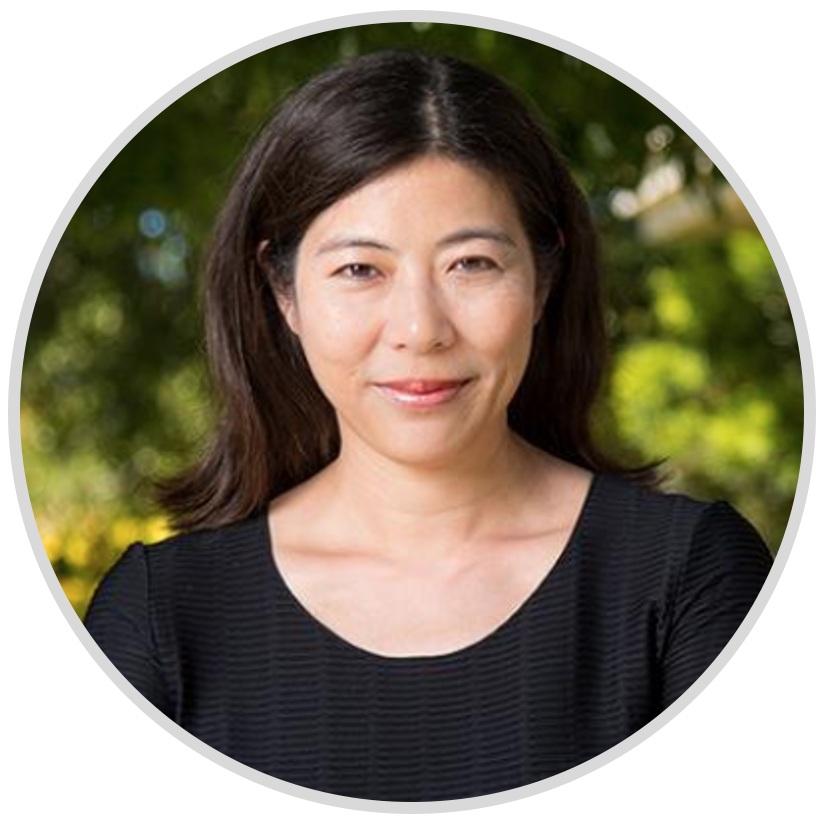
Yao is the co-founder, director, and chief executive of Univfy, a nine-person company in Los Altos, California. Univfy sells software that estimates an individual patient's probability of a live birth from in vitro fertilization. The inputs are the ones a fertility clinic already collects on intake: age, body mass index, anti-Mullerian hormone, antral follicle count, prior reproductive history, past treatment, semen analysis. The output is a personalized number and, in the version sold to patients, a financing plan attached to it. Univfy has raised roughly $22.5 million to date, with a $6 million Series B closing in December 2021. It also, in a small industry footnote, holds a patent portfolio on the underlying models.
The company's founding claim is easy to summarize and slightly awkward to accept if you are a fertility clinic. In work Yao and Stanford statistician Wing H. Wong began publishing around 2009, they argued that age accounts for only half of the variation in IVF success rates. The other half - the half a patient's counseling usually elides - lives inside the rest of the intake form. What Univfy's machine learning models do, in effect, is stop rounding.
Before Univfy, Yao's biography reads like a textbook path through academic medicine. She trained at the University of Toronto Medical School, did her OB/GYN residency at McGill, and then went to Boston for a fellowship in reproductive endocrinology and infertility at Brigham and Women's Hospital, part of Harvard University. She stayed there through a postdoctoral appointment in the developmental biology lab of Richard L. Maas, from roughly 1998 to 2001. In 2003 she joined the Stanford faculty and opened an NIH-funded lab studying early embryo development and uterine receptivity. She has said publicly she left that job somewhat reluctantly; she was not chasing entrepreneurship so much as she was chasing a specific patient sentence she kept hearing in clinic - the one that starts, "Had I known my chances were so low, I would have done this other thing." She also co-authored the Infertility chapter in Berek and Novak's Gynecology, the standard OB/GYN reference. It is a strange thing to do and then leave for a startup. Yao did it.
The Stanford work with Wong was the pivot. Wong is a statistician; Yao is a physician-scientist. Their models were not built to be clever. They were built to be reproducible, and to survive contact with data from clinics that had not helped generate them. Univfy has since deployed and validated its models across US, European, and other centers, from academic hospitals to suburban practices. The point of the multi-center validation - and it is a point Yao makes carefully in interviews - is that a prediction model built at Stanford has to work in a strip mall clinic in Ohio to be worth anything. Univfy's publications indicate that theirs does.
The product exists in two main forms. Univfy PreIVF is a report a fertility center orders during an initial consultation; it uses information available before treatment begins to estimate a baseline probability. Univfy PredictIVF layers on additional clinical response data and produces a stronger estimate. Yao's published figures put PreIVF at a 36% improvement in predictive power over age alone and PredictIVF at 77%. Univfy also, in one of the more accurate marketing lines you will encounter from an AI healthcare company, argues that its models are roughly one thousand times more likely to be right than an age-only estimate. This is a probability ratio, and it is largely a function of the base rate the age-band prediction is competing against. It still, given the stakes, is a statistic worth quoting.
What complicates the story, and what makes Univfy interesting as a business rather than an academic exercise, is the second half of Yao's stated mission. She has repeatedly framed the company's job as combining healthcare AI, scientific validation, and financial services. The premise is uncomfortable and correct: telling a patient their odds is not useful if the price of finding out is $12,000 to $30,000 a cycle. So Univfy pairs prediction with financing. Through a bank partner, patients can borrow up to $100,000 for as many as three IVF cycles, with refund provisions if treatment fails. Prediction, in other words, is the front-end. The financing is the payload.
There is a version of this story where an OB/GYN builds an app and calls it a day. Yao has been unusually persistent about the parts that are unglamorous. The multi-center validation studies. The integration work with fertility clinic EHRs. The consulting engagements with fertility centers on how to reset a patient counseling workflow. In 2017 MM+M named her to its Top 40 Healthcare Transformers list, mostly for the same reasons. A November 2024 paper in the Journal of Personalized Medicine - the pragmatist's version of a Univfy overview - laid out the case again: prognostic counseling built on machine learning, using real clinical inputs, is now defensible enough to sell as counseling infrastructure.
Univfy is not a large company. Its revenue, per public estimates, hovers around the low seven figures. Its team, per Univfy, is nine people. It is easy to look at those numbers, and at the twelve years between Univfy's founding and its Series B, and read a story of slow growth. It is also possible to read a different story: that the market Yao is trying to reshape - fertility counseling as it is practiced across US clinics - is not the sort of market a well-funded consumer app can capture by advertising. It moves clinic by clinic, physician by physician, insurer by insurer. In that market, being a physician who can talk to fertility doctors in their own language, and being a founder who has spent time in the statistics literature with a co-author like Wing Wong, is not incidental. It is the moat.
Yao lives in the San Francisco Bay Area with her family. She grew up in Toronto and has lived in the United States for more than two decades. She keeps a low online profile - the Univfy Facebook page is more active than her personal social presence - and is on X at @myleneyao and @Univfy. Her LinkedIn presence, which is where most of the public professional footprint lives, does what LinkedIn presences do. She is, per multiple interviews, more comfortable talking about likelihood ratios than about herself. This is arguably the correct temperament for the job.
The company's next act, if it has one, is the routinization of what it currently sells as a specialty product. Personalized IVF prediction should not be a boutique offering. It should be the default first slide of a fertility consult. Yao has been telling clinicians this for more than a decade. The interesting question is not whether she is right. The interesting question is how many more clinics have to install Univfy's reports before the standard of care catches up.