For most of its life, Nikon was one half of a two-word sentence. If you shot professionally, you shot Canon or Nikon, and the argument between the two camps ran hotter than most political ones. Then the ground shifted. Mirrorless cameras arrived, Sony moved fast, and the old duopoly cracked. What Nikon has done since is the more interesting story: it threw out a 60-year-old lens mount, bought the cinema-camera brand Hollywood actually uses, and started shipping products that don't fit neatly into the box people had put it in.
Nikon Inc. is the American face of all this. Run out of Melville, New York, it handles the US sales, service, and the direct store at nikonusa.com, while the glass and the engineering come from parent Nikon Corporation in Tokyo. The parent turned 108 this year. It is one of the few companies on the planet that still manufactures its own optical glass rather than buying it. That single fact explains a lot about how Nikon behaves.
01What Nikon actually does
Strip away the brand loyalty and Nikon is an optics company that happens to be famous for cameras. It designs and builds interchangeable-lens cameras and NIKKOR lenses, yes, but the same optical expertise runs through microscopes and bioscience imaging, industrial metrology and inspection, sport optics like binoculars and rangefinders, and the semiconductor lithography systems used to print chips. The camera is the part the public sees. The optics are the business underneath it.
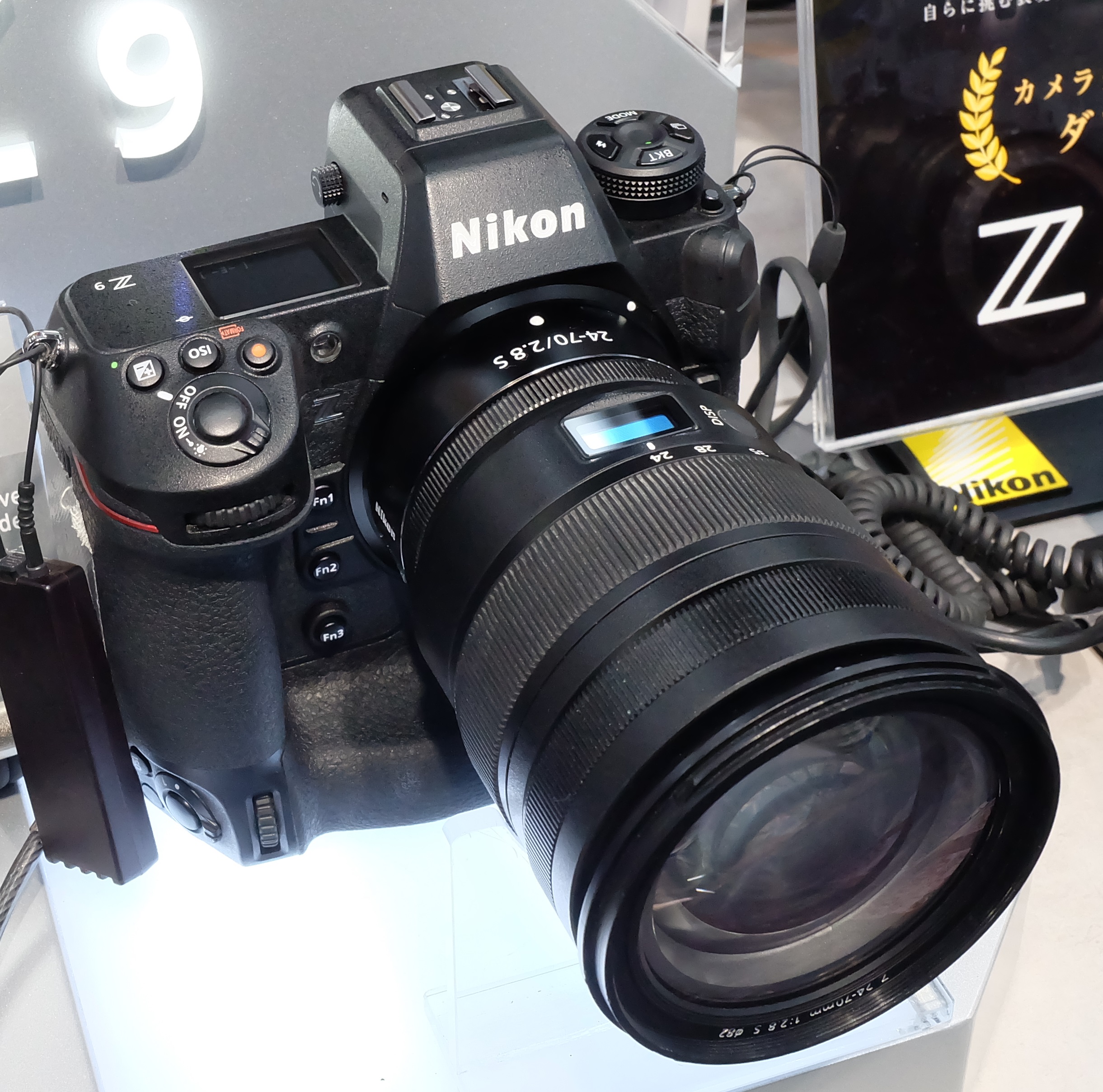
The consumer story right now is the Z system. Nikon introduced the mirrorless Z mount in 2018, a wide, short-flange mount that gave its lens designers more room to work. Since then the lineup has filled out fast: the flagship Z9 in 2021, the compact-flagship Z8 in 2023, the retro-styled Zf the same year, and the Z6III and Z50II in 2024.
02The RED bet that surprised everyone
In March 2024, Nikon announced it was buying RED Digital Cinema, the American company whose cameras have shot a large share of top-grossing films. The deal, reported at around $85 million, closed that April. RED's founder Jim Jannard and president Jarred Land moved into advisory roles, and RED became a wholly owned Nikon subsidiary.
The surprising part was what Nikon didn't do. It didn't fold RED into a spreadsheet, kill the brand, or scatter the dealer network. It kept RED's identity, its REDCODE RAW codec, and its color science intact, and then it went to work combining them with Nikon's own autofocus and stabilization.
"Nikon has seen brisk demand for powerful video functions in recent years."
Muneaki Tokunari, President & CEO, Nikon Corporation, on the RED acquisitionThe proof shipped in September 2025. The Nikon ZR is the first camera in a new Z Cinema series, co-developed with RED. It is a compact full-frame body that records 6K 12-bit RAW internally using a Nikon-edition version of RED's codec, delivers 15-plus stops of dynamic range and RED color science, and weighs just 1.19 pounds. It launched at $2,199.95 for the body, a price that undercuts established cinema cameras that cost two to three times as much.
03Where it sits in the market
The camera business is close to an oligopoly. Sony, Canon, and Nikon together hold roughly 70% of the global market. In mirrorless specifically, 2025 figures put Sony first at about 29.9%, Canon second near 27.4%, and Nikon third at roughly 15.5%, up from the prior year. Third place sounds modest until you remember how few players there are and how expensive it is to design sensors, processors, lenses, and cameras all at once.
Nikon's answer to the leaders is not to out-volume them. It is to own a lane. The RED acquisition and the Z Cinema series are a bet that the next wave of creators wants a single system that shoots stills like a Nikon and motion like a movie camera, without a five-figure budget. If that bet lands, cinema becomes the wedge that pulls video-first buyers into the Z ecosystem.
The difference from its rivals is one of posture. Canon competes on breadth and Sony on sensor and autofocus firepower. Nikon leans on the thing it has that neither fully matches: in-house optical glass and, now, RED's cinema pedigree. Where Sony would build a video camera from scratch and Canon would extend its own cinema line, Nikon simply bought the brand filmmakers already trusted and grafted its own strengths onto it. That is a slower, riskier route than shipping another spec-sheet leader, but it buys credibility that marketing cannot.
04The business model and the software layer
Nikon Inc. sells three ways at once. There is straightforward B2C through retailers, direct D2C through the nikonusa.com store, and a B2B side that most photographers never touch: microscopes, metrology, and the lithography optics behind semiconductor manufacturing. Professional cinema now runs through RED's preserved dealer network. Parent Nikon Corporation is publicly traded in Tokyo under ticker 7731, so the numbers are open. Consolidated revenue was roughly 715 billion yen in the fiscal year ending March 2025 and about 677 billion in the following year, when the company posted an operating loss. This is a company mid-pivot, and the financials show the cost of it.
The quieter move is software. Nikon Imaging Cloud, launched alongside the Z6III in 2024, pushes firmware updates, backups, and downloadable "image recipes" straight to the camera over Wi-Fi. SnapBridge handles the phone connection. None of this is flashy, but it is the layer that keeps a buyer inside the Nikon world after the body is paid for. A camera used to be a one-time sale. Increasingly it is the front door to an ecosystem.
A camera used to be a one-time sale. Now it is the front door to an ecosystem you keep logging into.
On Nikon's cloud strategy05Who uses it, and the reach
The customer list runs from a first-time buyer picking up a Z50II to a cinematographer framing a feature on RED glass. In between sit wedding and event shooters, wildlife and sports photographers, YouTubers and content creators, and the working pros who call Nikon's service network at inconvenient hours. On the B2B side, the same optical DNA shows up in research labs, hospitals, and chip fabs. And then there is space: Nikon equipment has been to the Moon since Apollo 15 in 1971, has ridden on the International Space Station since 1999, and the Z9 has been selected for NASA's Artemis lunar program.
- "Nikon" is short for Nippon Kogaku - "Japan Optics." The lens brand NIKKOR was trademarked back in 1932.
- Nikon started in 1917 making rangefinders and microscope optics. Its first branded camera came 31 years later, in 1948.
- The F-mount lasted about 60 years before Nikon replaced it with the mirrorless Z mount in 2018.
- Nikon gear has been to the Moon and lives on the ISS. Over 100 spaceflights carry its name.
- The same optics arm builds the lithography systems that help manufacture semiconductor chips.
- The 1.19-pound Nikon ZR records 6K 12-bit RAW internally, using a codec derived from RED's.
06How Nikon got here
07What to make of it
Nikon is not the biggest camera company, and its most recent fiscal year was a loss, not a lap of honor. But the strategy is legible. It sold its heritage F-mount to bet on mirrorless, it bought a cinema brand and shipped a product with it inside 18 months, and it is quietly wiring a cloud layer under everything. For a 108-year-old optics house, that is a fairly aggressive hand. Whether it pays off depends on whether creators buy the pitch that one company can hand them stills, cinema, and the software to tie them together. The ZR is the first real test, and it arrived priced to be taken seriously.