Nikolaus Volk helped build a company that would bring a car to your door. At the beginning, the founders were living and working in a garage. It is a pleasingly literal arrangement: before Kyte could reorganize the way people used cars, its creators had to reorganize the way people used a place meant for parking them.
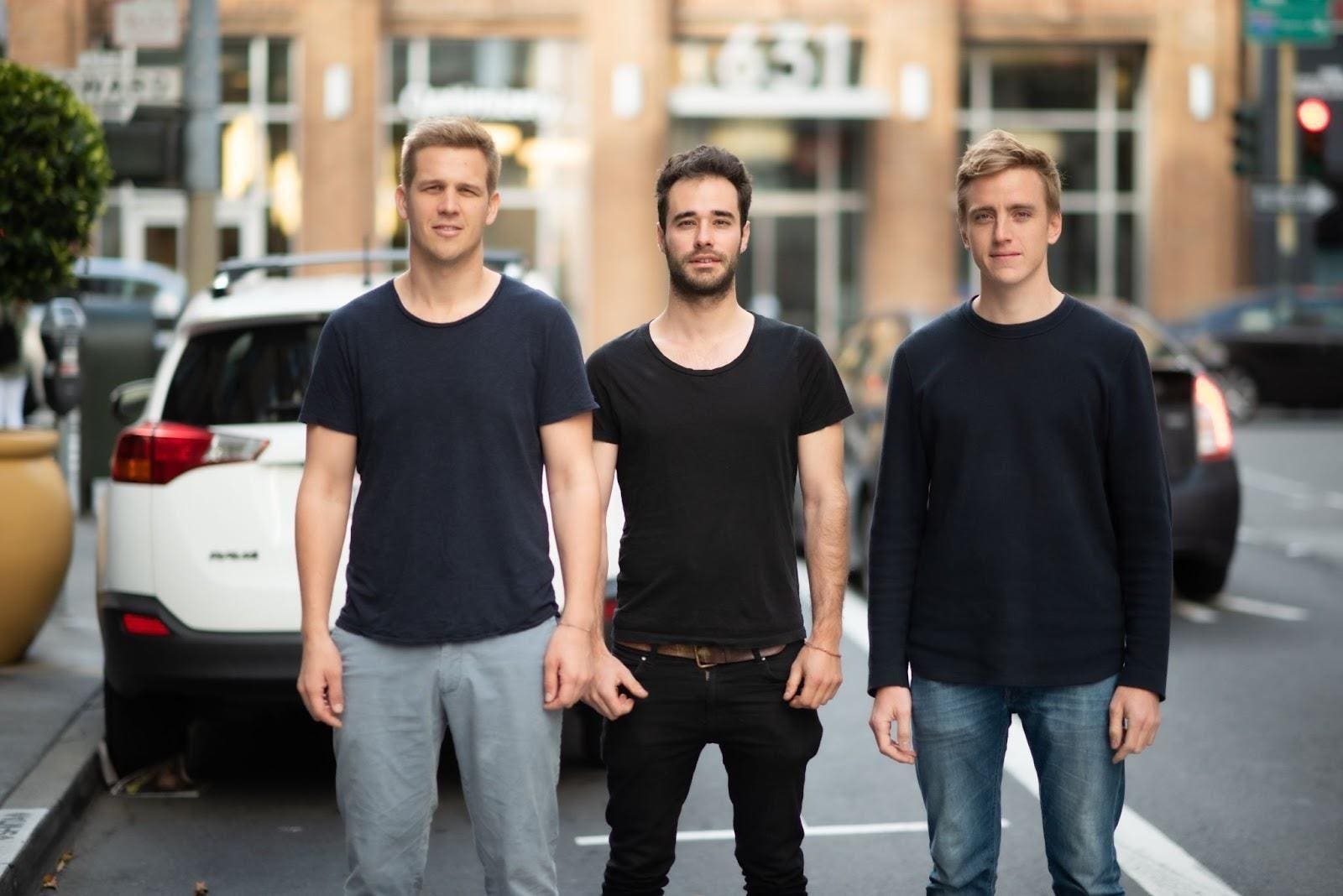
The garage was in San Francisco's West Portal neighborhood. The year was 2019. Volk and his co-founders, Ludwig Schoenack and Francesco Wiedemann, wanted to remove a familiar indignity from travel: the excursion you must make to collect the vehicle that is supposed to make excursions easier. A rental counter is a peculiar starting line. You have already made a journey before your journey begins.
By 2022, Kyte was operating in 14 cities. By August 2025, it had shut down. Volk subsequently took a group of former colleagues into fleet management company Wheels, then joined Sierra in 2026 to help build its business in Germany, Austria and Switzerland. His career now poses a more interesting question than whether a car can arrive on time: what travels with a founder when the company stops?
The journey before the journey
Volk's route ran through the Technical University of Munich, where he studied engineering science, and Stanford, where he pursued a master's in engineering. At Uber, he worked on machine learning systems using sensor and location data. The attraction was the meeting point between computers and the world outside them. A prediction becomes rather more interesting when something with wheels has to act on it.
The founding team brought three different kinds of experience. Wiedemann had worked on mobility products at BMW. Schoenack brought automotive strategy experience from McKinsey. Volk concentrated on software, optimization and analytics. He and Wiedemann knew one another from undergraduate study; Schoenack entered his life through Schoenack's future wife in San Francisco. An old university connection and a social introduction became a division of labor.
Kyte's earliest proposition was easy to grasp. A customer chose a place and a time; someone brought the car, and later collected it. In its 2019 form, the business partnered with existing rental companies rather than owning the vehicles. Suppliers had cars. Kyte supplied a different route to the customer. The early service could arrange a reservation with as little as two hours' notice.
Somebody still has to move the car
There is a small piece of theater in a doorstep delivery. The customer sees an arrival. The company must arrange everything before and after it. At Kyte, the delivery drivers were called surfers. Some used folding electric scooters to reach their next pickup. Behind the breezy name sat a serious logistical question: after delivering a car, how does the person who delivered it get anywhere else?
The system included vehicle tracking, renter verification and, with selected partners, remote unlocking. Cars waited at operational locations rather than customer-facing branches. The app was the visible surface of a business that still needed people, places and careful timing. That made an engineer's understanding of location and movement useful well beyond the checkout screen. Every convenience offered to the customer created another coordination problem backstage.
Volk's explanation of Miami's November 2021 launch showed how closely the practical and commercial questions were connected. South Florida's busy season complemented colder markets. Density helped the delivery model. Drivers, he said, could see their schedules and prospective earnings ahead of time. These were operating choices, each with implications for how the service would feel to the person waiting for it.
The expansion followed a $30 million Series A. Miami and Long Beach brought the company's reported footprint to eleven cities. The ambition was spreading, but its appeal remained domestic in the everyday sense of the word: a car arriving at a hotel after the traveler had settled in, or at home before a weekend away. Freedom, in this version, came with a scheduled handover.
- 01ReserveChoose a car, time and location.
- 02DeliverA surfer brings the vehicle.
- 03CollectThe car returns to the fleet.
Two businesses under one bonnet
In December 2022, Volk described the work as building two companies simultaneously. One concerned assets; the other concerned technology. His observation was compact enough to fit on a whiteboard and substantial enough to govern the whole business. Cars require financing, maintenance and eventual disposal. Software has a different set of demands. Kyte had chosen a business in which both sets mattered.
“There is the assets part and the technology part.”
Nikolaus Volk · December 2022
Subscriptions extended the proposition. Someone who needed a vehicle for months could use Kyte without buying a car or entering a conventional long lease. At launch, the options ranged from small sedans to SUVs and a Tesla Model 3. The subscription operation was still a small part of the company, Volk said. It enlarged the range of customer needs the fleet might serve.
The ownership model also changed. An August 2023 update to an account of the business recorded that Kyte owned its entire fleet. In March 2024, the company announced a credit facility of up to $250 million from Barclays and Waterfall Asset Management. It refinanced and enlarged an earlier facility. The number described borrowing capacity secured against assets, rather than a fresh equity investment of the same size.
That distinction matters to Volk's story. Software entrepreneurs are often described through the money their companies raise. Here, the kind of money was part of the operating system. The 2024 financing announcement said Kyte sourced vehicles directly from manufacturers and had raised more than $100 million in equity. Access to cars and access to capital had become inseparable.
Fourteen cities, then two
By October 2024, expansion had given way to concentration. Kyte was withdrawing from most of its markets and focusing on San Francisco and New York City, including Jersey City. Volk said these two core markets accounted for about 70 percent of revenue. The workforce had been reduced by roughly 40 to 50 percent. The objective was to reach profitability within eighteen months.
It was a sharp change in the meaning of focus. Earlier, a company could choose where to grow. Now it had to choose where it could afford to continue. Volk said the team had considered selling the business before deciding to restructure. The economics in other markets were failing to produce enough free cash flow. Customers could want a service while the company delivering it still struggled to sustain the machinery behind it.
of revenue came from the two core markets Kyte chose to keep.
The retrenchment did not save Kyte. Turo announced an agreement to acquire select assets in July 2025. Operations subsequently ended. For a founder who had made access to cars his product, it was a hard limit: the service could no longer deliver what it had been built to provide. A customer's next trip and a company's next chapter had ceased to be the same proposition.
The team takes another road
In September 2025, Volk joined Wheels with a core group of former Kyte employees. He would lead a new group developing technology and products. The fleet management company offered a very different scale: Volk put its fleet at more than 500 times the size of Kyte's recent fleet. That was his comparison, and it describes the change of setting more clearly than a job title could.
The move kept colleagues together while changing the institution around them. Fleet technology and customer applications were still useful skills. Instead of supporting their own consumer rental network, they would work inside an established business backed by Apollo. The group became Wheels X. When Volk later announced his departure, he described integrating the team and shipping products there as a rewarding stretch of work.
There is no need to turn that into a tidy redemption story. Kyte had closed. Wheels presented another opportunity. Both facts belong in the same biography. The continuity was specific: people who had learned to build together were able to keep doing so, in another company, with another fleet and another set of customers.
Munich, with a different kind of agent
In July 2026, Volk announced his move to Sierra to build its Agent Strategist function for the DACH region. He praised a deployment model in which builders work closely with customers. The attraction was recognizable: making software useful inside an operating business, where requirements arrive with complications attached. The vehicle had changed; the interest in implementation remained.
Sierra announced its Munich office that August. For Volk, helping establish it meant returning to his hometown. The company builds AI agents for customer interactions and business processes. Its regional remit covered Germany, Austria and Switzerland. After years spent working in the United States, he was helping an American company establish itself among customers close to where his own engineering education began.
By early October, he was sharing accounts of Bits & Pretzels, Oktoberfest tables and a Sierra gathering in Munich with more than fifty guests. There was a demonstration of German-language voice agents. The details bring the new job down to earth: conversations, rooms full of prospective customers, a product asked to perform in front of people. Software still has to show up.
Volk once wanted to remove the rental counter from the start of a trip. He now works on another place where customers meet the machinery of a business. His route from a San Francisco garage to Munich has included expansion, contraction, closure and fresh employment. The next delivery is an outcome a customer can use. He is building toward it again.